China Tightens Export Checks on Crushing Equipment
auth.cTime
Jun 18, 2026Click Count
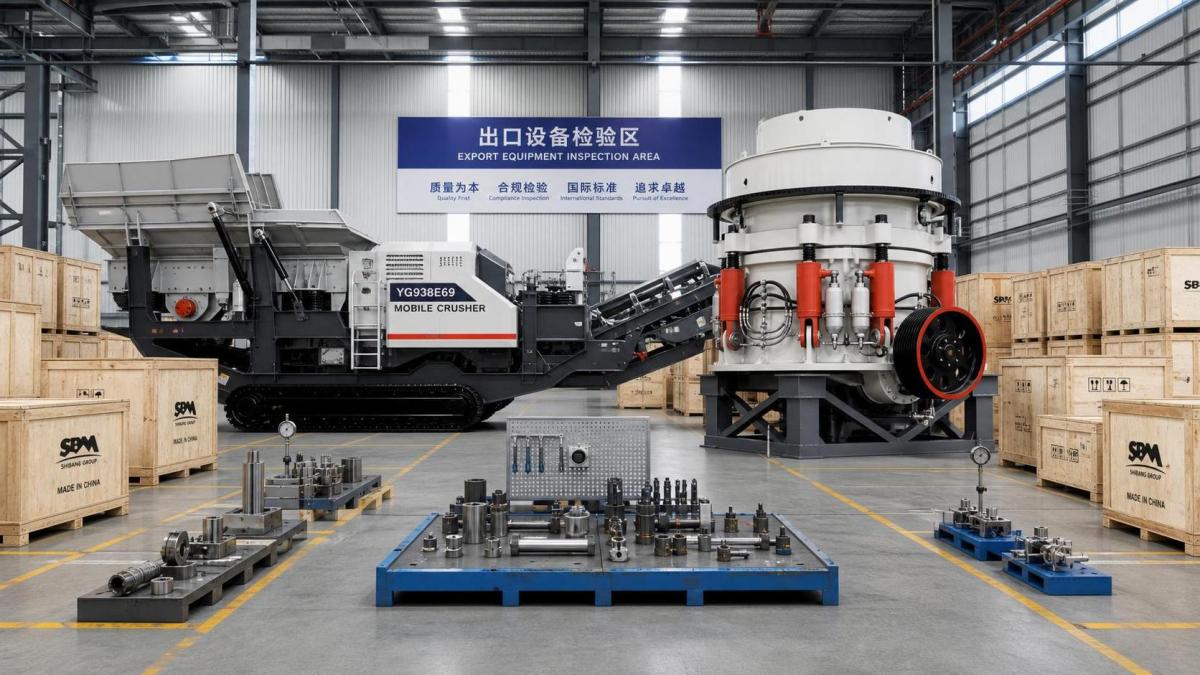
On June 17, 2026, China’s General Administration of Customs revised its inspection and supervision guide for complete equipment exports, bringing tracked mobile crushers and hydraulic cone crushers into a newly emphasized high-risk category. For exporters, manufacturers, certification-related service providers, and overseas buyers handling orders for RCEP, African, and Latin American markets, the update matters because it links export readiness more directly to pre-shipment testing, dual certification review, and traceable records for key components before the new rules take effect on September 1, 2026.

What the revised guide now requires
According to the information provided, the update was issued through Announcement No. 38 of 2026 by China’s General Administration of Customs on June 17, 2026. The revised Inspection and Supervision Guide for Complete Equipment Exports lists Tracked Mobile Crushers and Hydraulic Cone Crushers as “high-risk complete equipment for export” for the first time.
The same update requires exporters to complete a type test report before export, with reference to GB/T 14385 and ISO 14121-1. It also requires verification of both CE and UL certifications, as well as traceable batch filing for key components including the main shaft, moving cone liner, and hydraulic station.
The new requirements take effect on September 1, 2026, and apply to all orders exported to RCEP, African, and Latin American markets.
Where the pressure is likely to appear first
Export preparation moves closer to document readiness
From an industry perspective, exporters handling the covered equipment are likely to feel the most immediate impact in pre-shipment preparation. The rule change points attention toward whether type test reports, CE/UL verification materials, and traceability records are complete before export, rather than being treated as supporting documents assembled later in the process.
Manufacturing and assembly records become more relevant
For manufacturers and assembly operations, the traceable batch filing requirement for the main shaft, moving cone liner, and hydraulic station suggests closer attention to internal record consistency. Analysis shows that the affected business link is not only final machine delivery, but also how key parts are identified, documented, and matched with export files.
Certification and testing service workflows may face tighter timing
Certification-related companies and testing service institutions may need to pay closer attention to project schedules tied to the covered product categories. What deserves closer attention is that the rule change connects export eligibility to both a type test report and CE/UL verification, which may influence document sequencing, review timing, and handover coordination between suppliers and exporters.
Buyers and procurement teams may review compliance earlier
For overseas buyers, procurement teams, and supply chain service providers, the practical effect may appear in contract review, technical file checks, and delivery planning. Observably, orders bound for the covered markets may require earlier confirmation that the equipment falls within the updated customs compliance path and that supporting records can be presented without delay.
What companies should check before September 1
Review whether product scope matches the regulated categories
Companies involved in exporting crushing equipment should first verify whether their products fall within the tracked mobile crusher or hydraulic cone crusher categories referenced in the updated guide. This is a practical starting point for deciding which orders, document sets, and internal reviews need to be adjusted before the effective date.
Recheck the completeness of testing and certification files
Analysis shows that the most immediate compliance focus is the alignment between type testing materials and CE/UL verification records. Where document packages are prepared across multiple departments or external partners, companies may need to check whether technical files, report versions, and certification evidence are consistent enough for export review.
Pay closer attention to key-part traceability records
The traceable batch filing requirement puts specific attention on the main shaft, moving cone liner, and hydraulic station. For exporters and manufacturers, this means the quality of part-level records may matter more in export compliance review, especially when shipment files, production records, and supplier information need to correspond clearly.
Watch for follow-up interpretation in execution practice
The provided information confirms the rule change and effective date, but it does not provide more detailed execution procedures. It is therefore more appropriate to understand the current stage as one that requires continued monitoring of compliance interpretation, document review expectations, tender file language, and market-side implementation feedback rather than assuming a fully settled operating practice already exists.
Why this looks like an execution signal, not just a notice
Analysis shows that this update is better understood as a concrete compliance signal tied to export operations, because it identifies specific equipment categories, specific certification and testing references, specific traceability targets, and a clear effective date. At the same time, observation also suggests that the market still needs to watch how these requirements are reflected in actual review practice, buyer documentation requests, and project delivery coordination after September 1, 2026.
How to read the change at this stage
At this stage, the update is best read as a rule change that has already entered the implementation track rather than as a general policy direction. For the industry, the key point is not only that customs oversight has been tightened for certain crushing equipment exports, but that compliance preparation may now need to start earlier across testing, certification, parts traceability, and shipment documentation. A cautious reading remains necessary, because the detailed application in day-to-day transactions still deserves continued observation.
Basis of this article and points still to verify
This article is generated from the user-provided news title, event date, and event summary. For events of this kind, commonly relevant source types may include official announcements, releases from regulatory authorities, customs or trade administration information, industry association updates, standards organization documents, and reporting by authoritative trade media.
No specific official source link was provided in the input, so the exact official link remains subject to further verification. What still requires continued observation includes any follow-up policy detail, compliance interpretation, certification review practice, tender document changes, industry feedback, and how companies implement the new requirements in actual export projects.
Recommended News
- 00
0000-00
How Hydraulic Power Rating and Cutterhead Torque Affect Dredging Efficiency in Soft-Bed Port Projectsdredging equipment manufacturer insights: discover how hydraulic power rating & cutterhead torque directly drive efficiency in soft-bed port dredging projects. - 00
0000-00
China Tightens CE and MSHA Dual Certification Rules for Mining CrushersChina tightens CE and MSHA rules for mining crushers, raising export compliance costs and risks. Learn what buyers and suppliers must prepare before 2026. - 00
0000-00
China Tightens Export Compliance for Mining Hydraulic CrushersChina tightens export compliance for mining hydraulic crushers, raising new certification hurdles for EU, US, and Australia shipments. Learn what exporters must do before the October 2026 deadline.
000000-00
{item.title}{item.description}Search News
Industry Portal
Hot Articles
- How to assess a large scale mining machinery manufacturer for EPC projectsLearn how to assess a large scale mining machinery manufacturer for EPC projects, from technical fit and delivery capacity to lifecycle support and risk control.
- How a Quarry Production Management dashboard exposes bottlenecksDiscover how a Quarry Production Management dashboard reveals hidden bottlenecks, connects material flow data, and improves saleable aggregate output.
- When smart construction hoisting equipment improves site safetySmart construction hoisting equipment enhances site safety with real-time monitoring, smart alerts, interlocks, and data-driven maintenance insights.
Popular Tags