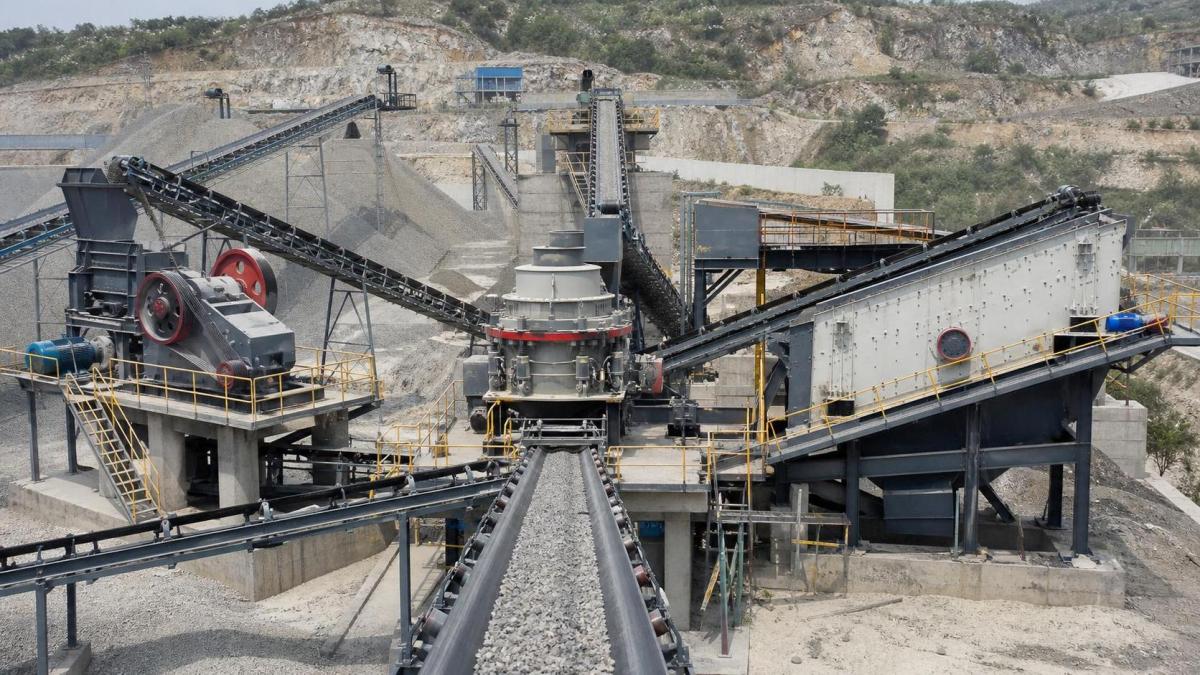
How to Evaluate an Industrial Rock Crushing Manufacturer
auth.Rock Comminution ExpertTime
Jun 18, 2026Click Count
Choosing an industrial rock crushing manufacturer is rarely a simple equipment comparison. In quarrying, mining, and infrastructure production, the crusher influences aggregate shape, plant uptime, liner cost, energy use, and downstream screening efficiency. A strong evaluation process looks beyond brochure capacity and asks whether the manufacturer can deliver stable performance in real rock conditions, support long operating cycles, and align with project economics over time.
Why manufacturer evaluation matters in heavy industry
Rock crushing sits at the center of many material supply chains. Roads need graded aggregates, tunnels need base materials, mines need size reduction before conveying or milling, and concrete plants depend on consistent feed quality.

A weak supplier decision can create hidden losses. These often appear as uneven product size, excessive wear, unplanned shutdowns, poor spare parts availability, or control systems that do not integrate well with the rest of the plant.
That is why the industrial rock crushing manufacturer should be assessed as a long-term technical partner, not only as a machine vendor. In sectors tracked by HIES, this broader view is increasingly important because project margins depend on uptime, compliance, and cost per ton.
What a capable industrial rock crushing manufacturer should prove
The first question is not how many models are listed in a catalog. The real question is whether the manufacturer understands fragmentation, feed variability, and the link between crushing stages and final material quality.
In practical terms, a capable industrial rock crushing manufacturer should demonstrate four things. It should understand the rock, engineer the machine for duty conditions, support plant integration, and maintain service capability after commissioning.
Process knowledge is as important as machine design
A good jaw crusher or cone crusher does not work in isolation. Feed gradation, moisture, abrasiveness, recirculation load, and screen performance all affect output.
An experienced manufacturer usually asks detailed questions early. Rock type, compressive strength, silica content, target product sizes, required shape, and planned throughput should all be part of the discussion.
Evidence matters more than claims
Reference projects are especially valuable when they match similar applications. Granite for railway ballast, basalt for asphalt aggregate, and limestone for concrete feed each create different wear and product shape demands.
The more closely a case resembles the intended duty, the more useful it becomes in evaluating an industrial rock crushing manufacturer.
The technical factors that deserve close attention
Many evaluations stall because teams focus too heavily on nominal capacity. Throughput is important, but it should be tested against operating reality rather than ideal feed assumptions.
This is where the industrial rock crushing manufacturer must show depth. For example, chamber geometry should not only raise throughput. It should also improve liner utilization and keep the product curve within specification.
Wear parts should be evaluated as a system cost
Wear parts often decide whether a low-priced machine stays economical. Ask for liner material options, expected life under comparable rock conditions, and the labor required for replacement.
A lower purchase price can quickly lose value if mantle, concave, jaw plate, or blow bar consumption is high. In abrasive formations, metallurgy and fastening design become major decision factors.
Automation is no longer optional in many plants
Modern plants benefit from sensor-based control, fault alarms, and remote diagnostics. This matters when feed conditions change quickly or when labor resources are limited.
An industrial rock crushing manufacturer with mature automation can help maintain closed-side settings, protect against overload, and generate operating data useful for continuous improvement.
Where application fit becomes decisive
Not every manufacturer is equally strong in every segment. Some are highly competent in stationary quarry lines, while others are better in mobile crushing for contractors or modular systems for export projects.
Application fit should be checked against the full operating context, not only against crusher type.
- Hard rock quarrying needs robust frames, high wear resistance, and precise secondary or tertiary crushing control.
- Mining applications may prioritize high throughput, maintainability, and integration with conveying or grinding circuits.
- Infrastructure projects often require flexible layouts, predictable aggregate grading, and quick commissioning near changing job sites.
- Export-driven or remote projects need spare parts planning, documentation quality, and strong remote support capability.
This is one reason HIES places technical equipment within a wider infrastructure context. Crushing plants do not create value alone. They support roads, bridges, tunnels, rail lines, ports, and material supply systems that depend on continuity.
Commercial review should support technical judgment
Price still matters, but it should be interpreted carefully. A quote from an industrial rock crushing manufacturer should be unpacked into equipment scope, auxiliaries, controls, foundations assumptions, commissioning terms, and exclusions.
Some offers look competitive because major items are missing. Others include stronger automation, installation guidance, or extended wear packages that improve total project value.
Useful questions during supplier review
- What operating assumptions support the stated capacity figures?
- Which reference sites use similar rock hardness and abrasiveness?
- How are critical spare parts stocked regionally?
- What failure modes appear most often, and how are they addressed?
- Can the control system connect with plant-wide monitoring platforms?
- What compliance documentation is available for the target market?
Answers to these questions often reveal more than polished presentations. They show whether the industrial rock crushing manufacturer understands field risk and supports transparent decision-making.
Compliance, documentation, and support after delivery
Technical strength should be matched by documentation quality. Layout drawings, power requirements, lubrication schedules, wear part manuals, and safety documentation all influence installation speed and operating discipline.
Compliance also deserves attention. Depending on the market, this may include CE-related documentation, dust and noise considerations, guarding arrangements, electrical standards, and site safety practices.
After delivery, the manufacturer’s role continues. Commissioning support, operator training, troubleshooting response time, and periodic performance review can determine whether the plant reaches planned output.
A practical way to narrow the shortlist
A useful method is to compare suppliers through a weighted matrix. Capacity alone should not dominate the result. Wear cost, service access, automation maturity, and application references often deserve equal or greater weight.
At this stage, the best industrial rock crushing manufacturer is usually the one with the clearest technical logic, the most relevant operating evidence, and the strongest ability to support stable production after startup.
Before moving forward, define the rock characteristics, target products, expected annual tonnage, maintenance philosophy, and digital control needs. Then compare each industrial rock crushing manufacturer against those realities, not against generic claims. That approach creates a more reliable shortlist and a better foundation for final plant decisions.
Recommended News
- 00
0000-00
What is an EPC crushing plant and how does it differ from traditional crushing setups?What is an EPC crushing plant meaning? Discover how this turnkey, performance-guaranteed model eliminates interface risk and boosts ROI vs. traditional setups. - 00
0000-00
How to compare crushing screening contractors by production capacityCrushing screening contractors compared by real production capacity: assess accepted output, uptime, material handling, quality compliance, and project risk. - 00
0000-00
Impact crusher rotor design and its effect on output sizeImpact crusher rotor design directly affects output size, fines, and wear. Learn how rotor speed, diameter, and blow bars shape better crushing results.
000000-00
{item.title}{item.description}Search News
Industry Portal
Hot Articles
- How to assess a large scale mining machinery manufacturer for EPC projectsLearn how to assess a large scale mining machinery manufacturer for EPC projects, from technical fit and delivery capacity to lifecycle support and risk control.
- How a Quarry Production Management dashboard exposes bottlenecksDiscover how a Quarry Production Management dashboard reveals hidden bottlenecks, connects material flow data, and improves saleable aggregate output.
- When smart construction hoisting equipment improves site safetySmart construction hoisting equipment enhances site safety with real-time monitoring, smart alerts, interlocks, and data-driven maintenance insights.
Popular Tags