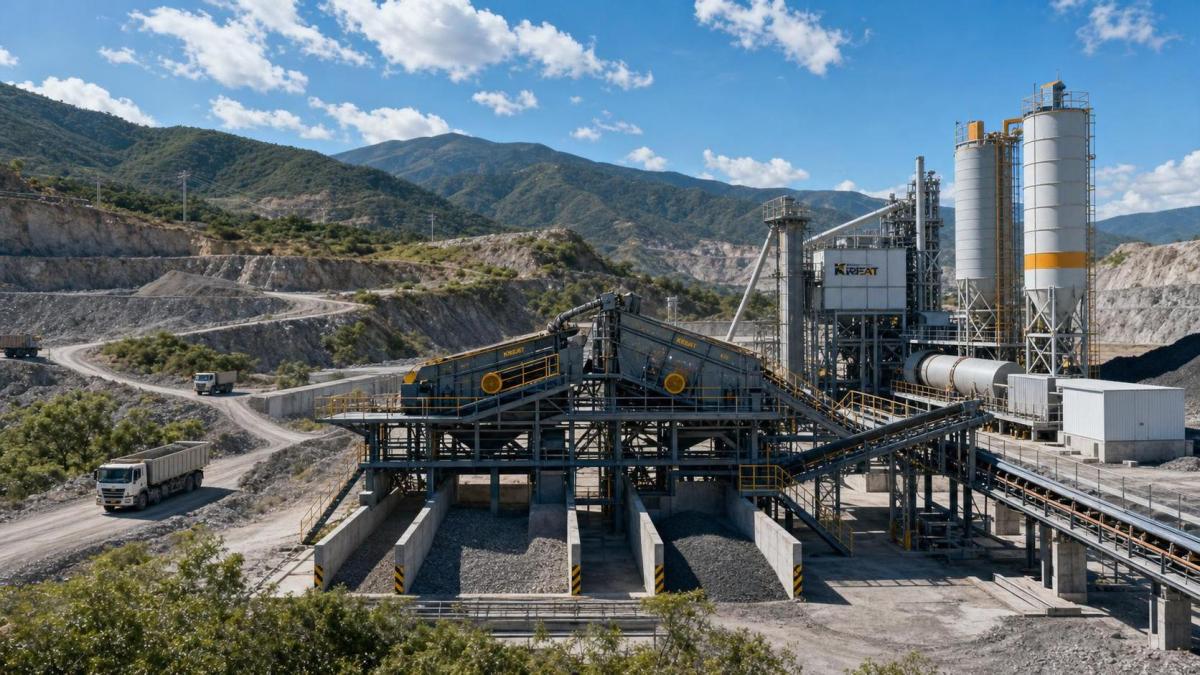
Codelco Launches Green Mine Upgrade Plan for 2026-2030
auth.Rock Comminution ExpertTime
Jun 27, 2026Click Count
On June 26, 2026, Codelco announced the launch of its 2026-2030 “Green Pit 2030” infrastructure upgrade plan with a total investment of $1.28 billion, centered on replacing outdated screening systems and road maintenance material production lines. For mining equipment manufacturers, asphalt plant suppliers, cross-border traders, certification service providers, and localized after-sales operators, this update is worth close attention because it ties procurement access more directly to technical compliance and qualification readiness, while also signaling fresh import demand for infrastructure equipment in South America.

What Codelco Has Confirmed
According to the disclosed information, the program will focus on upgrading two key areas: legacy screening systems and production lines related to road maintenance materials. Within that scope, Codelco has specified that high-frequency vibrating screens must comply with ISO 2631-1 vibration exposure limits.
The company has also opened international tendering for continuous asphalt mixing plants (CAP). Chinese suppliers may enter the shortlist if they obtain SIS certification and complete local service registration. These are the confirmed facts provided in the current project description.
Where the Immediate Industry Impact May Appear
Equipment manufacturers face a more qualification-led bidding environment
From an industry perspective, manufacturers of high-frequency vibrating screens and continuous asphalt mixing plants are likely to feel the impact first. The reason is straightforward: the project has already identified target replacement categories and has attached a clear technical threshold for vibration exposure in screening equipment. The business effect is likely to concentrate in product compliance review, tender preparation, and technical documentation.
What deserves closer attention is whether suppliers can present not only equipment specifications, but also evidence that their products align with the stated ISO requirement and the buyer’s procurement language.
Cross-border suppliers may see opportunity, but only with market-entry preparation
For international suppliers, especially Chinese exporters, the opening of CAP tendering is commercially relevant because access to the shortlist is not based on price alone. The disclosed condition that SIS certification and local service registration are required means the impact extends into compliance filing, partner selection, and service network preparation.
Observably, this affects the timeline of market entry. Suppliers that have not completed certification or localization arrangements may find themselves unable to respond effectively even if product demand is present.
Service and support providers may become part of the procurement equation
The reference to local service registration suggests that after-sales capability is not a secondary issue. For service providers, agents, and local support partners, the likely impact is on maintenance readiness, response commitments, and documentation support for shortlisted bidders.
This matters because procurement qualification in this case appears linked not only to the equipment itself, but also to the ability to support delivery and service execution in-market.
Practical Points Companies Should Track Now
Watch for any refinement in tender rules
Companies following this project should pay close attention to whether later official language adds detail on technical specifications, certification scope, or local service filing procedures. Analysis shows that this type of project can become more commercially defined as procurement documents move from announcement stage to bid execution stage.
Prepare compliance files around the named product categories
For suppliers of high-frequency vibrating screens, the stated ISO 2631-1 vibration exposure limit is a concrete threshold that should shape bid preparation. For CAP suppliers, the shortlist condition makes certification status and local registration records central rather than optional. In practice, the relevant work is likely to involve technical dossiers, qualification documents, and readiness for buyer verification.
Separate demand signal from executable orders
What deserves closer attention is the difference between a procurement signal and a confirmed transaction. The announcement points to equipment replacement demand and international tender access, but it does not by itself confirm contract awards, shipment schedules, or final supplier selection. Companies should therefore treat this as an actionable market indicator, while avoiding assumptions about near-term order conversion.
Review local support and delivery coordination early
The local service registration requirement indicates that customer communication, service commitments, and in-market coordination may influence competitiveness. Suppliers and trading firms should assess whether they have the local documentation, support structure, and execution partners needed to meet shortlist expectations if tendering proceeds quickly.
Why This Looks More Like a Market Signal Than a Final Outcome
Analysis shows that this announcement should currently be read as a strong directional signal rather than a completed market result. The confirmed facts already point to two important themes: first, green mining upgrades are being linked with equipment replacement decisions; second, access to South American project demand may increasingly depend on technical standards and local service readiness together.
At the same time, it is more appropriate to understand this as an industry development that still requires observation. The project framework is clear enough to affect supplier planning, but not detailed enough to support firm conclusions on award volume, procurement pace, or which international vendors will ultimately benefit.
How the Industry May Best Read This Development
In practical terms, this Codelco update matters because it connects infrastructure renewal, compliance requirements, and international supplier access in one procurement signal. For companies in mining equipment, asphalt plant supply, certification support, and localized service operations, the immediate value lies in understanding where qualification conditions are becoming part of competitive positioning.
From an industry perspective, this is best understood as a medium-term signal with near-term preparation value. It does not yet establish a final market outcome, but it does indicate where attention should shift: compliance-backed bidding capability, local service readiness, and closer monitoring of South American import demand for project equipment.
Basis of This Article
This article is based on the user-provided news title, event date, and event summary concerning Codelco’s June 26, 2026 announcement of the “Green Pit 2030” upgrade plan, the stated ISO 2631-1 requirement for high-frequency vibrating screens, and the international tender opening for continuous asphalt mixing plants (CAP).
For this type of industry update, commonly relevant source categories may include official company announcements, procurement notices, industry association materials, authoritative media reports, and standards organization documents. A specific official source link was not provided in the input, so further verification remains necessary. Follow-up attention should focus on any formal tender documents, updated qualification rules, and subsequent clarification on certification and local service filing requirements.
Recommended News
- 00
0000-00
High-Frequency Screening Technology: How to Improve Efficiency in Fine Material SeparationHigh-frequency screening technology efficiency explained: discover how to boost fine material separation, improve product quality, cut recirculation, and lower operating costs. - 00
0000-00
EU CE Rule Takes Effect for EMC Limits on High-Frequency ScreensEU CE rule update: high-frequency screens sold to the EU from Oct 1, 2026 must meet EN 61000-6-4:2026 EMC limits. See impacts on testing, certification, and delivery planning. - 00
0000-00
High-Frequency Vibrating Screens South Africa: What Affects ThroughputHigh-frequency vibrating screens South Africa: discover what really affects throughput, from ore, moisture, and aperture choice to feed stability and maintenance for better plant results.
000000-00
{item.title}{item.description}Search News
Industry Portal
Hot Articles
- What to check before choosing an aggregate production line manufacturerChoose an aggregate production line manufacturer with confidence. Explore key checks for capacity, product quality, layout, service, lifecycle cost, and reliable project delivery.
- When does open-pit mining fleet electrification cut haulage costs?Mining Fleet Electrification open pit: learn when electrified haulage lowers cost per tonne through reliable power, stable routes, high utilization and smarter charging.
- How TBM cutterheads should match abrasive rock conditionsTBM Cutterheads for abrasive rock: learn how geology, cutter layout, wear protection, muck flow, and maintenance strategy improve tunnelling reliability.
Popular Tags