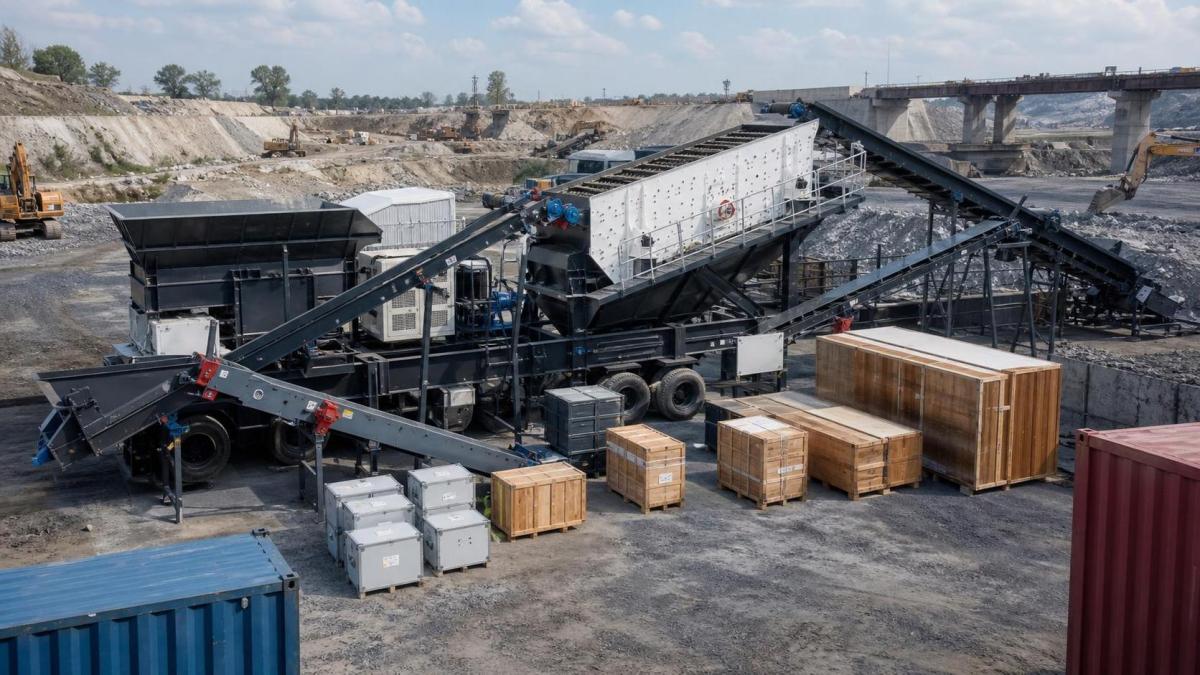
Kananga Phase II Deal Signals Equipment Import Compliance Focus
auth.Rock Comminution ExpertTime
Jun 25, 2026Click Count
On June 11, 2026, a contract signing for Phase II of the Kananga anti-erosion project in the Democratic Republic of the Congo, together with the confirmed export of a China-made high-frequency vibrating screen system, offers more than a project update. From an industry perspective, it should be read as an execution signal tied to cross-border procurement, equipment delivery, technical documentation, and compliance review for infrastructure repair and mineral-processing support equipment. What deserves closer attention is how this kind of project can affect exporters, procurement teams, equipment manufacturers, and service providers that may participate in follow-on orders linked to reconstruction demand.

What Has Been Confirmed So Far
The confirmed facts are limited but commercially relevant. China First Highway Engineering Bureau Group signed the Phase II contract for the Kananga anti-erosion project on June 11, 2026. The project covers integrated treatment at 13 erosion sites. At the same time, it was confirmed that a domestic supplier would provide a high-frequency vibrating screen system for aggregate grading and tailings recovery. The event summary further indicates that the project is being viewed as a practical starting signal for urgently needed infrastructure repair in Africa and suggests potential follow-on import demand for equipment such as vibrating screens, hydraulic cone crushers, and mobile crushing stations in the reconstruction of the copper-cobalt belt.
Why This Matters Across Trade and Delivery Chains
Export preparation moves closer to project-specification control
Analysis shows that equipment exporters may be affected first because project-linked supply is usually shaped by technical specifications, bid documents, shipment records, and acceptance requirements. For companies involved in vibrating screens or related processing equipment, the key business impact is not only sales opportunity but also readiness to align model configuration, supporting documents, and delivery scope with project-side requirements. What deserves closer attention is whether future procurement packages ask for clearer proof on performance, traceability, and after-sales capability.
Procurement teams may face tighter document and supplier screening
For procurement entities and sourcing teams, the signal is relevant because confirmed equipment supply for aggregate grading and tailings recovery points to more detailed review of supplier qualification, technical file completeness, and delivery reliability. Observably, if follow-on demand extends to hydraulic cone crushers and mobile crushing stations, procurement work may become more document-driven, especially around specification matching, packing lists, inspection records, and contractual definitions of scope.
Manufacturers and integrators need to watch compliance at the handover stage
For manufacturers, system integrators, and assembly suppliers, the impact is likely to appear at the interface between production and export delivery. Analysis shows that once infrastructure repair projects begin to convert into equipment orders, compliance pressure often shifts to factory test records, product descriptions, installation guidance, spare-parts lists, and quality traceability files. Even without a newly stated regulation in the input, the project signal matters because cross-border project execution tends to make these requirements more visible and less flexible at handover.
Service and support providers may be pulled into earlier planning
After-sales providers, commissioning teams, and supply chain service companies may also be affected. From an industry perspective, equipment used in grading and tailings recovery is not judged only at shipment; service response, parts support, and fault-tracing arrangements can become part of buyer review. This means logistics coordination, installation preparation, and service documentation may need to be considered earlier in the transaction cycle rather than after delivery.
Practical Signals Companies Should Track Now
Watch for changes in procurement language
Analysis shows that companies should monitor whether later tenders, procurement notices, or technical appendices use more specific wording for processing equipment, recovery systems, or integrated project supply. This is not yet a confirmed rule change in itself, but it can become the first operational sign that buying requirements are hardening.
Prepare technical and compliance files before orders scale
For exporters and manufacturers, a practical priority is to review the completeness of technical documents linked to high-frequency vibrating screens and adjacent equipment categories. What deserves closer attention is whether product descriptions, test materials, configuration sheets, operation manuals, and quality records can support project-side review without repeated revisions that delay award or shipment.
Reassess supplier qualification and delivery capacity
Observably, if reconstruction-related demand expands from one confirmed screen system to broader equipment categories, supplier qualification may become a gating issue. Companies should pay attention to production scheduling, subcontracting boundaries, parts availability, and delivery coordination, especially where one project may involve multiple equipment types and staged shipment requirements.
Do not separate export delivery from service obligations
Analysis shows that firms should not treat the export leg as complete once equipment leaves the factory. For project equipment, the more relevant operational question is whether documents, spare-parts planning, remote support, and quality traceability remain consistent through installation and use. This is especially important where procurement decisions may later reflect execution feedback rather than price alone.
How This Signal Should Be Read at This Stage
Observably, this development is better understood as an execution signal than as a fully defined regulatory shift. The confirmed contract and equipment pairing indicate that infrastructure repair demand is beginning to translate into actual equipment export participation. At the same time, the input does not provide detailed policy texts, certification mandates, or official enforcement rules. For that reason, the industry should treat the event as a practical marker that trade, procurement, and compliance requirements may become more concrete in subsequent project documents and market feedback, rather than as proof that a new formal rule set has already been issued.
A Cautious Reading for the Equipment Market
From an industry perspective, the main significance of this event lies in the linkage between a confirmed overseas infrastructure contract and the confirmed supply of a China-made screening system. That combination points to possible downstream demand for additional processing and crushing equipment, but the more appropriate interpretation today is that companies are seeing an early operational signal. It suggests that exporters, manufacturers, procurement teams, and service providers should prepare for closer scrutiny of specifications, documentation, delivery coordination, and execution capability while continuing to wait for clearer market-side and project-side requirements.
Basis of This Article and What Still Needs Verification
This article is based on the user-provided news title, event date, and event summary. For events of this type, market participants would normally continue to cross-check official announcements, regulatory releases, customs or trade authority information, industry association updates, standard-setting documents, tender materials, and reporting from authoritative media. No specific official source link was provided in the input, so further verification remains necessary. What still needs continued observation includes any later policy detail, certification interpretation, tender-document changes, procurement wording, industry feedback, and actual company-side execution arrangements.
Recommended News
- 00
0000-00
High-Frequency Screening Technology: How to Improve Efficiency in Fine Material SeparationHigh-frequency screening technology efficiency explained: discover how to boost fine material separation, improve product quality, cut recirculation, and lower operating costs. - 00
0000-00
EU CE Rule Takes Effect for EMC Limits on High-Frequency ScreensEU CE rule update: high-frequency screens sold to the EU from Oct 1, 2026 must meet EN 61000-6-4:2026 EMC limits. See impacts on testing, certification, and delivery planning. - 00
0000-00
High-Frequency Vibrating Screens South Africa: What Affects ThroughputHigh-frequency vibrating screens South Africa: discover what really affects throughput, from ore, moisture, and aperture choice to feed stability and maintenance for better plant results.
000000-00
{item.title}{item.description}Search News
Industry Portal
Hot Articles
- What to check before choosing an aggregate production line manufacturerChoose an aggregate production line manufacturer with confidence. Explore key checks for capacity, product quality, layout, service, lifecycle cost, and reliable project delivery.
- When does open-pit mining fleet electrification cut haulage costs?Mining Fleet Electrification open pit: learn when electrified haulage lowers cost per tonne through reliable power, stable routes, high utilization and smarter charging.
- How TBM cutterheads should match abrasive rock conditionsTBM Cutterheads for abrasive rock: learn how geology, cutter layout, wear protection, muck flow, and maintenance strategy improve tunnelling reliability.
Popular Tags