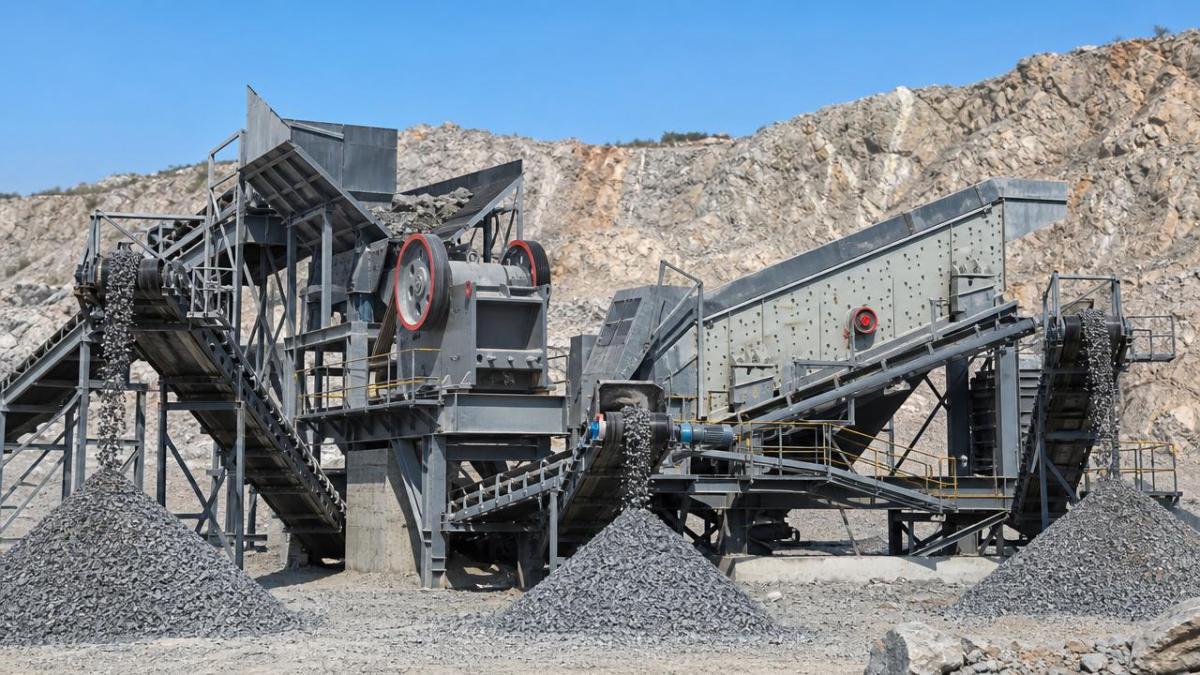
Mining Rock Processing Bottlenecks and How to Fix Them
auth.Rock Comminution ExpertTime
May 19, 2026Click Count
In mining rock processing, bottlenecks rarely come from a single machine. They usually develop across crushing, screening, transfer points, wear control, stockpile management, and plant automation. When output falls or cost per ton climbs, the real task is locating the restriction before replacing equipment blindly. This guide explains where mining rock processing losses typically occur and how practical engineering changes restore throughput, stability, and margin.
Why a Checklist Matters in Mining Rock Processing

Mining rock processing plants operate as linked systems, not isolated assets. A strong primary crusher cannot compensate for poor feed presentation, overloaded screens, or choke points in conveyors and surge bins.
A checklist-based review helps separate symptom from cause. It prevents expensive upgrades that target the wrong stage and supports faster decisions on debottlenecking, modernization, and maintenance planning.
For complex hard-rock operations, structured diagnosis is especially valuable because ore hardness, moisture, fragmentation, and liner wear interact continuously. Mining rock processing performance depends on how those variables are controlled together.
Core Checklist for Finding Processing Bottlenecks
- Measure actual feed gradation and moisture at each stage, because unstable ROM size distribution often overloads crushers, blinds screens, and causes inconsistent downstream tonnage.
- Check whether the primary crusher is consistently choke-fed, since uneven feeding lowers reduction efficiency, increases liner wear, and creates avoidable fluctuations in mining rock processing output.
- Inspect screen media selection, open area, and vibration settings, because poor stratification or pegging can reduce separation efficiency long before a drive motor reaches capacity.
- Trace conveyor transfer points for spillage, buildup, and restricted flow, as material hang-up at chutes often behaves like a hidden bottleneck in mining rock processing plants.
- Review crusher closed-side settings and recirculating load, because excessive recirculation wastes energy, accelerates wear, and masks the true limiting stage of the circuit.
- Compare liner life, wear pattern, and chamber utilization, since uneven wear indicates poor feed distribution or incorrect chamber design rather than simple consumable exhaustion.
- Audit surge capacity between stages, because inadequate buffering turns minor upstream variation into full-plant instability, particularly during blasting pattern changes or truck dispatch delays.
- Verify instrumentation accuracy for belt scales, power draw, and bin levels, since bad data leads to wrong operating decisions and ineffective mining rock processing upgrades.
- Examine control logic and operator intervention frequency, because plants with excessive manual correction usually suffer from poor automation tuning or unstable process design.
- Calculate cost per ton by stage, not only total plant cost, so the most expensive restriction in mining rock processing becomes visible for targeted correction.
How to Fix the Most Common Bottlenecks
Stabilize Feed Before Upgrading Machines
Many plants try to solve low throughput by installing larger crushers. In practice, unstable feed often causes the problem. Oversize boulders, sticky fines, and variable truck dumping patterns reduce effective capacity.
Use better blasting control, pre-scalping, feeder tuning, and improved hopper geometry first. In mining rock processing, a steadier feed can deliver more usable tonnage than a larger machine operating under poor conditions.
Reduce Screen Inefficiency Early
Screening losses are frequently underestimated. If apertures blind or media wears unevenly, undersize bypasses or oversize contamination will spread across the circuit and overload secondary crushing.
Correcting deck angle, stroke, speed, and media type often improves mining rock processing efficiency quickly. Modular polyurethane, wire cloth, or hybrid media should match rock abrasiveness and cut-size duty.
Redesign Chutes and Transfer Points
A plant may appear mechanically sound while losing hours to chute plugging and carryback. Poor transfer design slows flow, raises dust, and increases belt mistracking and structural wear.
Apply flow modeling, adjust impact angles, add wear liners, and ensure enough clearance for wet or flaky material. In mining rock processing, material handling geometry often decides real capacity.
Manage Wear as a Process Variable
Wear is not only a maintenance issue. As liners degrade, chamber shape changes, product size shifts, power draw varies, and recirculating load may rise without immediate detection.
Track liner condition with planned inspections, digital measurements, and wear-life forecasting. Predictable wear management keeps mining rock processing stable and avoids emergency shutdowns that destroy utilization.
Application Notes for Different Operating Scenarios
Hard and Abrasive Ore
Granite, quartz-rich ore, and dense metallic rock create high compressive loads and fast wear. In these circuits, chamber selection, liner metallurgy, and power stability are more important than nameplate capacity.
Mining rock processing for abrasive ore benefits from choke feeding, optimized CSS control, and strict wear monitoring. Otherwise, throughput falls gradually while energy and consumables rise sharply.
Wet or Clay-Contaminated Material
Moisture changes everything. Sticky ore blinds screens, bridges bins, and increases buildup in chutes. Plants designed for dry duty often underperform badly when seasonal moisture spikes appear.
For this mining rock processing condition, add prescreening, washing, anti-pegging media, steeper chute angles, and effective liner materials. Small handling modifications can prevent major production loss.
High-Volume Quarry or Infrastructure Aggregate Supply
Where specification compliance matters as much as tonnage, bottlenecks often sit in final screening, shaping, or stockpile segregation. The problem is not always total output, but saleable output.
In this version of mining rock processing, product quality controls, surge management, and accurate split ratios are essential. A plant can produce volume while still missing the most valuable gradations.
Commonly Missed Risks
Ignoring recirculating load is a frequent mistake. A circuit may look busy and still create poor net output because too much material is repeatedly reprocessed.
Treating downtime as only mechanical failure is another risk. In mining rock processing, control instability, delayed clearing, and poor changeover discipline can consume just as many production hours.
Underestimating stockpile behavior also creates hidden losses. Segregation, compaction, and reclaim inconsistency can feed the plant unevenly and restart the bottleneck cycle.
Relying on monthly averages hides transient restrictions. Short-duration overloads, plugging, and power spikes often reveal the real weakness in mining rock processing systems.
Practical Execution Steps
- Map the full process, from ROM tipping to final stockpile, and record actual constraints by shift rather than assumed design limitations.
- Collect one week of reliable data on feed size, moisture, power draw, screen efficiency, downtime causes, and wear condition.
- Rank bottlenecks by lost tons, added cost, and operational risk, then separate low-cost fixes from capital-intensive modifications.
- Pilot one change at a time, such as feeder tuning, screen media replacement, or chute redesign, before approving major equipment replacement.
- Review results against cost per ton, uptime, and saleable product yield to confirm the mining rock processing improvement is real.
Conclusion and Next Action
The most expensive bottlenecks in mining rock processing are often the least obvious. They emerge where feed instability, screening losses, transfer restrictions, wear progression, and weak controls interact.
A disciplined checklist turns plant troubleshooting into an engineering process. Start with measured constraints, fix flow and classification first, then justify heavier capital only where data proves the limit remains.
The next practical step is a stage-by-stage audit of crushing, screening, transfer, and wear behavior. In mining rock processing, accurate diagnosis is what unlocks durable throughput gains.
Recommended News
- 00
0000-00
High-Frequency Screening Technology: How to Improve Efficiency in Fine Material SeparationHigh-frequency screening technology efficiency explained: discover how to boost fine material separation, improve product quality, cut recirculation, and lower operating costs. - 00
0000-00
EU CE Rule Takes Effect for EMC Limits on High-Frequency ScreensEU CE rule update: high-frequency screens sold to the EU from Oct 1, 2026 must meet EN 61000-6-4:2026 EMC limits. See impacts on testing, certification, and delivery planning. - 00
0000-00
High-Frequency Vibrating Screens South Africa: What Affects ThroughputHigh-frequency vibrating screens South Africa: discover what really affects throughput, from ore, moisture, and aperture choice to feed stability and maintenance for better plant results.
000000-00
{item.title}{item.description}Search News
Industry Portal
Hot Articles
- What to check before choosing an aggregate production line manufacturerChoose an aggregate production line manufacturer with confidence. Explore key checks for capacity, product quality, layout, service, lifecycle cost, and reliable project delivery.
- When does open-pit mining fleet electrification cut haulage costs?Mining Fleet Electrification open pit: learn when electrified haulage lowers cost per tonne through reliable power, stable routes, high utilization and smarter charging.
- How TBM cutterheads should match abrasive rock conditionsTBM Cutterheads for abrasive rock: learn how geology, cutter layout, wear protection, muck flow, and maintenance strategy improve tunnelling reliability.
Popular Tags