Heavy Duty Construction: Where Delays Start
auth.Mr. Gideon CrossTime
May 19, 2026Click Count
In heavy duty construction, delays rarely begin when a milestone is missed. They usually start much earlier, inside planning assumptions, machine choices, site data gaps, and weak coordination.
Across mining, tunneling, lifting, crushing, and materials processing, heavy duty construction depends on synchronized systems. When one element underperforms, schedule pressure spreads across the entire chain.
That is why delay prevention is not only a scheduling task. It is an engineering, logistics, safety, and intelligence task with direct cost consequences.
What Heavy Duty Construction Really Includes

Heavy duty construction covers asset-intensive work where progress relies on oversized equipment, hard environments, and long supply chains. It often includes mega-infrastructure, quarrying, mining support, and complex urban builds.
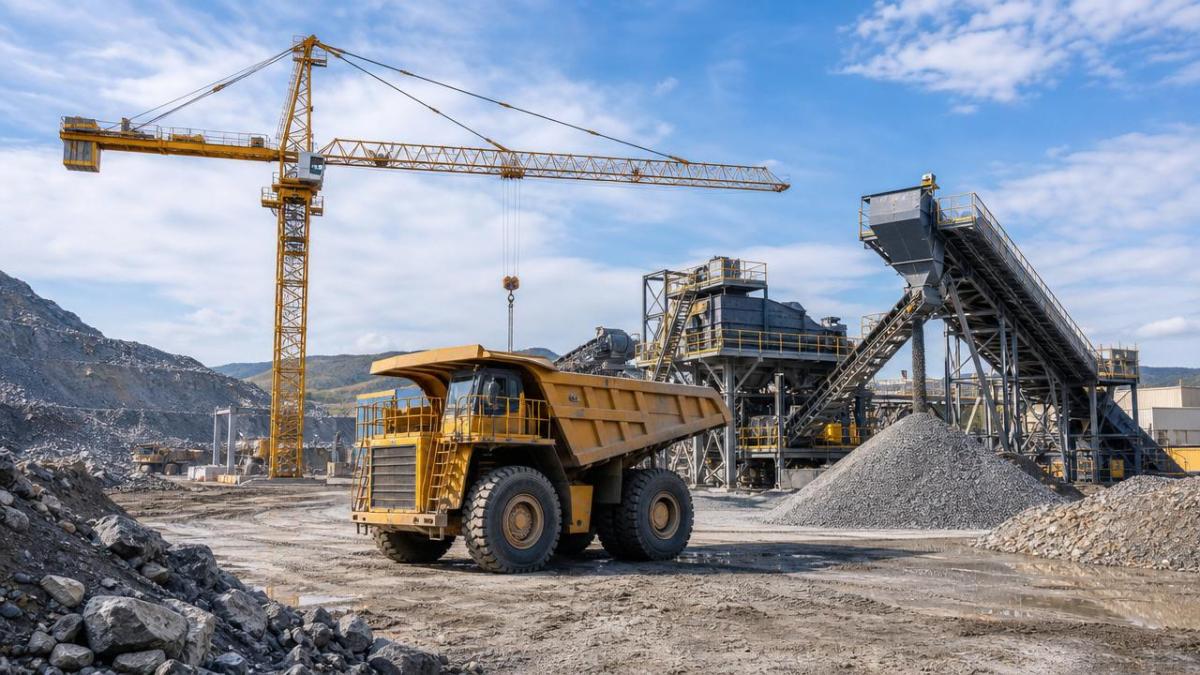
Typical systems include tower cranes, Tunnel Boring Machines, mining dump trucks, crushing and screening plants, and asphalt or concrete mixing plants. Each system carries unique delay risks.
For HIES, these systems are not isolated machines. They are linked production assets shaped by geomechanics, steel fatigue, hydraulics, compliance, and capital efficiency.
In practical terms, heavy duty construction means every hour of downtime can affect labor deployment, materials flow, subcontract sequencing, and equipment utilization across multiple zones.
Where Delays Start in Heavy Duty Construction
Many delays begin before mobilization. They grow from incomplete assumptions during bid preparation, design coordination, transport planning, and field readiness reviews.
In heavy duty construction, the most common hidden triggers include:
- Wrong equipment sizing for rock hardness, lift radius, gradient, or throughput demand
- Unverified ground conditions affecting foundations, haul roads, tunneling, and staging areas
- Late spare parts, cutters, tires, structural components, or electrical modules
- Regulatory or certification gaps delaying commissioning and cross-border deployment
- Fragmented data between engineering, operations, maintenance, and commercial teams
- Weak maintenance planning causing repeat stoppages instead of controlled interventions
These triggers rarely appear dramatic at first. Yet in heavy duty construction, minor misalignment compounds quickly because assets are large, expensive, and difficult to replace fast.
Delay signals often appear as small operational symptoms
A crane may spend extra time waiting for wind windows. A TBM may consume cutters faster than forecast. A mining truck fleet may lose cycles because haul roads deteriorate early.
On paper, these look like isolated events. In reality, they are early warnings that heavy duty construction productivity assumptions were too optimistic or poorly connected.
Current Industry Signals Shaping Delay Risk
Global heavy duty construction is being reshaped by larger equipment, electrification, stricter safety frameworks, and capital pressure for lower cost per ton or cubic meter.
At the same time, projects are moving into more difficult geology, denser cities, and remote mining regions. That increases planning complexity from the earliest stage.
These signals matter because heavy duty construction no longer succeeds through equipment power alone. It requires intelligence stitching between engineering facts and commercial timing.
Why Delay Prevention Creates Business Value
Avoiding delay in heavy duty construction protects more than completion dates. It preserves cash flow, contractual credibility, safety margins, and long-term equipment life.
A well-timed intervention can reduce idle labor, prevent rushed maintenance, and avoid emergency procurement at premium cost. It can also stabilize production forecasting for downstream operations.
In sectors tracked by HIES, this value is especially visible. Better cutter selection affects TBM advance rates. Better haul road planning improves tire life. Better batching consistency reduces rework in materials plants.
Heavy duty construction becomes more resilient when teams track cost per operating hour, cost per ton-kilometer, and downtime root causes alongside schedule metrics.
Typical Delay Patterns by Equipment System
Different equipment categories create different risk paths. Understanding those patterns improves planning quality and makes heavy duty construction decisions more realistic.
Practical Methods to Reduce Heavy Duty Construction Delays
Effective control starts with earlier visibility. Heavy duty construction performs better when assumptions are tested before they become contractual deadlines.
- Match equipment to geology, altitude, haul profile, and throughput, not only purchase price.
- Build logistics plans around actual lead times for critical components and field assembly constraints.
- Use shared data reviews across engineering, maintenance, safety, and commercial functions.
- Track early wear indicators before they convert into emergency shutdowns.
- Validate compliance documents, certifications, and operator readiness well before commissioning.
- Create contingency plans for weather, power interruptions, transport bottlenecks, and access limitations.
For heavy duty construction, prevention is usually cheaper than acceleration. Recovering lost time later often introduces safety risk, quality compromise, and higher lifecycle cost.
Why intelligence quality matters
HIES emphasizes disciplined intelligence because decisions on cutters, steel fatigue, haulage economics, and compliance are deeply connected. Better interpretation produces stronger schedule resilience.
When heavy duty construction teams understand both physics and finance, they can justify more durable designs, smarter maintenance timing, and lower-risk deployment strategies.
Next-Step Actions for More Predictable Delivery
A useful next step is to review one active or planned heavy duty construction operation through five lenses: equipment fit, ground truth, logistics, compliance, and operating data quality.
Then identify where assumptions remain unverified. These gaps often reveal the earliest source of future delay, even when the master schedule still looks healthy.
For organizations working with tower cranes, TBMs, mining trucks, crushers, or mixing plants, structured intelligence can turn hidden delay risk into measurable action plans.
Heavy duty construction moves best when engineering reality, safety discipline, and capital logic are aligned from the start. That alignment is where schedule protection truly begins.
Recommended News
- 00
0000-00
What to check before choosing an aggregate production line manufacturerChoose an aggregate production line manufacturer with confidence. Explore key checks for capacity, product quality, layout, service, lifecycle cost, and reliable project delivery. - 00
0000-00
What drives the price of a luffing jib crane for an EPC project?Luffing jib crane price depends on lift capacity, radius, hook height, wind, foundations, logistics, and safety systems. Learn how EPC teams compare quotes and control total project cost. - 00
0000-00
What to verify before choosing a mineral processing equipment manufacturerMineral processing equipment manufacturer selection guide: verify process guarantees, duty-cycle reliability, engineering interfaces, service support, and lifecycle cost.
000000-00
{item.title}{item.description}Search News
Industry Portal
Hot Articles
- What to check before choosing an aggregate production line manufacturerChoose an aggregate production line manufacturer with confidence. Explore key checks for capacity, product quality, layout, service, lifecycle cost, and reliable project delivery.
- When does open-pit mining fleet electrification cut haulage costs?Mining Fleet Electrification open pit: learn when electrified haulage lowers cost per tonne through reliable power, stable routes, high utilization and smarter charging.
- How TBM cutterheads should match abrasive rock conditionsTBM Cutterheads for abrasive rock: learn how geology, cutter layout, wear protection, muck flow, and maintenance strategy improve tunnelling reliability.
Popular Tags