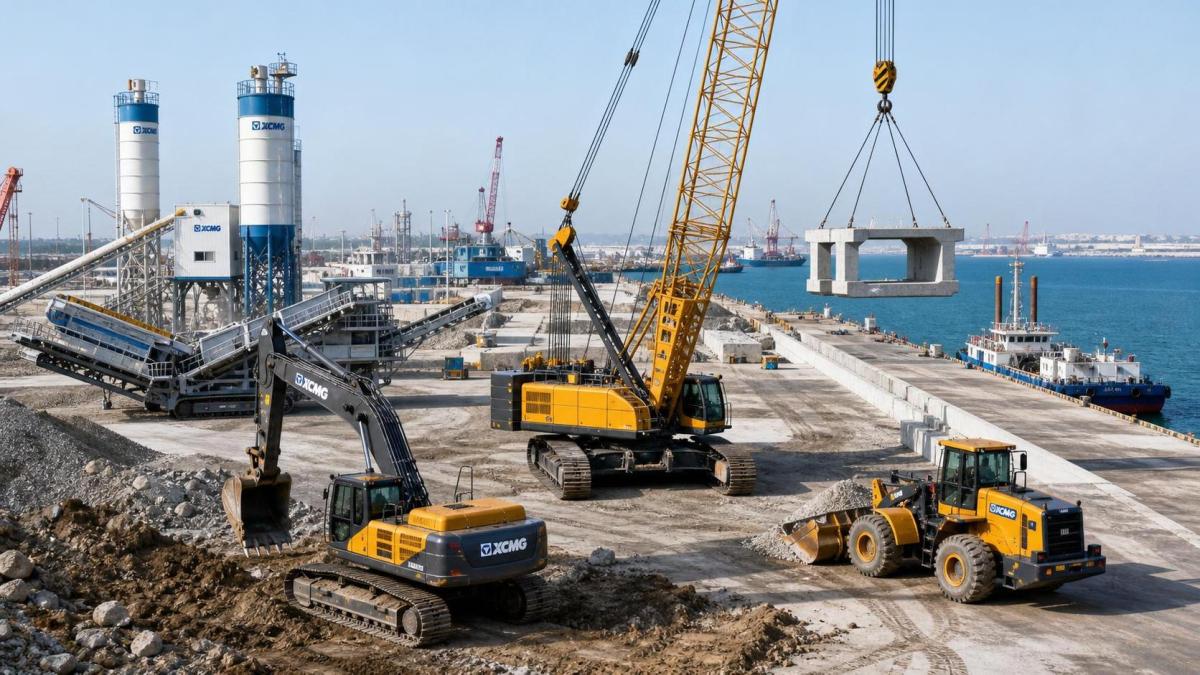
Large Scale Construction Machinery for Ports: What to Compare First
auth.Mr. Gideon CrossTime
Jun 18, 2026Click Count
Choosing large scale construction machinery for ports starts with a broader question than lifting strength alone. Port projects depend on synchronized earthmoving, lifting, material handling, pavement, and utility work, often under tight windows, corrosive conditions, and strict safety controls.
That is why the first comparison should focus on operating reality. Duty cycle, quay layout, ground bearing capacity, cargo profile, fleet compatibility, and lifecycle cost usually reveal more than a headline specification sheet.
In practice, the right selection affects uptime, civil sequencing, contractor coordination, and long-term expansion planning. For port infrastructure, an early equipment comparison can prevent bottlenecks that are expensive to correct after mobilization.
Why port equipment decisions carry extra weight

Ports are multi-system construction environments. One package may include dredged fill handling, heavy concrete placement, breakwater work, pavement construction, rail interfaces, and structural erection in the same development phase.
As a result, large scale construction machinery for ports must support both peak output and coordinated handoffs. A crane that lifts well but slows yard circulation can still damage schedule performance.
This is also where a cross-sector view becomes useful. HIES tracks heavy machinery across cranes, batching plants, crushing systems, mining trucks, and infrastructure technologies, which reflects how port projects actually work on site.
A port expansion rarely depends on one machine category. It depends on whether lifting, aggregate supply, concrete production, haulage, and ground preparation can perform as one connected production chain.
What large scale construction machinery for ports usually includes
The term covers more than ship-to-shore handling assets. During construction, it often includes crawler cranes, mobile harbor cranes, foundation rigs, heavy excavators, wheel loaders, articulated dump trucks, crushing and screening units, asphalt plants, and concrete batching systems.
In marine civil work, supporting equipment can be just as important as the headline machine. Temporary roads, aggregate stockpiles, precast yards, and pavement zones all require reliable production equipment behind the main lifting operation.
That broader definition matters when comparing options. The best-performing machine on paper may create mismatch if fuel systems, attachment interfaces, control software, or service support do not align with the rest of the site fleet.
Typical comparison scope
- Heavy lifting equipment for quay walls, steel structures, and precast segments
- Earthmoving and haulage machinery for reclamation, grading, and embankments
- Crushing, screening, and batching systems supporting onsite material production
- Specialized machines for marine foundation, utility trenching, and rail integration
Compare duty cycle before rated capacity
A common mistake is starting with maximum capacity. For large scale construction machinery for ports, operating intensity usually matters more. Equipment may run in salt-laden air, stop-start logistics patterns, and extended shift structures.
Duty cycle affects heat management, hydraulic endurance, structural fatigue, tire wear, and service intervals. Machines designed for intermittent use can struggle in continuous material movement or repetitive heavy-lift applications.
A stronger comparison looks at average daily throughput, peak-hour loading, idle-to-work ratio, and maintenance access under actual site sequencing. Those details usually indicate whether the equipment will protect or erode schedule certainty.
Questions worth asking early
- How many hours per day will the machine operate at high load?
- Will it cycle continuously or wait between tasks?
- How quickly can critical wear parts be inspected and replaced?
- Does the design support marine corrosion protection as standard?
Site conditions often decide the better machine
Port construction environments punish generic assumptions. Ground improvement zones may limit axle loads. Reclaimed areas can behave differently from paved terminals. Wind exposure may reduce usable lifting windows even when nominal crane capacity looks adequate.
Salt, humidity, and abrasive material handling add another layer. Electrical systems, boom sections, hydraulic seals, undercarriage components, and structural coatings need to be compared for marine suitability, not only base-model performance.
This is where technical comparison becomes practical rather than theoretical. HIES often frames machinery choices through uptime, fatigue, automation, and compliance, which is especially relevant for ports where lost hours quickly affect multiple contractors.
Compatibility matters more than isolated performance
A port project can lose efficiency when excellent machines arrive as disconnected systems. The comparison should include attachment commonality, refueling method, telematics format, spare part logic, and operator interface consistency.
For example, if crushing and screening equipment feeds quay pavement works, output gradation must align with batching or asphalt requirements. If haul trucks feed a marine fill zone, loading tools and dump geometry should match cycle expectations.
This systems view is increasingly important as electrification, automation, and remote diagnostics expand. A machine that cannot integrate with the site’s maintenance and reporting framework may become harder to manage than a slightly less powerful alternative.
Useful compatibility checks
- Shared telematics or exportable data formats
- Common consumables and simplified spare inventory
- Operator training overlap between machine types
- Support for phased expansion without replacing the base fleet
Safety compliance and maintainability should be early filters
When comparing large scale construction machinery for ports, safety systems should not be treated as a final checklist item. Visibility aids, overload protection, emergency access, lockout procedures, and safe maintenance platforms influence daily risk exposure.
Maintainability has a similar effect. A machine with difficult service access can extend downtime, especially where tidal timing, berth coordination, or concrete pouring windows leave little recovery time.
It helps to compare not only certifications, but also how the design behaves during inspection and repair. Component placement, hose routing, corrosion-prone zones, and digital fault diagnostics all affect field performance.
Lifecycle cost gives a more realistic answer than purchase price
The most reliable way to compare large scale construction machinery for ports is to estimate cost across the full job horizon. Purchase price is only the visible starting point.
Fuel or energy consumption, wear parts, corrosion treatment, tire cost, service intervals, labor productivity, and unplanned stoppages usually determine the real economic difference between options.
For long programs or multi-phase terminal development, residual value and redeployment flexibility also matter. Equipment that fits future berth expansion or inland logistics work may outperform cheaper, single-purpose assets.
A practical evaluation lens
Compare equipment by cost per productive hour, cost per ton moved, cost per cubic meter placed, or cost per completed package milestone. Those measures connect machinery selection with project outcomes more clearly than brochure pricing.
How to move from comparison to a defensible shortlist
A useful shortlist usually starts with three layers. First, define the real operating scenario. Second, remove options that fail on site constraints or compliance. Third, compare remaining machines as part of the full construction system.
This is where intelligence platforms such as HIES can add value without turning the process into advertising. Cross-category technical insight helps link crane performance, haulage economics, batching accuracy, crushing efficiency, and uptime strategy into one decision frame.
For the next step, build a comparison matrix that reflects port-specific duty cycle, marine exposure, compatibility, maintenance access, and lifecycle cost. That approach makes large scale construction machinery for ports easier to judge on operational fit, not just impressive specifications.
Recommended News
- 00
0000-00
Mining Project Economics Open Pit: Key Cost Drivers to Watch in 2026Mining Project Economics open pit in 2026: discover the key cost drivers shaping NPV, cash flow, and payback—plus practical insights to assess project risk and improve returns. - 00
0000-00
Infrastructure Development Solutions for Mining: What Impacts Project ROI Most?Infrastructure development solutions for mining impact ROI far beyond capex. Discover how roads, power, water, and materials flow shape uptime, cost per ton, and faster project returns. - 00
0000-00
Export Promotion for Manufacturers: What Drives Qualified Overseas LeadsExport promotion for manufacturers now depends on qualified overseas leads. Learn how technical proof, compliance readiness, and use-case credibility drive better global inquiries.
000000-00
{item.title}{item.description}Search News
Industry Portal
Hot Articles
- Hydraulic Underground Excavation Machinery: Performance Limits in Hard Rock ConditionsHydraulic underground excavation machinery in hard rock faces limits beyond power alone. Explore wear, pressure stability, vibration, heat, and lifecycle cost insights.
- Tunnel Construction Equipment for Metro: How to Reduce Downtime UndergroundTunnel construction equipment for metro projects must do more than cut fast. Learn how to reduce underground downtime through better system fit, maintenance access, and reliable backup support.
- Mining Project Economics Open Pit: Key Cost Drivers to Watch in 2026Mining Project Economics open pit in 2026: discover the key cost drivers shaping NPV, cash flow, and payback—plus practical insights to assess project risk and improve returns.
Popular Tags