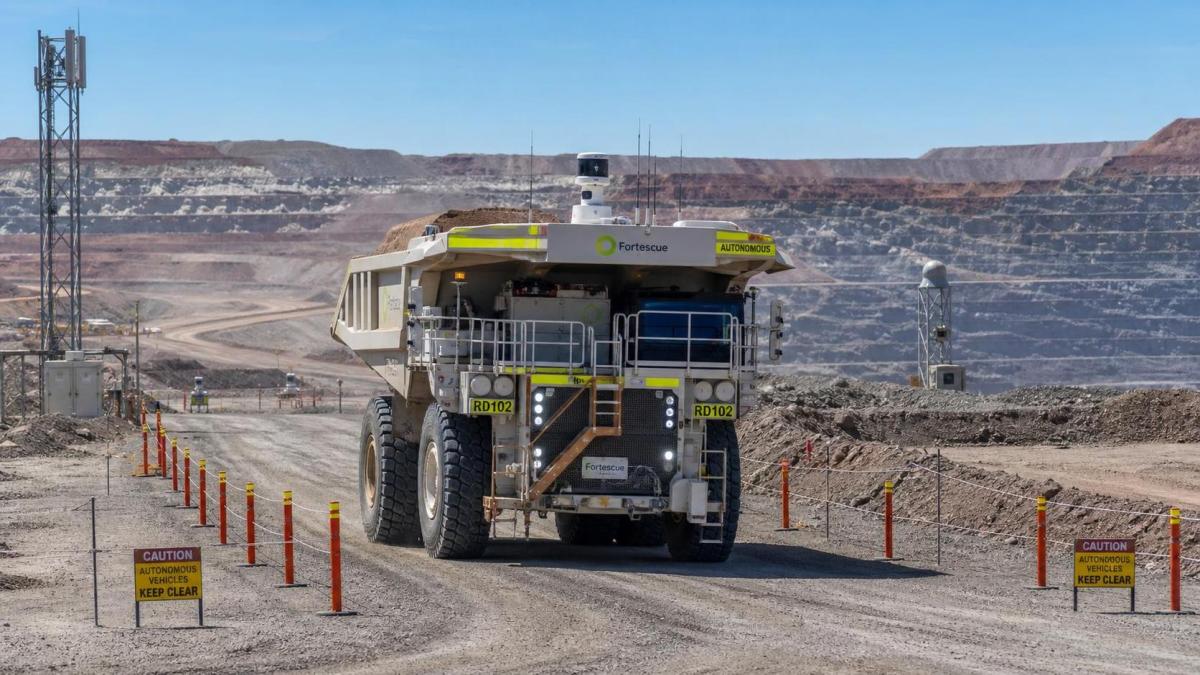
Australia Issues New AHS Safety Standard
auth.Heavy Haulage StrategistTime
Jul 23, 2026Click Count
On July 22, 2026, Standards Australia released AS 63222.1:2026, an updated functional safety standard for mining Autonomous Haulage Systems (AHS). The update matters because it will apply mandatorily to both imported and locally deployed AHS equipment, with type certification required from October 1, 2026. For AHS exporters, mining equipment suppliers, certification teams, and procurement and delivery functions serving the Australian market, this is not just a technical revision; it is a near-term compliance development that may affect product readiness, documentation, and delivery timing.

What the Standard Update Confirms
The confirmed facts are limited but commercially significant. Standards Australia formally issued AS 63222.1:2026 on July 22, 2026. The standard is titled for functional safety requirements covering mining Autonomous Haulage Systems. According to the provided information, the updated rules are mandatory for all imported and locally deployed AHS equipment in Australia, and type certification will be required starting October 1, 2026.
The update also strengthens several specific compliance points: redundant communications, dynamic obstacle response delay at no more than 80 milliseconds, and fail-safe protection for geofencing. These confirmed changes directly affect compliance and certification timelines for Chinese AHS equipment exporters delivering into the Australian market.
Where the Impact Is Likely to Be Felt First
Export-facing equipment suppliers may face tighter delivery planning
From an industry perspective, suppliers shipping AHS equipment into Australia are among the first groups likely to feel the impact. The reason is straightforward: the requirement applies to imported equipment, and type certification becomes part of market entry and delivery preparation from October 1, 2026. The main pressure points are likely to sit in product compliance review, certification scheduling, and customer delivery coordination.
Local deployment teams will need closer alignment with certification status
Businesses involved in local deployment may also need to pay closer attention, because the requirement is described as mandatory not only for imports but also for locally deployed AHS equipment. In practical terms, deployment planning, acceptance timing, and system readiness checks may become more closely tied to whether the relevant equipment has cleared the required certification process.
Procurement and project owners may need to reassess timing assumptions
Procurement functions and project-side buyers are also relevant stakeholders. Analysis shows that when a standard introduces mandatory type certification and sharper technical safety requirements, procurement decisions may need to account for whether suppliers can demonstrate readiness on the updated requirements. What deserves closer attention is not only the equipment specification itself, but also whether certification timing could affect project sequencing or handover expectations.
Certification, documentation, and compliance support functions become more central
Service providers and internal teams handling compliance documentation, technical submissions, and certification coordination may see a more immediate workload effect. The update highlights specific technical areas such as redundant communications, obstacle response delay, and geofencing fail-safe protection, which means supporting materials and evidence preparation may become a more critical part of the delivery path.
What Companies Should Be Watching Now
Track how the standard is applied in certification practice
Analysis shows that the published requirements and their implementation in certification are related but not identical issues. Companies serving Australia should monitor how the updated standard is interpreted in actual type certification workflows from October 1, 2026, especially around evidence requirements tied to communications redundancy, response timing, and geofencing fail-safe behavior.
Review product configurations intended for Australia
For exporters and product teams, the immediate operational question is whether Australia-bound AHS configurations align with the updated safety requirements. This is particularly relevant where product variants, software behavior, or system-level integration may affect the ability to demonstrate compliance against the updated clauses named in the provided information.
Recheck delivery schedules and customer communication
What deserves closer attention is the gap between commercial delivery plans and certification timing. If type certification becomes a gating item from October 1, 2026, companies may need to revisit order planning, lead-time assumptions, and customer communication for Australia-related shipments or deployments. This is less about broad strategy and more about execution discipline in contracts, milestones, and expectation management.
Strengthen document readiness before market-facing commitments
Companies involved in export or deployment should also look at document readiness, supplier coordination, and proof-of-compliance preparation. Observably, when a standard update directly affects certification cycles, gaps in technical files or supporting records can become a commercial issue as much as a regulatory one.
Why This Looks Like More Than a Routine Revision
This section is analysis rather than confirmed fact. It is more appropriate to understand this update as a concrete near-term compliance change with longer-term signaling value. The near-term element is clear: a published standard, mandatory applicability, and a defined date for type certification. The longer-term signal is that functional safety expectations for mining AHS equipment in Australia are being expressed with greater specificity around communications resilience, obstacle response timing, and geofencing fail-safe behavior.
At the same time, this should not yet be overstated as a final market outcome beyond what the input confirms. Observably, the immediate consequence is stronger compliance pressure on equipment entering or being deployed in Australia. Broader competitive effects, certification bottlenecks, or purchasing shifts still require continued verification.
How the Market May Best Read This Development
At this stage, the most balanced reading is that AS 63222.1:2026 is both an operational deadline and a policy signal. It creates a defined compliance requirement for AHS equipment tied to the Australian market, while also indicating that specific functional safety controls are now receiving closer formal attention. For exporters, deployment teams, and buyers, the practical significance lies in certification readiness and delivery planning rather than in abstract regulatory discussion.
It is more appropriate to understand this as a confirmed short-term compliance change that may carry broader long-term implications, but those wider implications still need to be watched rather than assumed.
Basis of This Article and Ongoing Verification
This article is based on the user-provided news title, event date, and event summary concerning Australia’s update to the mining Autonomous Haulage Systems safety standard AS 63222.1:2026. For developments of this kind, commonly relevant source types would include official announcements, standard-setting organization documents, industry association updates, company disclosures, and reporting from established trade media.
No specific official source link was provided in the input, so the precise source document link remains to be verified on an ongoing basis. Follow-up attention should focus on any further official clarification about certification implementation, interpretation of the updated technical clauses, and any related compliance guidance affecting market delivery into Australia.
Recommended News
- 00
0000-00
China Tightens AHS Export ComplianceChina tightens AHS export compliance with new type testing and customs filing rules. Learn how autonomous haulage system exporters can avoid delays, protect delivery schedules, and stay compliant. - 00
0000-00
EU Requires EN 50126-3 for AHS Mining Trucks from Oct 2026EN 50126-3 becomes essential for AHS mining trucks entering the EU from Oct 2026. Learn compliance impacts, CE documentation risks, and how suppliers can prepare faster. - 00
0000-00
Australia Sets AHS Safety Certification RuleAustralia Sets AHS Safety Certification Rule: Learn how AS 61508:2026 Ed.3 and SIL2 requirements will impact AHS exports, approvals, delivery timelines, and market access in Australia.
000000-00
{item.title}{item.description}Search News
Industry Portal
Hot Articles
- What to check before choosing an aggregate production line manufacturerChoose an aggregate production line manufacturer with confidence. Explore key checks for capacity, product quality, layout, service, lifecycle cost, and reliable project delivery.
- When does open-pit mining fleet electrification cut haulage costs?Mining Fleet Electrification open pit: learn when electrified haulage lowers cost per tonne through reliable power, stable routes, high utilization and smarter charging.
- How TBM cutterheads should match abrasive rock conditionsTBM Cutterheads for abrasive rock: learn how geology, cutter layout, wear protection, muck flow, and maintenance strategy improve tunnelling reliability.
Popular Tags