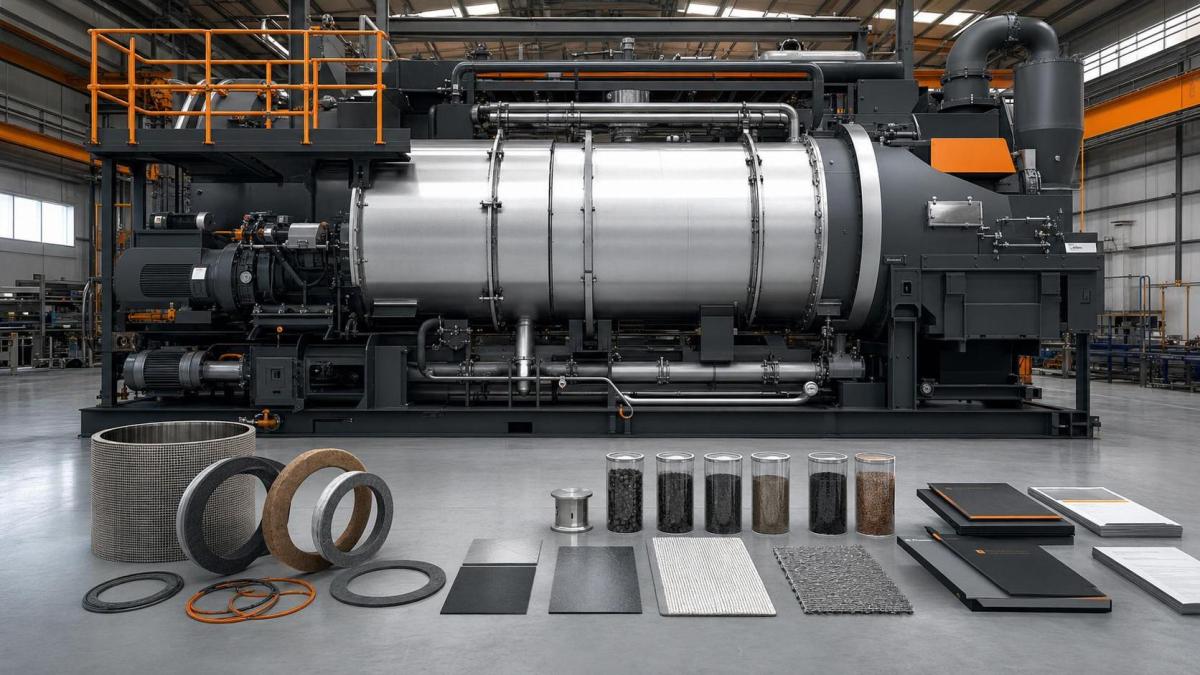
EU REACH Extends BaP Limit to Asphalt Recycling Seals
auth.Paving Materials FellowTime
Jul 05, 2026Click Count
On July 4, 2026, the European Commission issued Regulation (EU) 2026/1189, extending the benzo[a]pyrene (BaP) restriction under REACH Annex XVII to high-temperature sealing compounds, gaskets, and heat-resistant lining materials used in asphalt hot recycling equipment. With enforcement set for October 1, 2026, this update deserves close attention from sealing material exporters, equipment manufacturers, procurement teams, and compliance functions because it affects both product composition control and document management linked to supply chain compliance and SVHC declarations.

What the New Restriction Formally Covers
The confirmed change is that the BaP limit has been extended to materials used in asphalt hot recycling equipment, specifically high-temperature sealing compounds, gaskets, and heat-resistant lining materials. The limit is set at no more than 0.1 mg/kg. The regulation was formally published by the European Commission on July 4, 2026, under Regulation (EU) 2026/1189, and the new requirement will become mandatory on October 1, 2026.
The information provided also indicates that the rule is relevant to supply chain compliance reviews and updates to SVHC substance declarations for Chinese exporters of sealing materials and complete equipment manufacturers.
Where the Immediate Pressure May Appear
Material suppliers facing composition verification
From an industry perspective, suppliers of high-temperature sealing materials may be affected first because the restriction directly targets the material categories used in asphalt hot recycling equipment. The main business impact is likely to appear in formulation review, material specification confirmation, and supporting compliance records tied to exports to the EU market.
Equipment manufacturers reviewing installed parts
Complete equipment manufacturers may also be affected because the rule does not stop at standalone material trade; it also matters when regulated sealing components are incorporated into finished equipment. What deserves closer attention is whether existing component selections, technical files, and supplier declarations remain aligned with the new BaP limit before shipment or market placement.
Procurement and supply chain teams checking documentation flow
For procurement and supply chain roles, the likely impact is operational rather than theoretical. The change may require additional supplier screening, document collection, and consistency checks between material declarations and delivered parts. The reference to SVHC declaration updates means document handling may become a practical pressure point alongside the material restriction itself.
Export-facing business functions managing customer expectations
Direct trade companies and export sales teams may need to pay closer attention to customer inquiries, contract specifications, and delivery communication. Analysis shows that even when the technical scope is narrow, regulatory updates with a fixed enforcement date can quickly shift buyer expectations on evidence, declarations, and pre-shipment confirmation.
What Companies Should Track Now
Check whether the affected product scope touches current shipments
Companies involved in sealing compounds, gaskets, heat-resistant linings, or assembled asphalt hot recycling equipment should first identify whether any current or planned EU-facing products fall within the stated scope of the rule. This is the starting point for deciding whether technical, procurement, or documentation action is required before October 1, 2026.
Review supplier declarations and supporting files
The provided information explicitly points to supply chain compliance review and SVHC declaration updates. In practice, that makes supplier declarations, substance-related statements, and supporting compliance files a near-term focus area. The key issue is not only whether a document exists, but whether it matches the affected product category and the updated regulatory expectation.
Separate legal text from internal execution readiness
Observably, the publication date and the enforcement date create a short but important transition window. Companies should distinguish between the legal fact that the rule has been issued and the operational question of whether internal product data, supplier communication, and customer-facing compliance responses are ready for the mandatory date.
Prepare for customer and partner communication
For exporters and equipment makers, customer communication may need to be updated in parallel with technical review. That includes explaining product scope, confirming compliance status where available, and identifying any declarations that require revision. This is particularly relevant where multiple suppliers contribute sealing-related parts into one equipment delivery.
Why This Looks Like More Than a Routine Update
Analysis shows that this development is not simply a narrow wording change for one material category. It is more appropriate to understand it as a targeted compliance signal: the EU is applying a strict BaP threshold to specific high-temperature sealing and lining materials used in asphalt hot recycling equipment, while also creating immediate documentation consequences for affected exporters and manufacturers.
At the same time, this should not be overstated as a broad market conclusion beyond the facts provided. The confirmed result today is a defined restriction with a defined enforcement date. The broader commercial effect will depend on how companies map their product scope, supplier chain, and declaration workflow to the new requirement.
How This Update Is Best Understood at This Stage
At this stage, the development is best read as an enforceable near-term compliance change with longer-term signaling value. The short-term issue is clear: affected materials and equipment supply chains linked to the EU market need review ahead of October 1, 2026. The longer-term signal, based on the information provided, is that restricted substance control and declaration quality remain closely connected in market access for specialized industrial materials and assembled equipment.
A neutral reading is therefore the most useful one. This is neither a purely administrative adjustment nor a basis for broad market conclusions on its own. It is a concrete regulatory change that requires careful scope checking, document review, and continued attention to implementation details.
Basis of This Article
This article is based on the user-provided news title, event date, and event summary regarding Regulation (EU) 2026/1189, published on July 4, 2026, and its extension of the BaP limit to high-temperature sealing compounds, gaskets, and heat-resistant lining materials used in asphalt hot recycling equipment.
For this type of development, source categories commonly relevant include official regulatory notices, company compliance notices, industry association updates, authoritative media coverage, and standard-setting or regulatory documentation. No specific official source link was provided in the input, so the exact official link still requires ongoing verification. What remains worth tracking is any follow-up clarification on implementation scope, compliance documentation expectations, and related declaration updates in affected supply chains.
Recommended News
- 00
0000-00
EU Tightens RAP Lead Limit to 5 ppm Under REACHEU Tightens RAP Lead Limit to 5 ppm Under REACH: learn how the 2026 rule change impacts asphalt hot recycling equipment, EU compliance, testing documents, and supply chain readiness. - 00
0000-00
EU Tightens RAP Lead Limit to 5 ppm Under REACHEU Tightens RAP Lead Limit to 5 ppm Under REACH: learn how the new EU rule affects RAP sourcing, compliance declarations, and export readiness for hot asphalt recycling equipment suppliers. - 00
0000-00
China Tightens Export Checks on Asphalt Recycling EquipmentChina tightens export checks on asphalt recycling equipment: learn how the new REACH Annex XVII compliance rule may delay customs clearance and what exporters must do now.
000000-00
{item.title}{item.description}Search News
Industry Portal
Hot Articles
- What to check before choosing an aggregate production line manufacturerChoose an aggregate production line manufacturer with confidence. Explore key checks for capacity, product quality, layout, service, lifecycle cost, and reliable project delivery.
- When does open-pit mining fleet electrification cut haulage costs?Mining Fleet Electrification open pit: learn when electrified haulage lowers cost per tonne through reliable power, stable routes, high utilization and smarter charging.
- How TBM cutterheads should match abrasive rock conditionsTBM Cutterheads for abrasive rock: learn how geology, cutter layout, wear protection, muck flow, and maintenance strategy improve tunnelling reliability.
Popular Tags