Suez Disruption Extends Crusher Castings Lead Time
auth.cTime
Jun 29, 2026Click Count
On June 29, 2026, a new escalation in the Red Sea situation pushed the Suez Canal into a temporary 48-hour closure and tighter vessel inspections, extending the average customs clearance and ocean transit cycle for key heavy-equipment components shipped from Tianjin to Hamburg from 9 weeks to 14 weeks. For the crushing equipment supply chain, this matters because the affected cargo includes high-precision castings used in hydraulic cone crushers, and the longer cycle has already prompted multiple European equipment integrators to revise their Q3 stocking plans.

What Has Been Confirmed So Far
Drewry reported on June 29, 2026 that the latest Houthi attack led to a temporary 48-hour closure of the Suez Canal. At the same time, stronger vessel security inspections by Egyptian authorities further constrained transit conditions.
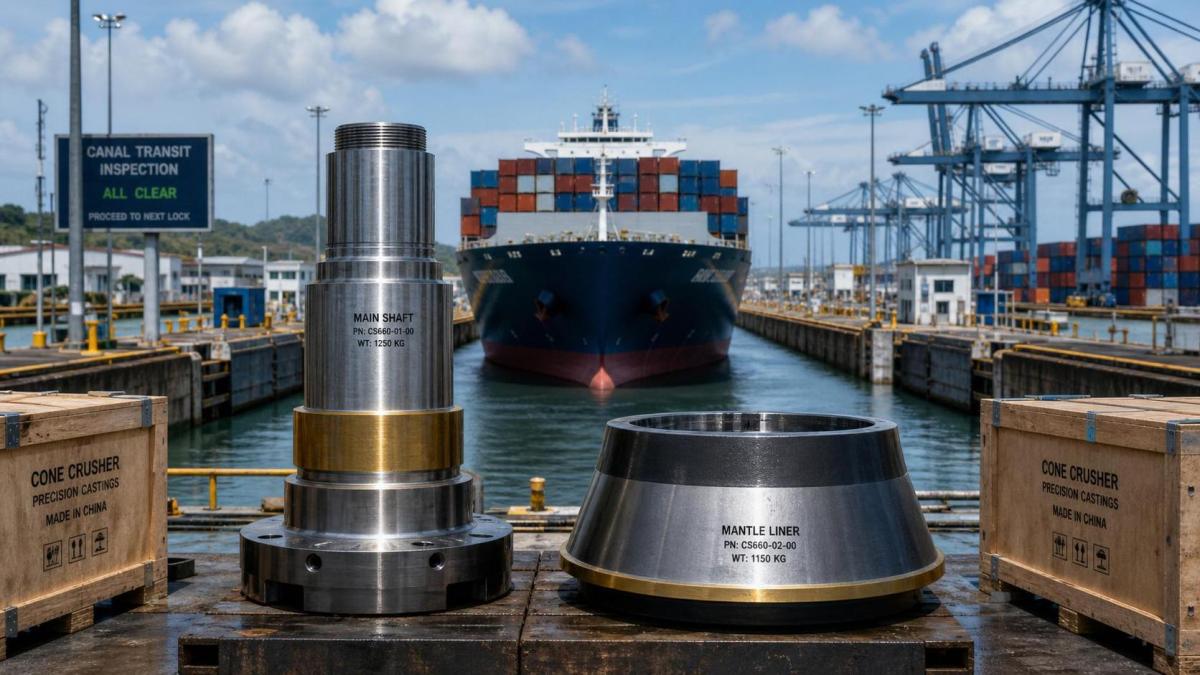
Against that backdrop, the average combined customs clearance and sea freight cycle for core heavy engineering machinery parts moving from Tianjin Port in China to Hamburg Port in Germany increased from 9 weeks to 14 weeks. The components specifically referenced include high-precision castings for hydraulic cone crushers, such as main shafts and moving cone liners.
The reported change has already led several European crushing equipment integrators to make urgent adjustments to their Q3 inventory preparation.
Where the Pressure May Appear Across the Chain
For equipment integrators, the immediate issue is schedule visibility
From an industry perspective, integrators are likely to feel the impact first because their assembly planning depends on the arrival of a small number of critical parts with long replacement cycles. When main shafts, liners, or similar castings move from a 9-week to a 14-week lead time, the main pressure point is not only procurement timing but also production sequencing, spare-parts readiness, and Q3 stock allocation.
What deserves closer attention is whether revised stocking plans remain limited to inventory timing or begin to affect delivery commitments for downstream customers.
For import and procurement teams, the risk shifts to order timing and document control
Analysis shows that buyers handling cross-border procurement may face a narrower margin for timing errors. With customs clearance and ocean transit both under pressure, the business impact is likely to show up in purchase order release dates, shipment planning, and coordination around compliance documents tied to heavy industrial components.
The practical focus here is whether current lead-time assumptions, supplier confirmations, and internal planning windows still reflect the new route conditions reported for Tianjin-to-Hamburg shipments.
For supply chain service providers, reliability may matter more than nominal transit time
Observably, freight forwarders, customs brokers, and related service providers may be judged less on quoted schedules and more on how clearly they can explain inspection-related delays, routing constraints, and shipment status changes. In this type of disruption, visibility becomes a commercial issue as much as a logistics issue.
The key variable to watch is whether the current delay remains concentrated in specific cargo flows linked to the Suez route or begins to alter broader planning assumptions for heavy machinery components entering Europe.
For downstream users, spare-parts availability becomes a planning concern
End users and service-facing businesses may not be the first point of disruption, but they can be affected if integrators tighten stock allocation or prioritize selected orders. For operations that depend on crusher components and replacement parts, the main concern is whether a logistics delay in upstream castings starts to influence equipment readiness, maintenance scheduling, or service lead times.
What Companies Should Watch Now
Track whether transit restrictions remain temporary or become operationally sticky
Analysis shows that the reported trigger was a temporary 48-hour canal closure combined with tighter inspections, but the business effect has already stretched to a 14-week average cycle. Companies should therefore distinguish between the formal duration of a disruption event and the longer operational backlog that can follow it.
Recheck critical-component lists rather than treating all parts the same
What deserves closer attention is the concentration of risk in specific high-precision castings, including hydraulic cone crusher main shafts and moving cone liners. Procurement and planning teams should review which parts are truly schedule-critical, because a broad category such as heavy machinery components can contain a much smaller set of items that actually determines final delivery timing.
Align supplier commitments with customer communication
Where Q3 stocking plans are being revised, the operational issue is not only inbound timing but also external communication. Companies should verify whether supplier-confirmed lead times, freight updates, and customer-facing delivery expectations still match, especially for orders tied to European assembly or distribution windows.
Separate reported route conditions from broader assumptions
Observably, the reported facts concern shipments from Tianjin to Hamburg and a specific set of heavy engineering machinery core components. Businesses should avoid overgeneralizing beyond the confirmed route and cargo profile, while still preparing contingency plans where similar dependencies exist.
Why This Matters Beyond a Single Delay
Analysis shows that this development is not merely about a longer shipping schedule. It highlights how a short-lived security event at a major maritime chokepoint can quickly translate into materially longer lead times for specialized industrial parts. In sectors such as crushing equipment, where certain castings are both technically specific and operationally critical, the disruption signal is stronger than the duration of the closure alone might suggest.
It is more appropriate to understand this as a live supply-chain stress signal rather than a settled long-term shift. The immediate effect is already visible in Q3 stocking decisions, but the longer-term meaning still depends on whether route conditions, inspections, and shipment flows stabilize or continue to deteriorate.
How the Market Should Read This Update
At this stage, the industry significance lies in timing risk, not in any confirmed structural shortage or permanent trade reset. The confirmed facts point to a meaningful extension in lead time for key hydraulic cone crusher castings moving into Europe, and that alone is enough to affect planning discipline across procurement, logistics, and inventory management.
For now, this is best understood as a short-term disruption with broader warning value. It calls for closer monitoring and tighter execution, but it does not yet justify deterministic conclusions beyond the route, parts, and planning impacts already reported.
Basis of This Article and What Still Needs Verification
This article is based on the user-provided news title, event date, and event summary. The confirmed factual basis includes the June 29, 2026 Drewry report, the temporary 48-hour Suez Canal closure, the tighter Egyptian vessel inspections, the extension of the Tianjin-to-Hamburg cycle from 9 weeks to 14 weeks, the affected hydraulic cone crusher castings, and the reported Q3 stocking adjustments by multiple European equipment integrators.
No specific official source link was provided in the input, so the precise official reference still needs ongoing verification. For follow-up coverage, the most relevant source types would typically include official announcements, company statements, industry association updates, authoritative media reporting, and other formal logistics or trade disclosures related to route conditions and shipment handling.
Recommended News
- 00
0000-00
China Tightens CE and MSHA Dual Certification Rules for Mining CrushersChina tightens CE and MSHA rules for mining crushers, raising export compliance costs and risks. Learn what buyers and suppliers must prepare before 2026. - 00
0000-00
China Tightens Export Compliance for Mining Hydraulic CrushersChina tightens export compliance for mining hydraulic crushers, raising new certification hurdles for EU, US, and Australia shipments. Learn what exporters must do before the October 2026 deadline. - 00
0000-00
Zero tariff for Brazilian construction machinery is implemented, and the purchasing window opensBrazil engineering machinery zero-tariff policy takes effect, opening a new procurement window. Learn how it impacts pricing, customs clearance, bidding, delivery, and project sourcing opportunities.
000000-00
{item.title}{item.description}Search News
Industry Portal
Hot Articles
- What to check before choosing an aggregate production line manufacturerChoose an aggregate production line manufacturer with confidence. Explore key checks for capacity, product quality, layout, service, lifecycle cost, and reliable project delivery.
- When does open-pit mining fleet electrification cut haulage costs?Mining Fleet Electrification open pit: learn when electrified haulage lowers cost per tonne through reliable power, stable routes, high utilization and smarter charging.
- How TBM cutterheads should match abrasive rock conditionsTBM Cutterheads for abrasive rock: learn how geology, cutter layout, wear protection, muck flow, and maintenance strategy improve tunnelling reliability.
Popular Tags