Zero tariff for Brazilian construction machinery is implemented, and the purchasing window opens
auth.cTime
Aug 13, 2026Click Count
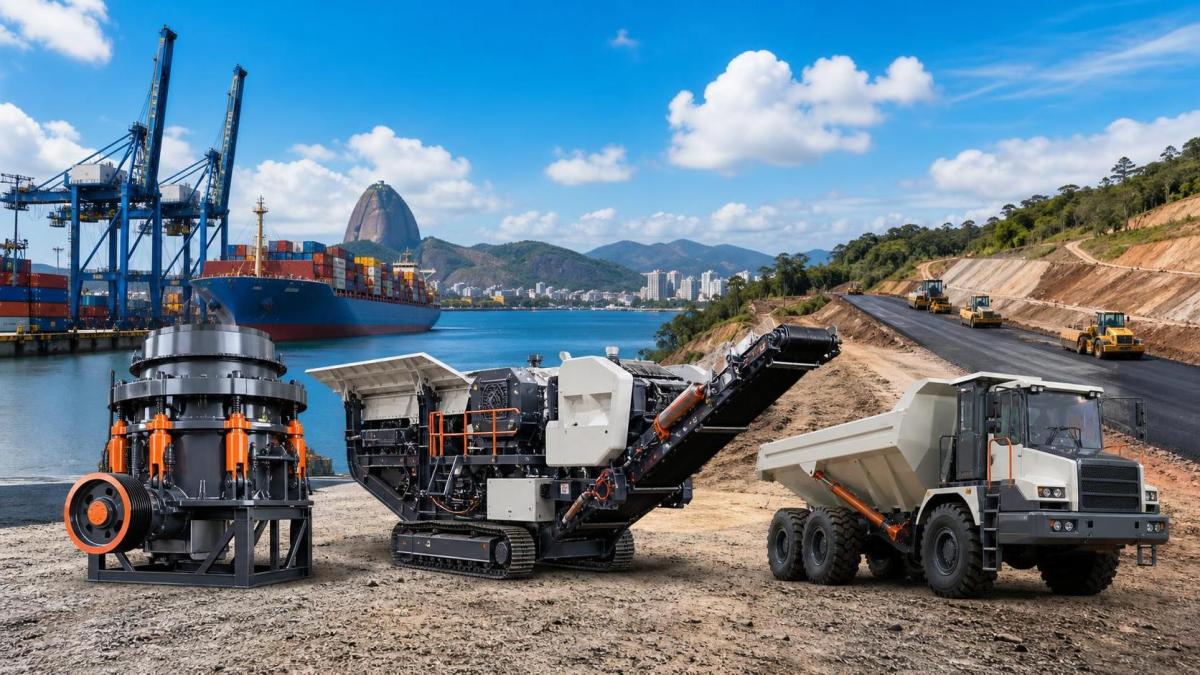
On August 12, 2026, Brazil began to implement zero import tariffs on road construction and infrastructure engineering equipment, involving categories such as hydraulic cone crushers, crawler mobile crushing stations, high-frequency vibrating screens, articulated dump trucks, and asphalt mixing equipment. For export companies, overseas distributors, terminal purchasers and supporting service links, this is not a simple change in tax burden, but a rule signal that will directly affect the pace of quotation, customs clearance, procurement and delivery, so it is worthy of continuous tracking.
The scope of equipment covered by zero tariff has been clarified
According to the information provided, the Brazilian government officially implemented a zero-tariff policy on the import of road construction and infrastructure engineering equipment on August 12, 2026, covering key categories such as hydraulic cone crushers, crawler mobile crushing stations, high-frequency vibrating screens, articulated dump trucks and asphalt mixing equipment. This change is directly related to China’s main export of engineering equipment to Latin America, and is also described as being related to the 50,000-kilometer road renovation project in Brazil’s “Growth Acceleration Plan”.

Who will feel this rule change first
Overseas distribution and direct trade
For overseas distributors and direct trade companies, the first thing that zero tariffs will change is the landed cost structure. After the import tax burden decreases, terminal quotation pressure will be adjusted accordingly, and the price model originally established based on the tax difference needs to be recalculated. From the analysis, companies should pay more attention to whether the quotation caliber, trade terms and customs clearance documents are updated simultaneously to avoid inconsistencies between the contract price and the actual customs clearance cost.
Export companies and manufacturing side
For Chinese export companies, the focus is not just “whether it can be sold”, but whether the product can be included in the candidate list faster in the procurement process of the target market. The equipment covered by this policy itself is the main category exported to Latin America, which means that technical data, shipping documents, equipment model matching and delivery cycle will more directly affect the efficiency of order taking effect. What deserves more attention now is whether the purchasing side will rearrange equipment priorities accordingly, and whether suppliers can maintain stable supply and after-sales response.
Procurer and project execution link
For local Brazilian purchasers and project executors, zero tariffs may bring wider equipment selection space, but it does not automatically eliminate technical review and bidding requirements. Procurement of infrastructure projects usually still involves screening based on equipment parameters, adaptation working conditions, delivery cycle, spare parts guarantee and follow-up service capabilities. For project parties, the direct impact of the rule changes is that procurement cost expectations are reset, and subsequent adjustments will depend on whether the bidding documents and technical terms are adjusted simultaneously.
What enforcement details should we focus on now
Certification and documents must be aligned first
Enterprises should prioritize the technical documents, packing lists, commercial invoices, origin-related materials and descriptions that match local customs clearance required for equipment export. Since the current input does not provide a more detailed enforcement standard, zero tariff cannot be directly understood as all customs clearance links have been simplified. Certification and document consistency are still the first compliance points to be dealt with.
Key categories require model-level verification
The equipment categories named in this policy are relatively specific. Enterprises should verify each item by model, purpose and configuration during business promotion. It is not appropriate to treat similar construction machinery as the same scope of application. For export companies and distributors, the most realistic action is to re-check the product list with the target market's procurement needs to confirm which models are more likely to enter a new round of inquiry and procurement.
Delivery and after-sales arrangements must be front-loaded
When import costs drop, the procurement rhythm will tend to be more focused on delivery capabilities and after-sales capabilities. According to analysis, whether subsequent orders are successfully converted depends not only on price, but also on spare parts supply, on-site support, warranty arrangements and fault response. For companies with Brazilian operations, it is more practical to sort out delivery cycles and after-sales resources in advance than to simply follow up on policy news.
The bidding documents and project caliber should be continuously observed
After such policies are implemented, what really affects the transaction is often how the bidding documents absorb the new rules. Enterprises need to continue to observe whether project procurement standards, technical specifications and quotation requirements change, because the enforcement of policies does not mean that the enforcement details are completely stable. For companies involved in the supply of road renovation and infrastructure equipment in Brazil, this step determines whether the rule changes can actually be converted into order opportunities.
This is more like a clear execution signal
From observation, this information is no longer a simple policy notice, but an execution signal that has taken effect. The message it conveys to the market is very direct: Brazil is releasing a lower tax environment for related import categories in road construction and infrastructure equipment procurement. At the same time, the industry cannot yet understand it as the final outcome because the specific enforcement standards, certification requirements, bidding terms and actual procurement feedback remain to be observed.
From an industry perspective, such changes first affect quotation logic and trade routes, followed by bulk purchasing opportunities at the project level. For enterprises, the focus is not on chasing concepts, but on confirming as soon as possible whether their products, documents and delivery systems can adapt to the new rules.
is more suitable to be understood as the opening of the procurement window
Overall, this information is more suitable to be understood as a taking effect node for Brazil’s infrastructure equipment import rules, rather than a prediction of market results. It provides clearer costs and transaction conditions for related equipment to enter the Brazilian procurement system, but the subsequent impact still depends on the enforcement details, bidding rhythm and market feedback. The current more reliable judgment is that the window has been opened. Whether it can be converted into actual orders depends on whether the company completes compliance, quotation and delivery preparations in a timely manner.
The scope of public information this article is based on
This article is generated based on the information title, event time and event summary provided by the user, and does not cite specific official links that are not provided. Types of sources typically associated with such events include official announcements, regulatory agency releases, customs or trade authority information, industry association information, standards organization documents and authoritative media reports. Since no specific official source link is provided in the input, it is still necessary to continue to verify policy details, certification enforcement standards, changes in bidding documents, industry feedback, and corporate enforcement status.
Recommended News
- 00
0000-00
China Tightens CE and MSHA Dual Certification Rules for Mining CrushersChina tightens CE and MSHA rules for mining crushers, raising export compliance costs and risks. Learn what buyers and suppliers must prepare before 2026. - 00
0000-00
China Tightens Export Compliance for Mining Hydraulic CrushersChina tightens export compliance for mining hydraulic crushers, raising new certification hurdles for EU, US, and Australia shipments. Learn what exporters must do before the October 2026 deadline. - 00
0000-00
Zero tariff for Brazilian construction machinery is implemented, and the purchasing window opensBrazil engineering machinery zero-tariff policy takes effect, opening a new procurement window. Learn how it impacts pricing, customs clearance, bidding, delivery, and project sourcing opportunities.
000000-00
{item.title}{item.description}Search News
Industry Portal
Hot Articles
- What to check before choosing an aggregate production line manufacturerChoose an aggregate production line manufacturer with confidence. Explore key checks for capacity, product quality, layout, service, lifecycle cost, and reliable project delivery.
- When does open-pit mining fleet electrification cut haulage costs?Mining Fleet Electrification open pit: learn when electrified haulage lowers cost per tonne through reliable power, stable routes, high utilization and smarter charging.
- How TBM cutterheads should match abrasive rock conditionsTBM Cutterheads for abrasive rock: learn how geology, cutter layout, wear protection, muck flow, and maintenance strategy improve tunnelling reliability.
Popular Tags