Codelco Sets Green Upgrade Tender Rules for 2026–2030
auth.Rock Comminution ExpertTime
Jun 28, 2026Click Count
On June 27, 2026, Codelco announced the launch of its 2026–2030 "VerdeMineria 2030" green mining infrastructure upgrade plan, putting early procurement attention on high-frequency vibrating screens and continuous asphalt mixing plants under defined energy-management and environmental compliance conditions. For equipment manufacturers, exporters, technical service providers, certification-related firms, and procurement teams, the noteworthy point is not only the procurement volume disclosed in the first phase, but also the clearer linkage between tender access, ISO 50001 certification, the NCH 2282:2025 emissions standard, and a bid structure that allows direct supply from Chinese original manufacturers together with localized technical service.

What the announced tender framework confirms
According to the disclosed information, Codelco started a green mining infrastructure upgrade program named "VerdeMineria 2030" with a total planned investment of USD 1.82 billion. The announcement date provided is June 27, 2026.
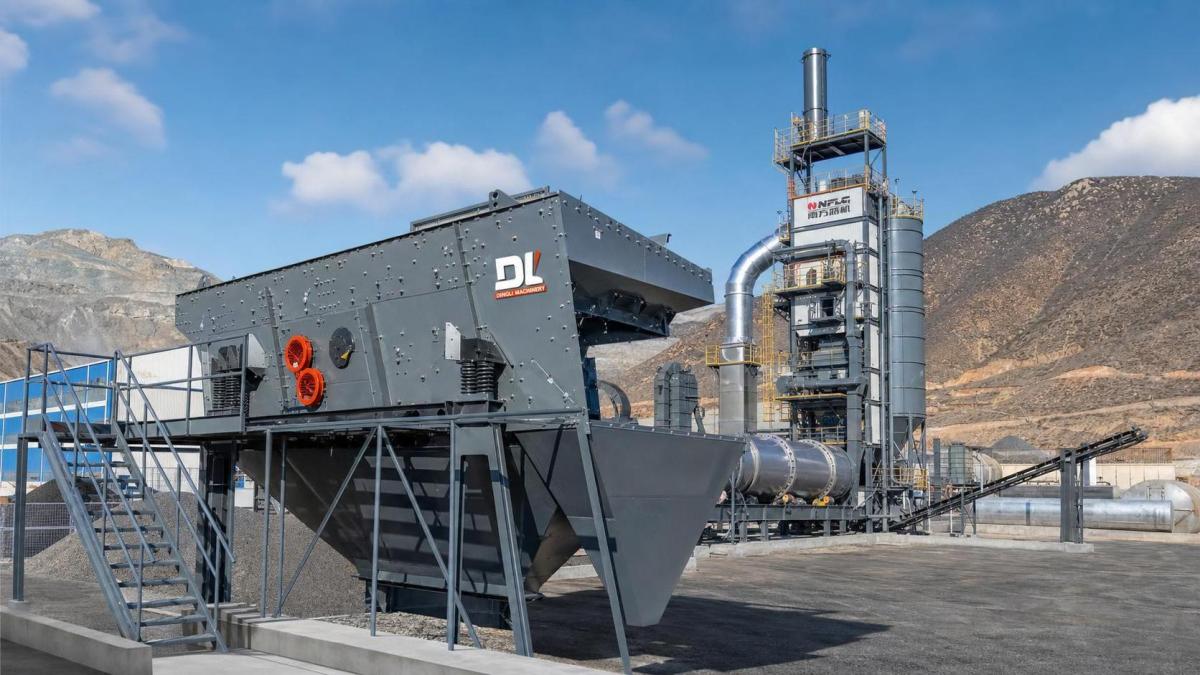
The first tender package covers 12 sets of high-frequency vibrating screens with a speed requirement of at least 3000 rpm, and 6 continuous asphalt mixing plants with CAP of at least 400 t/h.
The tender requirements expressly state compliance with the ISO 50001 energy management system certification and Chile's NCH 2282:2025 environmental emissions standard.
The project also accepts joint bidding structures combining direct supply from Chinese original manufacturers and localized technical service.
Where the rule signal may affect market participants
Equipment suppliers now face a stricter bid-entry filter
From an industry perspective, suppliers of high-frequency vibrating screens and continuous asphalt mixing plants may be affected first because the disclosed requirements tie product access more directly to certification and emissions compliance. The impact is likely to appear in pre-bid qualification, technical file preparation, and proof of conformity rather than in pricing alone. What deserves closer attention is whether suppliers can present certification materials, technical specifications, and supporting compliance documents in a form that aligns with the tender language.
Export and trade teams need to align product delivery with service capability
For export-oriented manufacturers and trading entities, the acceptance of direct supply from Chinese original manufacturers together with localized technical service changes the practical bid structure. Analysis shows that supply capability by itself may not be enough where the procurement route expects equipment delivery to be paired with local technical support. That means attention may shift to contract structure, responsibility allocation, technical handover documents, and after-sales service readiness.
Certification and testing-related firms may see earlier involvement
Certification-related businesses and testing service providers may also be drawn into the process earlier because ISO 50001 and NCH 2282:2025 are stated as explicit tender conditions. The likely effect is on document verification, conformity review, and technical evidence preparation. Observably, the commercial opportunity is linked less to broad market expansion claims and more to the immediate need for compliant paperwork and defensible technical support in bidding.
Procurement and project execution teams must prepare for compliance-led screening
For procurement departments, project owners, and supply-chain service firms, the rule change reflected in this tender is that equipment selection appears to be screened through both performance thresholds and formal compliance conditions. This may affect supplier shortlisting, document review workflows, delivery coordination, and technical clarification stages. Companies involved in execution should pay attention to how certification status, emissions standard alignment, and local service arrangements are reflected in bid files and later contract performance.
What companies should review before the next bidding steps
Check whether certification evidence is tender-ready
Analysis shows that companies interested in these categories should first review whether their ISO 50001-related materials are current, internally consistent, and suitable for submission in a tender environment. The issue is not only whether a company holds a relevant certification, but whether the supporting documentation can withstand procurement review.
Map technical specifications against stated thresholds
Suppliers should compare their equipment specifications directly against the disclosed thresholds, including the at least 3000 rpm requirement for high-frequency vibrating screens and the CAP at least 400 t/h requirement for continuous asphalt mixing plants. What deserves closer attention is technical bid alignment, because any mismatch between catalog specifications, test descriptions, and tender wording can become a practical barrier even before commercial terms are discussed.
Clarify the local service model in advance
Because the project accepts a combination of Chinese original-manufacturer supply and localized technical service, companies should review how they will structure service coverage, technical response, installation support, or other localized obligations if later tender documents require more detail. The current information does not confirm the exact execution model, so this is a point to monitor rather than a settled requirement beyond the announced joint-bid allowance.
Track document updates and tender wording closely
Companies should also watch for any follow-on tender texts, clarifications, or implementation language that may refine how ISO 50001 and NCH 2282:2025 are applied in practice. Observably, the main operational risk at this stage is acting on assumptions before the full bidding documentation or later clarifications define the required format, scope, or evidence standard more precisely.
How this announcement is best understood at this stage
This development is more appropriate to understand as an execution signal than as a broad policy narrative on its own. The reason is that the disclosed information already connects procurement access to named certification and emissions requirements, and it also indicates an accepted trade-and-service structure involving Chinese original manufacturers and localized support.
At the same time, analysis shows that it should not yet be treated as a complete picture of implementation. The available information confirms the direction of compliance expectations, but it does not settle every operational question around document interpretation, technical review practice, or how strictly each requirement will be applied across later tender stages. That is why market participants should read this as a live procurement rule signal with follow-up details still worth monitoring.
Why the market should keep this on the watchlist
The practical significance of this announcement lies in the fact that procurement criteria, certification expectations, environmental standard references, and service-delivery structure appear together in a named upgrade program and an identified first tender scope. For manufacturers, exporters, and service partners, this is not merely a purchase notice; it is a sign that compliance framing may increasingly shape equipment access and project participation.
From a neutral industry reading, the event is best treated as an announced and actionable market signal with confirmed entry conditions in the disclosed scope, while the full execution effect still depends on subsequent tender documents, clarification practice, and market response. That makes it relevant now, but still subject to continued verification as implementation proceeds.
Basis of this article and points requiring further verification
This article is based on the user-provided news title, event date, and event summary. Typical source types relevant to developments of this kind may include official company announcements, regulator notices, trade or customs authority information, industry association releases, standards organization documents, and reporting by established industry media.
A specific official source link was not provided in the input, so the exact original publication path still needs to be verified on an ongoing basis. Further observation is also needed regarding any detailed tender documents, implementation wording for ISO 50001 and NCH 2282:2025, possible clarification notices, industry feedback, and how participating companies organize compliance, service, and delivery in response.
Recommended News
- 00
0000-00
High-Frequency Screening Technology: How to Improve Efficiency in Fine Material SeparationHigh-frequency screening technology efficiency explained: discover how to boost fine material separation, improve product quality, cut recirculation, and lower operating costs. - 00
0000-00
EU CE Rule Takes Effect for EMC Limits on High-Frequency ScreensEU CE rule update: high-frequency screens sold to the EU from Oct 1, 2026 must meet EN 61000-6-4:2026 EMC limits. See impacts on testing, certification, and delivery planning. - 00
0000-00
High-Frequency Vibrating Screens South Africa: What Affects ThroughputHigh-frequency vibrating screens South Africa: discover what really affects throughput, from ore, moisture, and aperture choice to feed stability and maintenance for better plant results.
000000-00
{item.title}{item.description}Search News
Industry Portal
Hot Articles
- What to check before choosing an aggregate production line manufacturerChoose an aggregate production line manufacturer with confidence. Explore key checks for capacity, product quality, layout, service, lifecycle cost, and reliable project delivery.
- When does open-pit mining fleet electrification cut haulage costs?Mining Fleet Electrification open pit: learn when electrified haulage lowers cost per tonne through reliable power, stable routes, high utilization and smarter charging.
- How TBM cutterheads should match abrasive rock conditionsTBM Cutterheads for abrasive rock: learn how geology, cutter layout, wear protection, muck flow, and maintenance strategy improve tunnelling reliability.
Popular Tags