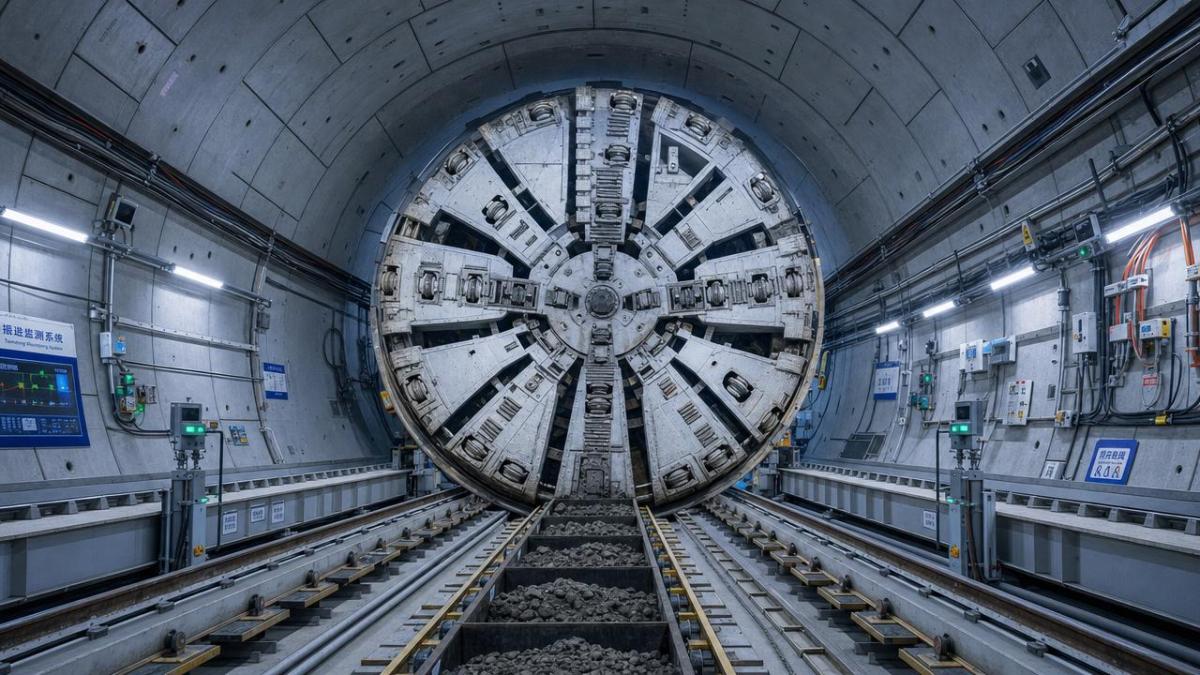
Underground Construction Technology Trends Reshaping Tunneling
auth.Dr. Torsten VanceTime
May 19, 2026Click Count
Underground construction technology is rapidly redefining how tunnels are planned, excavated, and delivered in today’s mega-infrastructure era. From smarter TBMs and real-time geotechnical monitoring to automation, digital twins, and safer segment installation, these innovations are transforming project speed, precision, and lifecycle cost. For researchers tracking industry direction, understanding these trends is essential to evaluating the future of tunneling performance and investment.
Why underground construction technology now drives tunneling strategy

For information researchers, underground construction technology is no longer a narrow engineering topic. It now sits at the intersection of capital planning, geological risk, equipment lifecycle, safety compliance, and delivery certainty.
In rail corridors, subsea links, urban metros, hydropower galleries, and mining access tunnels, project sponsors increasingly evaluate not only excavation speed, but also cutter wear, segment quality, digital traceability, and downtime exposure.
That shift matters because modern tunneling projects are larger, deeper, and more constrained. Hard rock transitions, mixed-face ground, groundwater pressure, urban settlement limits, and stricter environmental oversight all raise the cost of wrong assumptions.
- Owners want lower uncertainty before financial close and during EPC execution.
- Contractors want better predictability in advance rate, maintenance intervals, and spoil logistics.
- Equipment manufacturers want clearer demand signals around automation, electrification, and durability.
- Researchers want dependable signals that separate hype from deployable tunneling innovation.
This is where HIES brings practical value. Its focus on TBMs, heavy steel structures, rock-breaking mechanics, capital efficiency, and global mega-infrastructure gives decision makers a connected view rather than isolated technical fragments.
Which underground construction technology trends are reshaping tunnel delivery?
The market is not changing because of one breakthrough. It is changing because multiple systems are maturing together. The most important underground construction technology trends are compared below for researchers assessing project impact.
Taken together, these trends shift tunnel delivery from reactive control toward predictive control. That distinction is critical in projects where one week of stoppage can distort both cash flow and public timelines.
Smart TBMs are becoming data platforms
Earlier TBM selection often emphasized thrust, diameter, and geology fit. Those factors still matter, but underground construction technology now adds another layer: data quality. A TBM with weak sensing can leave teams blind to wear progression or unstable operating behavior.
For hard rock and highly abrasive strata, disc cutter life remains a core cost driver. HIES closely tracks the geomechanics behind chip formation, cutter loading, and wear behavior because these variables directly influence intervention frequency and schedule stability.
Monitoring is moving from compliance to decision support
Settlement markers, piezometers, convergence readings, and machine telemetry used to be reviewed in separate streams. Advanced underground construction technology brings them together, allowing engineers to react faster when face pressure, lining behavior, or spoil characteristics begin to diverge.
How do different tunnel scenarios require different technology choices?
Information researchers often make a costly mistake: treating all tunneling projects as if one equipment logic applies everywhere. In reality, underground construction technology choices are scenario-driven, and the wrong comparison framework leads to poor conclusions.
The following table highlights how application context changes technical priorities, procurement questions, and operating risks.
The key insight is simple: the best underground construction technology is not the most advanced option on paper. It is the option that best manages the dominant risk in a specific geological and commercial context.
Scenario signals researchers should track
- Ground variability across the alignment, not just average geology descriptions.
- Intervention difficulty if cutters, seals, or guidance systems require access under pressure.
- Spoil removal constraints, because haulage bottlenecks can erase gains from higher face performance.
- Segment supply consistency, especially where ring build quality affects settlement or water tightness.
What should researchers compare when evaluating procurement and project readiness?
In heavy infrastructure, technology evaluation is often distorted by headline specifications. Buyers may focus on diameter, installed power, or quoted advance rate while underweighting maintainability, data architecture, compliance burden, and spare parts lead times.
A stronger procurement lens for underground construction technology should compare system readiness across engineering, operations, and lifecycle cost. The table below can support preliminary screening.
For HIES readers, this broader checklist is especially useful because tunneling technology rarely acts alone. It interacts with cranes, crushing systems, mixing plants, and haulage logistics across the broader infrastructure chain.
Common procurement blind spots
- Assuming a high-capacity machine automatically lowers total project cost, even when geology is unstable or interventions are difficult.
- Ignoring the quality of operating data, which later weakens troubleshooting and performance benchmarking.
- Underestimating supply chain timing for cutters, seals, bearings, electrical components, and segment molds.
- Treating compliance as paperwork only, rather than as a driver of equipment configuration and commissioning sequence.
How cost, safety, and compliance are changing underground construction technology decisions
The economic case for advanced underground construction technology is not built only on faster excavation. It is often built on avoided disruption: fewer unplanned stops, better worker protection, more stable segment installation, and clearer evidence for owner oversight.
Automation in ring building and material handling reduces repetitive manual exposure in confined spaces. Real-time monitoring supports faster response to abnormal settlement or pressure behavior. Predictive maintenance helps crews schedule interventions before damage cascades into larger shutdowns.
Compliance also deserves more attention from researchers. Depending on market and site type, teams may face requirements tied to machinery safety, electrical systems, environmental management, occupational health, and inspection traceability. Even when no single international rule governs every project, the documentation burden can shape procurement timing and acceptance risk.
Why HIES has an edge in this analysis
HIES approaches underground construction technology through the combined lenses of geomechanics, anti-fatigue heavy steel engineering, equipment export compliance, and EPC capital logic. That makes its analysis useful for readers who need more than surface-level trend summaries.
Its coverage helps connect cutter wear physics, machine durability, safety obligations, and project finance implications. For an information researcher, that integrated perspective is often more valuable than isolated product claims.
FAQ: what do researchers most often ask about underground construction technology?
How should underground construction technology be compared across suppliers?
Start with geology fit, intervention strategy, monitoring depth, spare parts planning, and compliance support. Quoted penetration or thrust alone does not explain lifecycle risk. A sound comparison also asks how the system behaves when ground conditions deviate from forecast.
Which scenarios benefit most from digital twin capability?
Long, high-value tunnels with strict settlement control, hard-rock wear exposure, or difficult intervention access gain the most. In these cases, integrated data can help teams anticipate maintenance, verify ring quality, and communicate risk to owners more effectively.
What is the most common misconception in tunneling technology assessment?
Many assume the newest feature set automatically delivers the best project result. In practice, underground construction technology succeeds when sensors, machine design, support logistics, segment supply, and operator capability are aligned with the actual job conditions.
Why does cutter wear remain such an important research topic?
Because cutter wear affects downtime, labor exposure, spare inventory, and schedule reliability. In abrasive ground, the economics of tunneling can shift quickly if wear rates exceed assumptions. This is one reason HIES gives strong attention to rock-breaking mechanics and component lifespan.
Why choose us for underground construction technology intelligence?
If you are researching underground construction technology for market mapping, supplier screening, capital review, or EPC decision support, HIES can help turn scattered technical inputs into a usable decision framework.
- We can support parameter confirmation for TBM-related systems, wear-sensitive components, and monitoring architecture.
- We can help compare product selection paths across geology, application scenario, compliance needs, and project delivery pressure.
- We can assist with questions around delivery cycle expectations, spare planning, and implementation sequencing in mega-infrastructure environments.
- We can discuss customized intelligence needs covering certification concerns, solution evaluation, quotation communication, and broader heavy-equipment context.
For teams tracking where tunneling is headed next, the real advantage is not just knowing which technologies exist. It is understanding which ones materially improve project resilience, where they fit, and how they influence cost per delivered meter. That is the level of insight HIES is built to provide.
Recommended News
- 00
0000-00
How tunnel construction safety monitoring detects ground movement risksTunnel construction safety monitoring detects settlement, groundwater shifts, and support movement early—helping teams act faster to protect assets and reduce risk. - 00
0000-00
How OSHA tower crane safety standards affect lift planning on siteTower crane safety standards OSHA enforces can reshape every lift plan. Learn how wind, radius, inspections, and site conflicts affect safer, faster crane operations. - 00
0000-00
tower crane safety standards training for site crewsTower crane safety standards training for site crews helps reduce lift risks, improve coordination, and boost compliance on busy sites.
000000-00
{item.title}{item.description}Search News
Industry Portal
Hot Articles
- What to check before choosing an aggregate production line manufacturerChoose an aggregate production line manufacturer with confidence. Explore key checks for capacity, product quality, layout, service, lifecycle cost, and reliable project delivery.
- When does open-pit mining fleet electrification cut haulage costs?Mining Fleet Electrification open pit: learn when electrified haulage lowers cost per tonne through reliable power, stable routes, high utilization and smarter charging.
- How TBM cutterheads should match abrasive rock conditionsTBM Cutterheads for abrasive rock: learn how geology, cutter layout, wear protection, muck flow, and maintenance strategy improve tunnelling reliability.
Popular Tags