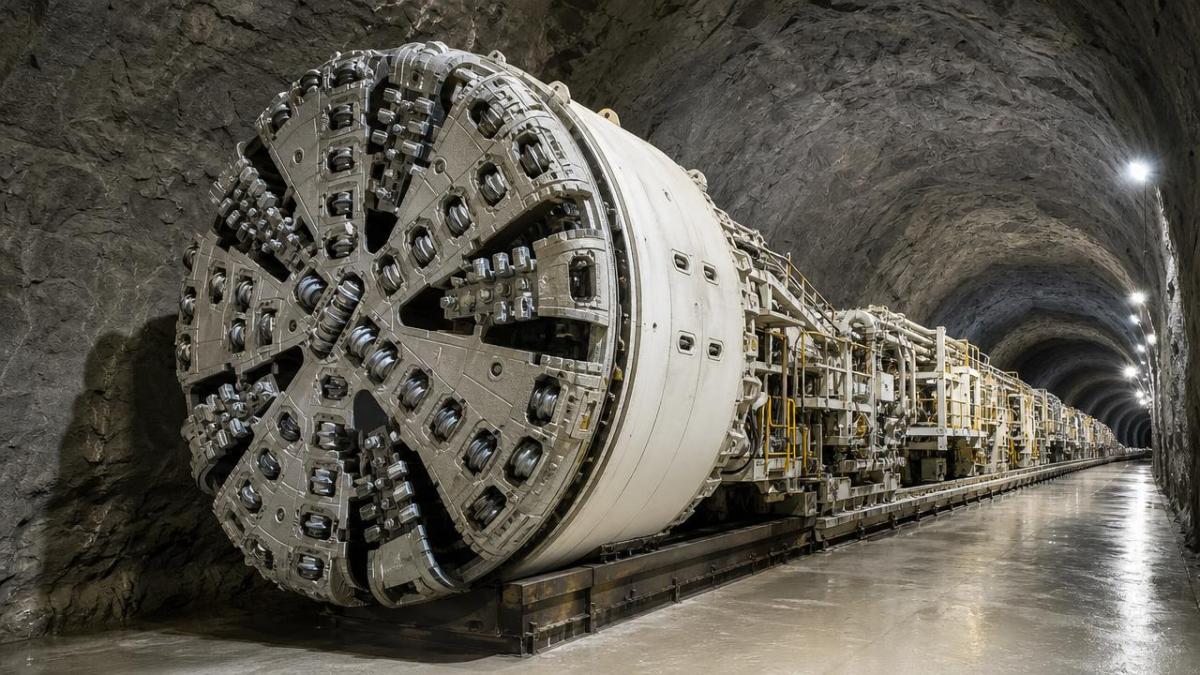
Tunnel Excavation Machinery for Hard Rock Conditions
auth.Prof. Heinrich AldenTime
Jun 13, 2026Click Count
Tunnel Excavation Machinery for Hard Rock Conditions
Selecting the right tunnel excavation machinery for hard rock conditions can determine project speed, cutter life, cost control, and construction safety.
In real projects, machine choice is rarely about one parameter.
Rock strength, abrasivity, water inflow, alignment accuracy, logistics, and maintenance access all shape final performance.
That is why tunnel excavation machinery must be evaluated as a full operating system, not only as a machine on paper.
Why hard rock tunnels demand a different machinery strategy

Hard rock conditions punish weak equipment decisions very quickly.
High UCS rock reduces penetration.
Quartz-rich formations accelerate cutter wear.
Fault zones create sudden instability.
Steep tunnel gradients raise mucking and transport complexity.
More importantly, delays usually come from interaction effects.
A machine may have enough thrust, yet still underperform because cutterhead design, cutter spacing, and muck removal are mismatched.
This is where tunnel excavation machinery selection becomes a project delivery decision.
It affects daily advance rate, spare parts demand, crew planning, and total intervention frequency.
From a commercial angle, the right setup protects schedule certainty, which usually matters more than nominal peak output.
How to match tunnel excavation machinery to hard rock geology
The starting point is geology, but the useful question is practical.
What machine can keep cutting consistently in the actual rock mass, not in a laboratory sample?
Key rock inputs that change machine selection
- Uniaxial compressive strength influences thrust and torque requirements.
- Cerchar abrasivity index directly affects disc cutter life.
- Joint spacing changes fragmentation behavior and vibration response.
- Groundwater conditions affect sealing, drainage, and maintenance windows.
- Mixed-face transitions can demand more adaptable tunnel excavation machinery.
For long drives in competent hard rock, hard rock TBMs often deliver better continuity than drill and blast.
However, that only holds when cutterhead design, gripper capacity, and backup logistics are properly engineered.
Where geology is variable, hybrid selection logic becomes more valuable.
Some projects benefit from a TBM strategy with reinforced cutterhead protection and stronger intervention planning.
Others still gain from conventional excavation supported by robust rock support sequencing.
Practical machinery comparison
The machine features that matter most in hard rock tunneling
Not every specification has equal value.
For tunnel excavation machinery in hard rock, a few features usually decide whether progress stays stable.
1. Cutterhead and disc cutter system
Cutterhead opening ratio must balance rock breaking and muck flow.
Disc cutter diameter, spacing, and material quality influence penetration and wear pattern.
In abrasive ground, easy cutter access can save more time than small gains in theoretical cutting force.
2. Thrust, torque, and structural stiffness
A strong drive system matters, but balanced force delivery matters more.
If the structure deflects under load, cutter efficiency drops and wear becomes uneven.
This also increases the risk of unplanned interventions.
3. Muck removal and backup systems
A surprisingly common bottleneck is not cutting.
It is spoil handling.
Conveyors, transfer points, rolling stock, and backup gantries must match peak and average production conditions.
When these systems lag, tunnel excavation machinery cannot achieve planned utilization.
4. Monitoring and predictive maintenance
Recent projects show a clear shift toward data-led operation.
Cutter temperature, bearing load, vibration, and penetration trends help crews act before failure spreads.
This improves machine uptime and protects component life in hard rock environments.
How to control risk, cost, and downtime with tunnel excavation machinery
The strongest equipment plan is operational, not promotional.
It connects geology, procurement, spare parts, and service response into one workable framework.
Build the decision around these checkpoints
- Define rock classes by excavation impact, not only by geological naming.
- Estimate cutter consumption using conservative wear assumptions.
- Check whether maintenance can be performed safely within expected intervention windows.
- Review backup logistics for long tunnel drives and restricted access zones.
- Model downtime cost per day before comparing equipment purchase price.
- Confirm local service support, training depth, and spare parts lead times.
This changes procurement conversations in a useful way.
Instead of asking which tunnel excavation machinery is bigger or faster, ask which setup keeps advancing under the real constraints.
That includes difficult shifts, abrasive stretches, delayed consumables, and variable support conditions.
In practice, the best solution often combines robust machine selection with disciplined cutter management and realistic maintenance planning.
This is also where lifecycle cost becomes more meaningful than initial capex.
A cheaper machine that stops often will usually become the more expensive option underground.
A practical selection path for better tunnel delivery
For hard rock tunneling, better outcomes come from disciplined matching, not guesswork.
Start with rock behavior, then test machine fit against penetration targets, cutter wear, muck logistics, and intervention access.
Next, compare tunnel excavation machinery options through cost per meter advanced, not headline power alone.
Finally, lock in service planning before excavation starts.
That single step often decides whether a hard rock project stays predictable.
Well-selected tunnel excavation machinery improves safety, stabilizes progress, and makes underground risk easier to manage.
When the machine, geology, and maintenance model work together, delivery performance becomes much more controllable.
That is the real benchmark for choosing tunnel excavation machinery in hard rock conditions.
Recommended News
- 00
0000-00
How TBM cutterheads should match abrasive rock conditionsTBM Cutterheads for abrasive rock: learn how geology, cutter layout, wear protection, muck flow, and maintenance strategy improve tunnelling reliability. - 00
0000-00
How rock mechanics testing helps predict excavation risksRock mechanics testing helps predict excavation risks by assessing strength, fractures, groundwater, and deformation for safer, smarter project decisions. - 00
0000-00
When should a mining project hire geomechanics consultants?Geomechanics consultants help mining projects manage slope, ground support, water, and infrastructure risks early—discover the key hiring triggers.
000000-00
{item.title}{item.description}Search News
Industry Portal
Hot Articles
- What to check before choosing an aggregate production line manufacturerChoose an aggregate production line manufacturer with confidence. Explore key checks for capacity, product quality, layout, service, lifecycle cost, and reliable project delivery.
- When does open-pit mining fleet electrification cut haulage costs?Mining Fleet Electrification open pit: learn when electrified haulage lowers cost per tonne through reliable power, stable routes, high utilization and smarter charging.
- How TBM cutterheads should match abrasive rock conditionsTBM Cutterheads for abrasive rock: learn how geology, cutter layout, wear protection, muck flow, and maintenance strategy improve tunnelling reliability.
Popular Tags