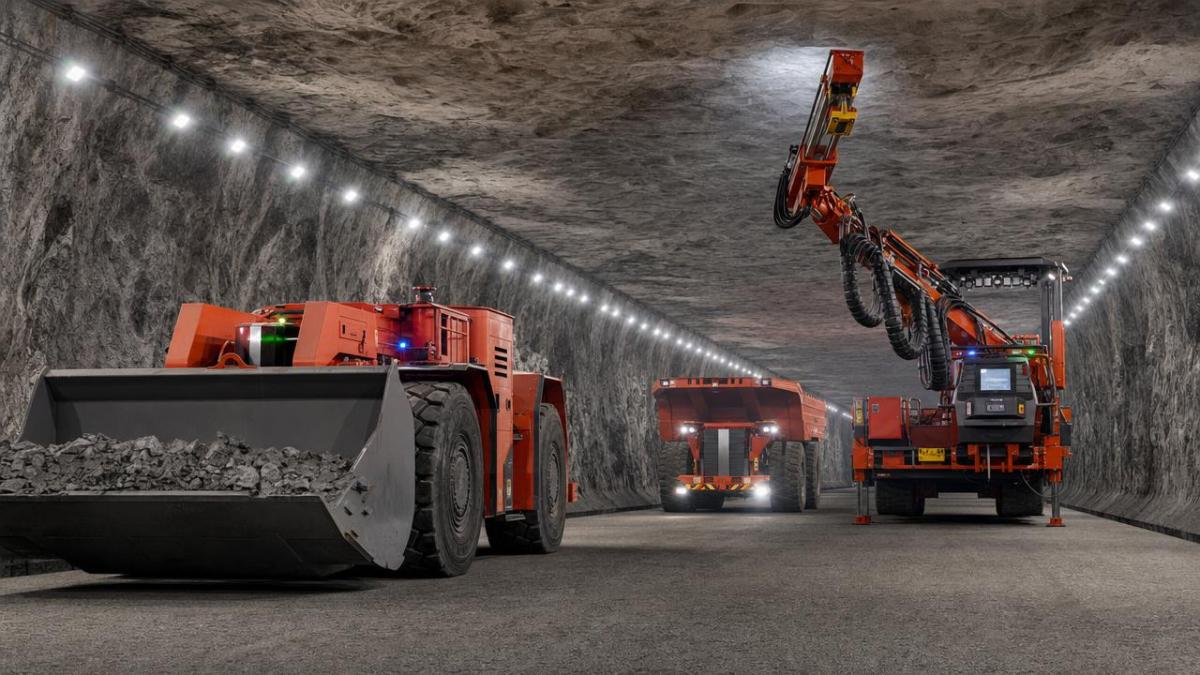
Underground Mining Machinery Automation ROI in 2026
auth.Heavy Haulage StrategistTime
Jun 13, 2026Click Count
Underground Mining Machinery Automation ROI in 2026: what is really worth paying for?

Underground mining machinery automation is no longer a pilot topic.
In 2026, the bigger question is whether the investment returns fast enough.
That answer depends less on headline technology and more on site conditions, fleet mix, and operating discipline.
Mines dealing with labor shortages, ventilation pressure, and tighter safety compliance are looking at automation differently now.
They want clearer proof on cost per ton, cycle stability, unplanned downtime, and risk exposure.
That practical view fits the wider HIES approach.
Across heavy equipment, tunneling, crushing, hauling, and batching systems, lifecycle ROI matters more than single-machine specifications.
So when evaluating underground mining machinery automation, the useful discussion starts with operational outcomes, not marketing claims.
Does automation in underground mining equipment really reduce cost, or just move it elsewhere?
This is usually the first serious question.
Underground mining machinery automation does reduce cost, but not always in the same line item.
Direct labor savings may be visible first, especially in repetitive haulage and loading routes.
However, the stronger ROI often comes from smoother production flow.
Automated drilling improves pattern consistency.
Autonomous or semi-autonomous loaders reduce waiting time at drawpoints.
Connected haulage systems lower idle time and reduce traffic conflicts underground.
The cost shift happens in software licensing, communications infrastructure, sensors, integration, and training.
So ROI should be measured at system level.
A cheaper machine with poor interoperability can destroy the business case.
A higher-capex platform with stable uptime may recover value faster.
In actual operations, the most credible benchmark is not purchase price.
It is cost per productive hour and cost per ton moved through the whole underground cycle.
Where does underground mining machinery automation create the fastest ROI?
Not every task pays back at the same speed.
The fastest ROI usually appears where machine movement is repetitive, visibility is limited, and delays create downstream losses.
That is why underground haulage, loader tramming, and remote operation zones get early attention.
Drill rigs can also justify automation quickly when accuracy affects fragmentation, scaling, and later crushing behavior.
A mine that overbreaks frequently may lose value far beyond the drilling stage.
The same logic is familiar across HIES coverage.
Whether the topic is TBM cutter wear or batching precision, small control improvements upstream often reshape cost downstream.
The table below helps compare where underground mining machinery automation tends to pay back fastest.
If one section is repeatedly constraining ore flow, that is often the best place to start.
How should ROI be calculated for underground mining machinery automation in 2026?
A basic payback formula is not enough anymore.
For underground mining machinery automation, a 2026 ROI model should include at least five layers.
- Production gain from higher machine availability and shorter cycle variation.
- Safety value from fewer people exposed in unsupported or high-traffic areas.
- Energy and ventilation impact, especially where fewer personnel reduce air demand.
- Maintenance effect from smoother machine operation and better diagnostics.
- Implementation cost, including integration downtime and skills transition.
Need a practical rule?
Model three cases instead of one: expected, conservative, and disrupted.
The disrupted case should assume communication outages, incomplete training, and slower interface adoption.
That sounds cautious, but it prevents inflated projections.
In many underground projects, the real failure is not the automation hardware.
It is the gap between the control system and daily production habits.
A sound business case should also compare retrofit versus greenfield deployment.
Retrofit programs may look cheaper initially, yet interface complexity can extend commissioning.
What separates a workable automation package from an expensive pilot?
This is where many buying decisions go wrong.
A workable underground mining machinery automation package fits the mine, not just the machine.
In practice, three checks matter more than glossy feature lists.
Is the control stack open enough?
If data cannot move between planning, dispatch, maintenance, and OEM systems, visibility stays fragmented.
That weakens long-term ROI.
Can the package handle harsh underground variability?
Dust, water, narrow headings, uneven ground, and intermittent connectivity all test system resilience.
A successful surface automation model does not automatically transfer underground.
What happens when automation stops?
Fallback logic matters.
Manual override, remote takeover, fault isolation, and restart procedures should be reviewed before contract award.
That review should be as serious as powertrain or hydraulic evaluation.
HIES often frames equipment value through reliability, safety, and lifecycle output.
The same lens works here.
Automation should be treated as an operating system for production, not an accessory.
Which risks are usually underestimated when comparing underground mining machinery automation options?
Most comparisons focus too much on machine capability and not enough on deployment friction.
The common blind spots are operational rather than technical.
- Overestimating workforce transition speed after commissioning.
- Ignoring communication network redundancy in deeper levels.
- Assuming OEM support response is equal across regions.
- Buying analytics tools without clear maintenance action paths.
- Missing the ventilation, battery charging, or fueling implications of changed traffic patterns.
There is also a tendering mistake seen more often in 2026 planning cycles.
Some specifications ask for “full automation” without defining the production bottleneck.
That creates a broad technical bid, but a weak economic comparison.
A sharper method is to define target metrics first.
For example, reduce loader waiting time by a set percentage, or lift active hauling hours per day.
Then test each underground mining machinery automation proposal against those outputs.
What should be on the shortlist before making a final investment decision?
By this stage, the goal is not to ask more general questions.
It is to remove uncertainty from the buying case.
A practical shortlist for underground mining machinery automation should cover the following points.
If these points are documented early, supplier comparison becomes far clearer.
It also becomes easier to explain why one option offers stronger lifecycle value, even at higher capex.
A final way to judge underground mining machinery automation ROI
The best 2026 decisions will not come from asking whether automation is impressive.
They will come from asking whether underground mining machinery automation removes a proven production constraint.
If the answer is yes, ROI can be strong through better utilization, safer access, lower variability, and fewer costly interruptions.
If the constraint is unclear, even advanced systems can become expensive pilots.
A sensible next step is to map one operating zone, measure its bottlenecks, and compare automation options against those exact losses.
Then review integration depth, support structure, and fallback procedures before final selection.
That approach keeps underground mining machinery automation tied to measurable business outcomes, which is where the strongest investment cases are built.
Recommended News
- 00
0000-00
China Tightens AHS Export ComplianceChina tightens AHS export compliance with new type testing and customs filing rules. Learn how autonomous haulage system exporters can avoid delays, protect delivery schedules, and stay compliant. - 00
0000-00
EU Requires EN 50126-3 for AHS Mining Trucks from Oct 2026EN 50126-3 becomes essential for AHS mining trucks entering the EU from Oct 2026. Learn compliance impacts, CE documentation risks, and how suppliers can prepare faster. - 00
0000-00
Australia Sets AHS Safety Certification RuleAustralia Sets AHS Safety Certification Rule: Learn how AS 61508:2026 Ed.3 and SIL2 requirements will impact AHS exports, approvals, delivery timelines, and market access in Australia.
000000-00
{item.title}{item.description}Search News
Industry Portal
Hot Articles
- What to check before choosing an aggregate production line manufacturerChoose an aggregate production line manufacturer with confidence. Explore key checks for capacity, product quality, layout, service, lifecycle cost, and reliable project delivery.
- When does open-pit mining fleet electrification cut haulage costs?Mining Fleet Electrification open pit: learn when electrified haulage lowers cost per tonne through reliable power, stable routes, high utilization and smarter charging.
- How TBM cutterheads should match abrasive rock conditionsTBM Cutterheads for abrasive rock: learn how geology, cutter layout, wear protection, muck flow, and maintenance strategy improve tunnelling reliability.
Popular Tags