When should a mining project hire geomechanics consultants?
auth.Prof. Heinrich AldenTime
Aug 31, 2026Click Count
Mining projects should engage geomechanics consultants when the ground can influence the safety, constructability, production sequence, or service life of an asset. That point often arrives before excavation begins. A pit layout may look workable on a topographic model, and a plant location may appear convenient for haulage, yet both can become difficult if weathered rock, faults, weak bedding, swelling clays, groundwater pressure, or high in-situ stress have not been interpreted in engineering terms.
Early geomechanical work is especially valuable where a design decision would be expensive to reverse. Pit-wall angles, underground development orientation, portal locations, waste-dump geometry, crusher foundations, haul-road cuttings, stockpile pads, and tailings-related earthworks all depend on the behavior of the rock mass or soil beneath them. A consultant does not replace geology, survey, civil, mining, or equipment engineering; the role is to connect geological observations with practical limits for excavation, support, loading, and monitoring.
Bring geomechanics into the concept stage when ground conditions shape the layout
A preliminary resource model or site investigation may identify lithology and structures without providing enough information to design stable slopes or underground openings. Core logging that records rock type alone cannot reliably establish joint persistence, fracture spacing, alteration, roughness, infill, groundwater conditions, or the orientation of weak planes relative to a proposed wall. Those details can determine whether a slope can stand at the planned angle, needs benches and catch berms, or requires a different mining sequence.
At concept stage, geomechanics consultants can define the investigation needed before landforms and facilities become fixed. This may include oriented core drilling, televiewer logging, face mapping, discontinuity surveys, laboratory strength testing, groundwater observations, and review of historic workings. The required scope depends on the deposit and proposed method. A shallow quarry in competent, massive rock needs a different evidence base from a deep open pit in foliated metamorphic rock or an underground mine in highly stressed ground.
Engagement should not wait until a feasibility layout has settled on a single pit shell, ramp position, or decline route. Several options may be structurally unsuitable even when their haul distance or ore recovery appears attractive. Comparing alternatives while they remain drawings is usually simpler than moving a crusher station, redesigning an access switchback, or re-establishing a tunnel portal after site work has started.
Warning signs that merit an immediate review
Some conditions justify a focused geomechanical assessment even on an established operation. Fresh tension cracks above a cut, repeated raveling from a bench face, increasing rockfall at a portal, abnormal water inflow, damage to support elements, or unexpected movement in survey prisms should be treated as engineering signals rather than isolated maintenance issues. The visible symptom may be small while the controlling failure surface extends behind the exposed face.
- A planned pushback intersects persistent bedding, shears, or fault zones that dip toward the excavation.
- Production drilling encounters highly variable recovery, voids, weak seams, or broken ground not represented in the current model.
- Rainfall or dewatering changes pore pressure conditions near slopes, ramps, sumps, or underground headings.
- Haul-road cuts are being steepened to gain width, shorten a route, or create space for larger trucks.
- A crusher, conveyor transfer tower, fuel facility, workshop, or batching area is proposed near an escarpment, filled platform, or excavated bench.
- Underground development approaches a major structure, an old void, a transition from competent rock to altered material, or a zone where seismic response has been observed.
These triggers do not automatically indicate failure. They indicate that the existing ground model, assumptions, or controls may no longer be sufficient. The consultant's task is to establish the mechanism that could develop, identify the uncertainty that remains, and define actions proportionate to the consequence.

Open-pit decisions that depend on rock-mass behavior
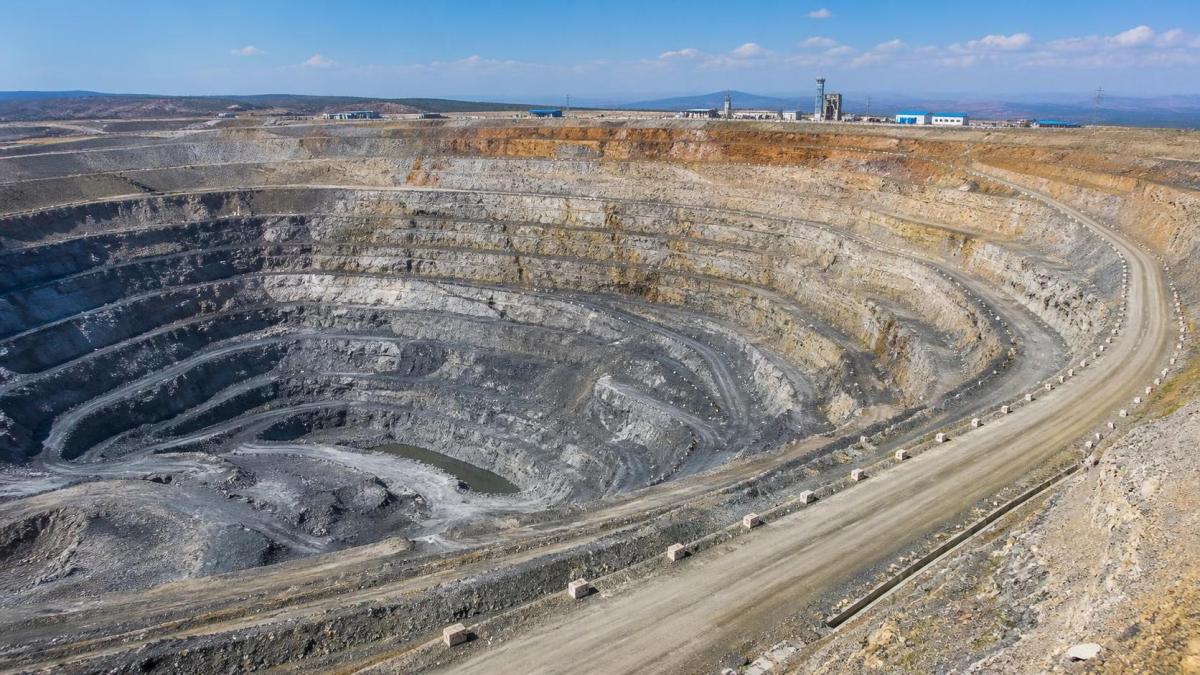
In an open pit, the most visible question is often the overall slope angle. That angle is only the final expression of a larger design process. Bench-face angle, berm width, bench height, inter-ramp geometry, catch capacity, wall orientation, blasting damage, groundwater, and geological domains must work together. A stable average wall angle does not guarantee that individual blocks cannot detach along joints or that a fault-bound wedge cannot slide.
Geomechanics consultants commonly divide the pit into structural or geotechnical domains rather than applying one slope design across the whole excavation. Domain boundaries may follow rock quality, alteration, fracture intensity, bedding orientation, major faults, weathering depth, or water conditions. The result can affect drilling patterns, blast control, scaling requirements, berm management, monitoring locations, and the acceptable timing of adjacent mining.
Blasting deserves attention because it can change the condition of the final wall. Excessive energy near a crest can back-break the rock and reduce berm effectiveness. Insufficient fragmentation can leave oversize material and make excavation harder, while poorly controlled trim blasting may damage rock intended to remain in place. A geomechanical review can establish wall-control objectives that drilling and blasting personnel can translate into practical loading, timing, exclusion zones, and post-blast inspection procedures.
Waste-rock dumps require the same discipline. Their stability depends on foundation conditions, material grading, segregation, lift placement, drainage, and runoff management. Fine, moisture-sensitive material can behave differently from coarse rockfill, particularly where it is placed over weak colluvium, saturated ground, or a sloping foundation. A dump that expands incrementally can exceed its original foundation assumptions long before its visible geometry appears unusual.
Underground works need input before support becomes a reactive expense
Geomechanics should be engaged before choosing the alignment, span, support concept, and development sequence of declines, crosscuts, chambers, ore passes, and ventilation connections. In underground work, the excavation itself redistributes stress. The response may include joint-controlled falls, squeezing ground, slabbing, rockburst-prone damage, floor heave, or gradual convergence. The controlling issue changes with depth, rock mass quality, structure orientation, excavation shape, and the proximity of other openings.
A support specification based solely on nominal rock class can be too broad for a variable mine. Ground support must match expected conditions and installation realities: bolt length and resin or grout selection, mesh overlap, shotcrete thickness, fibre content where applicable, cable support patterns, straps, arches, and drainage provisions. The design should also consider access for drill rigs, quality verification, curing conditions, corrosion exposure, and the sequence in which support can safely follow excavation.
Where tunnel boring machines, roadheaders, drill-and-blast headings, or raise-development methods are under consideration, geomechanics informs more than support. Abrasivity, blockiness, strength, stress conditions, and groundwater may affect cutter wear, advance rate assumptions, overbreak, machine loading, and the need for pre-grouting or probe drilling. Equipment selection should therefore use an interpreted ground model, not only an average uniaxial compressive strength from a limited set of samples.
Heavy infrastructure creates a second set of ground-loading questions
Mining facilities place concentrated and cyclic loads on ground that may have been cut, filled, blasted, or affected by water. Primary crushers and screens generate vibration. Conveyor galleries require stable supports and controlled settlement. Stockpiles apply changing loads and can concentrate water if drainage is poor. Truck workshops, wash bays, substations, and fuel areas need grades that remain serviceable under heavy axle loads and seasonal moisture changes.
A geomechanical consultant may need to coordinate with geotechnical and structural disciplines where the distinction is blurred. For example, a crusher foundation set into rock requires assessment of rock quality, excavation stability, anchors, blast-induced damage, and groundwater as well as conventional foundation design. A highwall conveyor route may require both slope review and structural loading information. If a facility is being installed on engineered fill, compaction records, material source, lift thickness, drainage, and settlement monitoring can be as relevant as the strength of the native ground.
Haul roads are often treated as an operational civil item, but their location can drive substantial geomechanical risk. A route cut into a pit wall may reduce slope support, intercept water-bearing structures, or leave inadequate catch space below a face. Road width, crossfall, ditch geometry, berm location, and truck turning zones need to be reconciled with the slope design. A road that meets vehicle-envelope requirements but forces unplanned wall steepening can create a conflict that should be resolved before construction.
Define the consultant's scope around decisions, not generic deliverables
A useful appointment starts with a clear list of decisions that the geomechanical work must support. These may include approving a pit phase, setting a maximum excavation elevation, selecting an underground support class, locating a plant foundation, validating a dump expansion, or establishing triggers for a monitored wall. Asking only for a general stability study can produce a report that is technically sound but poorly connected to the programme.
The scope should identify available information and its limitations. Relevant records may include geological models, drilling logs, assay intervals, oriented-core data, mapping sheets, drone surveys, lidar scans, blast records, water-level readings, monitoring histories, as-built drawings, incident records, and production plans. Consultants should be told where data are inferred, where coordinate systems differ, and whether historical mapping used consistent classifications. Ambiguous inputs can create false precision in later analyses.
Site access and field safety also affect the quality of the assessment. Mapping from a safe distance may be necessary on active faces, but it may not reveal joint infill, small-scale structures, or weathered seams. Access windows, scaling requirements, traffic controls, and blast clearances should be planned so observations can be made without forcing unsafe exposure or disrupting essential operations.
Use staged outputs as the design matures
The first output may be a geomechanical data-gap review and a preliminary ground model. This is often enough to identify decisions that should be deferred, alternative layouts that require investigation, and areas where conservative controls are warranted. Later work can refine domains, slope sectors, support classes, water controls, or monitoring requirements as drilling and exposure provide better evidence.
Design assumptions should be stated plainly. If a stability assessment relies on a target water level, a particular berm width, controlled blasting, or an exclusion zone, those assumptions need to become operational requirements. They should not remain buried in an appendix. The same applies to monitoring thresholds: instruments are useful only when readings have defined review routes, competent interpretation, and authority to change operations when conditions deteriorate.
Independent review can be appropriate where consequences are high, conditions are unusually complex, or a design departs from prior practice. The purpose is to challenge inputs, methods, and assumptions before the work is locked into construction. It is most effective when commissioned early enough to influence the design rather than after procurement packages are issued.
Procurement and construction interfaces are common failure points
Ground-related requirements can be lost when engineering intent passes into contracts. Excavation contractors need tolerances for final walls, bench-cleaning expectations, scaling responsibilities, water-management provisions, and protocols for encountering unforeseen ground. Support contractors need acceptance criteria for bolt pull testing, shotcrete thickness verification, mesh installation, grouting records, and reporting of voids or weak zones. Plant suppliers may need confirmed foundation stiffness, anchor loads, vibration criteria, and settlement limits before equipment interfaces are finalized.
Materials also require scrutiny. Rock bolts, mesh, shotcrete ingredients, grout, drainage pipes, geotextiles, rockfill, and instrumentation should suit the expected ground chemistry, water exposure, installation method, and storage conditions. A technically appropriate product can perform poorly if transported without protection, stored in wet conditions, mixed inconsistently, or installed outside the intended sequence. Field quality records should link material batches, locations, installation dates, and inspection outcomes where traceability matters.
During construction, the ground model should be updated from actual exposures. A field mapping routine after each cut, heading advance, or major blast can reveal structures absent from exploration drilling. This feedback loop is particularly important around portals, crusher excavations, high cuts, and transitions between weathered and fresh rock. The design may remain valid, but the observed conditions should test that assumption rather than being treated as informal site knowledge.
Geomechanics consultants are most useful when their involvement begins before irreversible layout, excavation, and equipment decisions are made, then continues through the points where real ground conditions can change the design basis. Waiting for visible instability narrows the available options. A staged engagement tied to mine planning, civil works, procurement, construction, and operating controls keeps the ground model connected to the work taking place above and below it.
Recommended News
- 00
0000-00
How TBM cutterheads should match abrasive rock conditionsTBM Cutterheads for abrasive rock: learn how geology, cutter layout, wear protection, muck flow, and maintenance strategy improve tunnelling reliability. - 00
0000-00
How rock mechanics testing helps predict excavation risksRock mechanics testing helps predict excavation risks by assessing strength, fractures, groundwater, and deformation for safer, smarter project decisions. - 00
0000-00
When should a mining project hire geomechanics consultants?Geomechanics consultants help mining projects manage slope, ground support, water, and infrastructure risks early—discover the key hiring triggers.
000000-00
{item.title}{item.description}Search News
Industry Portal
Hot Articles
- What to check before choosing an aggregate production line manufacturerChoose an aggregate production line manufacturer with confidence. Explore key checks for capacity, product quality, layout, service, lifecycle cost, and reliable project delivery.
- When does open-pit mining fleet electrification cut haulage costs?Mining Fleet Electrification open pit: learn when electrified haulage lowers cost per tonne through reliable power, stable routes, high utilization and smarter charging.
- How TBM cutterheads should match abrasive rock conditionsTBM Cutterheads for abrasive rock: learn how geology, cutter layout, wear protection, muck flow, and maintenance strategy improve tunnelling reliability.
Popular Tags