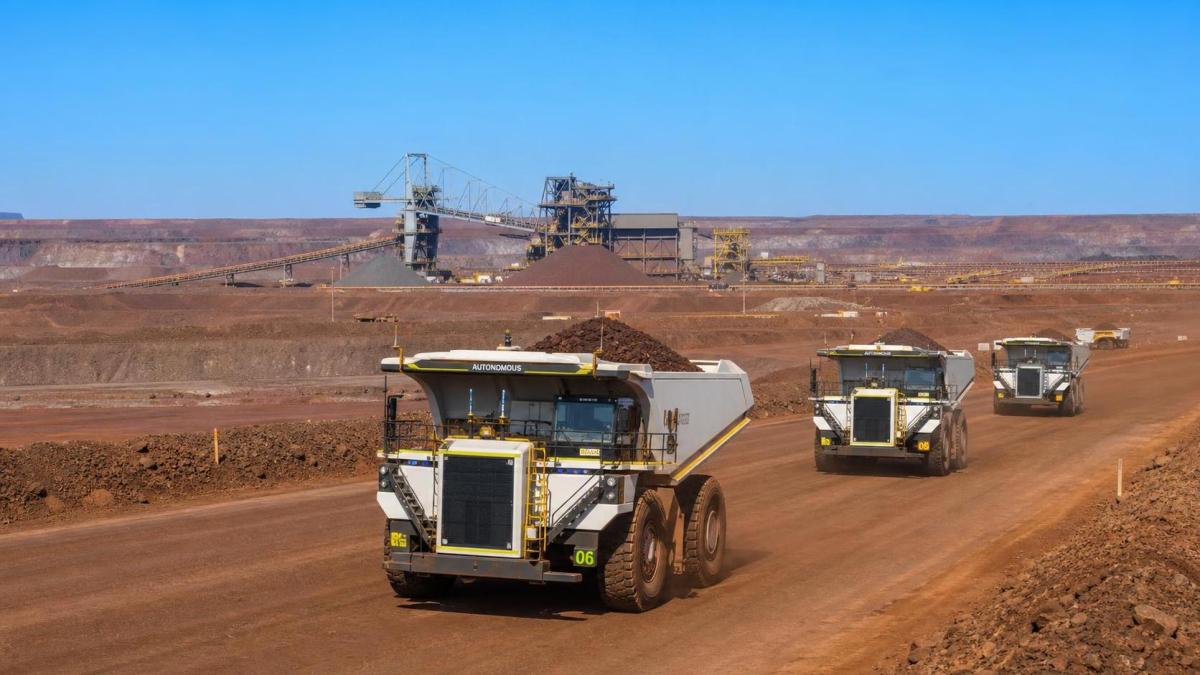
Onslow Iron Milestone Sharpens AHS Procurement Signals
auth.Heavy Haulage StrategistTime
Jun 24, 2026Click Count
On June 24, 2026, the latest operational update from the Onslow iron ore EPC project in Australia drew industry attention not only because a transport milestone was reached, but because it adds a practical execution signal for autonomous mining fleets in cross-border procurement, technical qualification, delivery review, and system acceptance. For mining equipment suppliers, procurement teams, EPC contractors, export businesses, and service providers, the more relevant question is how measurable operating performance in a live large-scale open-pit mine may influence future bid specifications, compliance reviews, and evaluation standards for integrated AHS solutions.

A verified operating milestone in a live mine setting
Confirmed information shows that the Australia Onslow iron ore project, under EPC delivery by Dalian Huarui Heavy Industry, recently completed its 2,000th iron ore transfer operation.
The project is reported to have continued stable operation at its designed capacity of 35 million tonnes per year.
According to the provided summary, the project fully uses a self-controlled AHS (Autonomous Haulage System) fleet. The operating results are described as validating the high reliability, low fault rate, and cross-brand interoperability of Chinese AC/DC drive mining trucks together with an intelligent dispatching system in a real super-large open-pit mining scenario.
The same summary also states that this operating record provides a quantifiable benchmark for overseas mining customers evaluating a Chinese AHS integrated solution.
Why this matters for procurement and delivery rules
Technical qualification may move closer to proven operating records
From an industry perspective, mining project owners and procurement teams may pay closer attention to whether suppliers can present operating evidence from real mine environments rather than relying only on technical presentations or factory-level claims. The potential impact is most visible in prequalification, technical bid alignment, and final equipment selection, where documented operating stability, fault performance, and system coordination may receive more weight.
What deserves closer attention is not a confirmed rule change, but a possible tightening in how buyers define acceptable proof for autonomous haulage capability, especially when integrated systems rather than single vehicles are under review.
Integrated delivery providers may face broader documentation demands
For EPC contractors, export suppliers, and supply-chain service companies, the signal is that deliverables may increasingly be reviewed as a package that includes vehicles, dispatch systems, interoperability evidence, and operating support capability. This can affect contract documentation, technical clarification rounds, delivery acceptance materials, and after-sales readiness planning.
Analysis shows that where buyers assess a complete AHS solution, the business risk no longer sits only in equipment shipment or commissioning, but also in the ability to demonstrate that system components can work together under continuous mine operation.
After-sales and traceability expectations may become more practical
For service providers and downstream support teams, the event suggests that operational continuity and fault management may become more central in customer reviews. In practice, that can influence how companies prepare maintenance records, troubleshooting procedures, software support documents, and quality traceability files for overseas delivery and long-cycle mine service contracts.
Observably, the operating milestone itself does not create a new formal certification requirement, but it may shape how customers interpret service credibility and delivery risk in later procurement rounds.
What companies should monitor next
Check how bidding language evolves
Companies involved in mining trucks, autonomous systems, and mine digitalization should monitor whether future tender documents place greater emphasis on verified operating cases, interoperability statements, or integrated fleet performance descriptions. The current information supports attention to this possibility, but it does not confirm that procurement rules have already changed across the market.
Prepare compliance and technical files as a system set
Exporters, OEMs, and EPC-linked suppliers should review whether their technical documents can explain the relationship between vehicle platforms, dispatch systems, fault records, and operating reliability in a consistent format. This is particularly relevant where buyers assess solution compatibility and delivery risk together rather than as separate lots.
Reassess supplier readiness beyond hardware delivery
What deserves closer attention is whether supplier qualification may increasingly depend on coordination capability across brands and subsystems. Companies should therefore pay attention to the completeness of test records, operational descriptions, service arrangements, and traceability materials that may be requested during procurement review or project acceptance.
Watch for follow-up execution signals
The provided information confirms a benchmark event, but not a final market-wide rule outcome. Businesses should continue tracking whether this kind of operating proof begins to appear more often in official project language, customer evaluation criteria, certification review practice, or delivery acceptance expectations.
How the market is likely to read this signal
Analysis shows that this update is more appropriately understood as an execution signal than as a standalone policy announcement. It does not establish a new regulation, certification code, or trade restriction in itself. However, it may influence how market participants interpret acceptable evidence for reliability, interoperability, and controllability in overseas autonomous mining projects.
From an industry perspective, the value of the event lies in its role as an observable operating reference. Where procurement and compliance decisions depend on risk assessment, a quantified mine-side operating benchmark can affect commercial discussions even before any formal change appears in published rules or tender templates.
A practical benchmark, not yet a final rule shift
In summary, the Onslow project milestone is best read as a practical reference point for how Chinese AHS solutions may be evaluated in overseas mining delivery, especially across procurement review, technical qualification, system acceptance, and service assurance. The confirmed facts support closer market attention, but they do not by themselves prove a universal rule change.
It is more appropriate to understand this development as a credible operating signal that may feed into future procurement standards, compliance expectations, and bid evaluation language, while the actual pace of rule adoption still requires observation.
Basis of this article and points still requiring verification
This article is generated from the user-provided news title, event date, and event summary. For events of this type, commonly relevant source categories may include official company announcements, regulatory releases, trade or customs information, industry association updates, standards organization documents, tender materials, and reporting by authoritative media.
No specific official source link was provided in the input, so the original official source path remains to be verified. Follow-up attention should remain on any later policy details, certification interpretation, tender document changes, market feedback, and actual execution by project owners, suppliers, and service providers.
Recommended News
- 00
0000-00
China Tightens AHS Export ComplianceChina tightens AHS export compliance with new type testing and customs filing rules. Learn how autonomous haulage system exporters can avoid delays, protect delivery schedules, and stay compliant. - 00
0000-00
EU Requires EN 50126-3 for AHS Mining Trucks from Oct 2026EN 50126-3 becomes essential for AHS mining trucks entering the EU from Oct 2026. Learn compliance impacts, CE documentation risks, and how suppliers can prepare faster. - 00
0000-00
Australia Sets AHS Safety Certification RuleAustralia Sets AHS Safety Certification Rule: Learn how AS 61508:2026 Ed.3 and SIL2 requirements will impact AHS exports, approvals, delivery timelines, and market access in Australia.
000000-00
{item.title}{item.description}Search News
Industry Portal
Hot Articles
- What to check before choosing an aggregate production line manufacturerChoose an aggregate production line manufacturer with confidence. Explore key checks for capacity, product quality, layout, service, lifecycle cost, and reliable project delivery.
- When does open-pit mining fleet electrification cut haulage costs?Mining Fleet Electrification open pit: learn when electrified haulage lowers cost per tonne through reliable power, stable routes, high utilization and smarter charging.
- How TBM cutterheads should match abrasive rock conditionsTBM Cutterheads for abrasive rock: learn how geology, cutter layout, wear protection, muck flow, and maintenance strategy improve tunnelling reliability.
Popular Tags