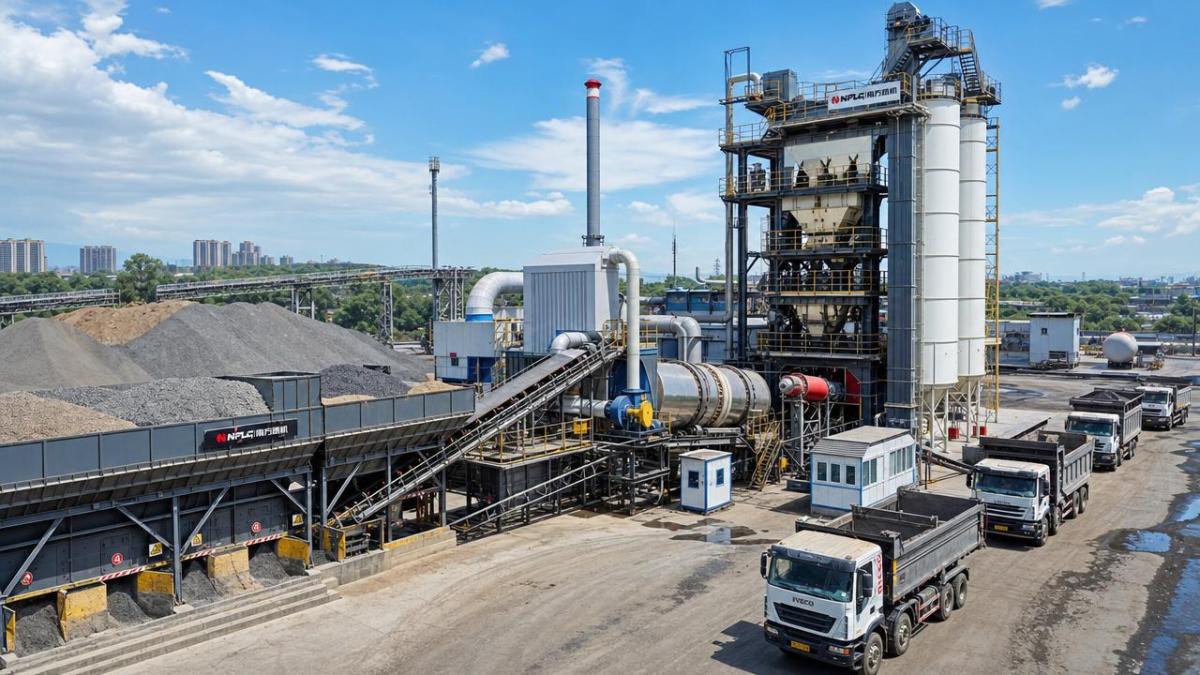
Continuous Asphalt Mixing Plants: Cost vs Output
auth.Paving Materials FellowTime
May 19, 2026Click Count
For procurement teams evaluating asphalt mixing plants, the real decision goes far beyond purchase price. Output stability, burner efficiency, wear-part life, and mix consistency shape project margins over years, not months.
In heavy infrastructure, asphalt supply interruptions can delay paving trains, waste crews, and raise fuel and logistics costs. That is why continuous asphalt mixing plants are often judged by total lifecycle value.
Within HIES coverage of large crushing systems, material handling, and high-throughput batching assets, asphalt mixing plants sit at a critical junction between quarry output and road delivery performance.
When continuous asphalt mixing plants make more financial sense

Continuous plants excel where demand is steady, material gradation is predictable, and daily tonnage is high. In those settings, lower unit production cost can outweigh higher specification limits.
The key question is simple: how many reliable tons per hour are needed, for how many hours, and under what aggregate and fuel conditions?
Compared with intermittent systems, continuous asphalt mixing plants usually offer simpler material flow, faster production rhythm, and lower stoppage frequency. Those advantages become valuable on linear mega-projects.
Typical cost drivers to examine first
- Initial plant purchase and installation scope
- Burner fuel consumption per ton
- Moisture-driven drying energy demand
- Wear on paddles, liners, dryer flights, and screens
- Bitumen dosing accuracy and additive integration
- Downtime risk from dust, fines, and feed inconsistency
If tonnage is large and recipes are repetitive, continuous asphalt mixing plants often produce a lower cost per ton. If recipes vary constantly, the advantage can narrow quickly.
Scenario one: long-haul highway paving with stable mix demand
Expressways, ring roads, and cross-border corridors usually require uninterrupted asphalt supply. Paving crews, rollers, and haul trucks depend on even plant rhythm and predictable dispatch timing.
In this scenario, output matters more than recipe switching speed. Continuous asphalt mixing plants can support sustained high throughput with fewer thermal cycling interruptions.
Core judgment points
- Can the plant match paving train consumption for full shifts?
- Is aggregate moisture low enough for efficient drying?
- Are haul distances short enough to preserve temperature?
- Can the control system maintain binder ratio consistency?
Where roads run through remote areas, fuel delivery and spare parts support also matter. A cheaper plant with unstable burners may create expensive downstream losses.
Scenario two: municipal and airport work with changing specifications
Urban resurfacing, airport rehabilitation, and phased access roads often involve multiple job sections, different mix grades, and tighter quality documentation requirements.
Here, continuous asphalt mixing plants remain viable only when the production plan groups similar recipes together. Frequent switches reduce throughput and increase waste material exposure.
Core judgment points
- How often will mix design changes occur each day?
- Are polymer-modified binders or additives required?
- What level of discharge traceability is expected?
- Can storage silos buffer output without segregation?
If quality protocols dominate and lot traceability is strict, overall economics should include testing delays, reject risk, and startup waste, not just nameplate capacity.
Scenario three: quarry-linked infrastructure bases seeking integrated efficiency
Many large contractors now pair crushers, screens, stockyards, and asphalt mixing plants in one logistics ecosystem. This setup changes the cost versus output calculation.
When aggregates come from an adjacent crushing line, feed consistency improves. Lower transport cost and better gradation control can raise actual output, even if rated capacity stays unchanged.
Core judgment points
- Is crushing output matched to plant hourly demand?
- Can fines and oversize be controlled before drying?
- Is moisture management built into stockpile design?
- Will power, dust collection, and traffic routes stay coordinated?
For HIES-tracked mega-projects, integrated material flow often creates the strongest return. The plant succeeds not alone, but as part of a synchronized heavy equipment chain.
How different scenarios change asphalt mixing plants requirements
This comparison shows why no single answer fits every site. The best asphalt mixing plants decision is the one aligned with actual operating rhythm.
Practical selection advice for cost versus output decisions
A useful evaluation model should combine capital cost, expected annual tonnage, plant utilization, and penalty costs from delays or rejected mix. Rated output alone is not enough.
Use these checks before shortlisting equipment
- Define average and peak hourly production separately.
- Measure aggregate moisture by season, not by one sample.
- Estimate fuel cost per ton at local burner settings.
- Review wear-part availability and replacement intervals.
- Map actual recipe change frequency across the project calendar.
- Confirm control accuracy for binder, filler, and additives.
- Check whether storage and dispatch protect mix temperature.
For many projects, slightly lower nameplate output but better uptime creates more saleable tons. Reliable asphalt mixing plants often outperform larger but unstable alternatives.
Common misjudgments that distort the cost calculation
One frequent mistake is comparing plants only by purchase price. That ignores energy intensity, dust handling, maintenance labor, and startup scrap after stoppages.
Another mistake is trusting ideal output figures without checking local aggregates. Wet stone, excessive fines, or poor stockpile discipline can reduce practical throughput sharply.
Some evaluations also overlook integration risk. Asphalt mixing plants depend on loaders, crushers, haul trucks, bitumen tanks, and traffic circulation to sustain effective production.
Often ignored factors
- Cold feed calibration drift over time
- Burner tuning under changing fuel quality
- Baghouse performance during peak dust load
- Operator skill in maintaining mix consistency
- Distance between plant and paving front
These details seem small individually. Together, they decide whether cost per ton stays competitive or quietly erodes project profitability.
A grounded next step for evaluating asphalt mixing plants
Start with the project scenario, not the brochure. Separate highway, municipal, airport, and quarry-linked needs. Then model output, fuel, maintenance, and logistics under real site conditions.
Build a comparison sheet for candidate asphalt mixing plants using saleable tons, downtime probability, and annual operating cost. Add material consistency and dispatch reliability as scored factors.
In large infrastructure portfolios, the winning plant is usually the one that delivers dependable throughput with manageable wear, efficient heat use, and stable quality over the full project cycle.
That approach reflects the HIES view of heavy systems: true value appears when machinery, materials, and project tempo are engineered together, not judged in isolation.
Recommended News
- 00
0000-00
How Concrete Production Automation Improves Batch Accuracy and Plant ThroughputConcrete production automation improves batch accuracy and plant throughput by optimizing moisture correction, weighing precision, sequencing, and traceability for more consistent, efficient output. - 00
0000-00
How to Evaluate Output Stability in Continuous Asphalt Plants for HighwaysContinuous Asphalt Plants for highways: learn how to judge output stability beyond rated capacity, from cold feed and burner response to controls—choose a plant with confidence. - 00
0000-00
Batching Accuracy Calibration: How Moisture and Scale Drift Affect Mix PrecisionBatching accuracy calibration goes beyond scale checks. Learn how moisture variation and scale drift impact mix precision, quality, and cost—and how smarter control improves results.
000000-00
{item.title}{item.description}Search News
Industry Portal
Hot Articles
- What to check before choosing an aggregate production line manufacturerChoose an aggregate production line manufacturer with confidence. Explore key checks for capacity, product quality, layout, service, lifecycle cost, and reliable project delivery.
- When does open-pit mining fleet electrification cut haulage costs?Mining Fleet Electrification open pit: learn when electrified haulage lowers cost per tonne through reliable power, stable routes, high utilization and smarter charging.
- How TBM cutterheads should match abrasive rock conditionsTBM Cutterheads for abrasive rock: learn how geology, cutter layout, wear protection, muck flow, and maintenance strategy improve tunnelling reliability.
Popular Tags