Crete Rebuild Review Puts Asphalt Plants in Focus
auth.Paving Materials FellowTime
Jun 21, 2026Click Count
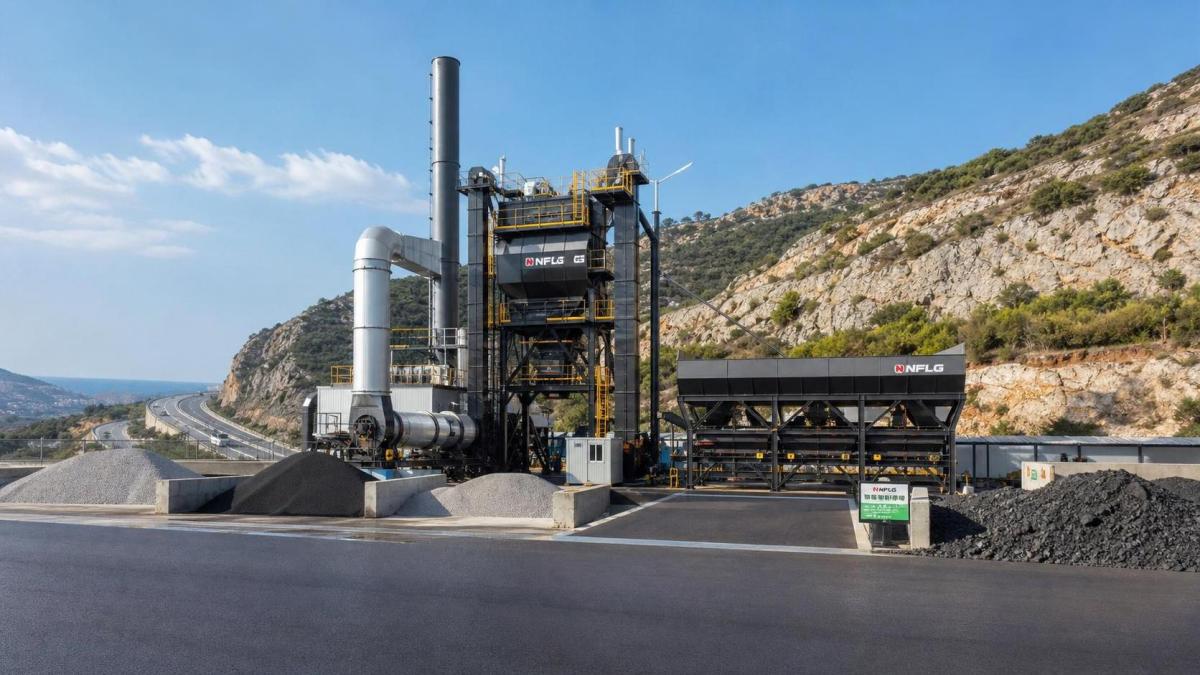
On June 20, 2026, a magnitude 5.3 earthquake in southern Greece caused serious damage to the Samaria Gorge area on Crete and nearby roads, prompting Greece’s Ministry of Public Works to activate an emergency reconstruction plan with priority placed on the national road network. For companies involved in road rebuilding, asphalt production equipment, compliance documentation, and cross-border supply preparation, this development deserves attention because the first round of procurement is expected to center on Continuous Asphalt Plants under tighter green purchasing rules.

What has been confirmed so far
The confirmed information is limited but commercially relevant. The earthquake occurred on June 20, 2026, in southern Greece and measured 5.3 in magnitude. Damage was reported in the Samaria Gorge scenic area on Crete and on surrounding roads. Greece’s Ministry of Public Works has already launched an emergency reconstruction plan and is giving priority to repairs on the national road network.
The market focus on Continuous Asphalt Plants comes from industry expectations tied to this reconstruction cycle. At the same time, the EU green procurement rule EN 13108-21:2025 imposes mandatory requirements on asphalt mixing temperature control accuracy and recycled material blending ratios. For Chinese exporters, advance completion of both CE and UKCA certification is identified as a necessary preparation point.
Why the procurement chain is likely to react first
Road repair buyers may shift attention to deployable plant solutions
From an industry perspective, procurement-side attention is likely to concentrate on equipment that can be mobilized quickly while still matching output and emissions requirements. In this context, Continuous Asphalt Plants are being watched because the reconstruction priority is road restoration rather than a broader, undefined infrastructure package.
Equipment manufacturers face a compliance-led bidding environment
Analysis shows that manufacturers and exporters are not only dealing with potential demand, but also with a more technical qualification threshold. The reference to EN 13108-21:2025 means bidding readiness may depend on whether plant performance can be documented around temperature control and recycled material usage, not simply on nominal capacity or delivery speed.
Supply-chain and documentation service providers may see earlier involvement
Observably, service providers handling certification, export paperwork, and delivery coordination may be affected before larger order volumes are confirmed. The reason is practical: if CE and UKCA certification are prerequisites for market access, supporting documentation and qualification files become part of the commercial process at an early stage.
What companies should watch now
Track how official reconstruction language turns into tenders
What deserves closer attention is the gap between an emergency reconstruction plan and actual procurement execution. Companies should monitor whether the road-repair priority remains narrowly focused on national road links or expands into adjacent infrastructure needs, because that affects equipment scope, timing, and bid preparation.
Prepare technical files around green procurement rules
For suppliers targeting this opportunity, the practical issue is not only product availability but also whether technical submissions can clearly address the mandatory requirements under EN 13108-21:2025. Temperature control precision and recycled material blending capacity should be framed as documented compliance points rather than general product claims.
Review certification status before market engagement
Chinese exporters in particular should pay close attention to the stated need for CE and UKCA dual certification. In business terms, certification status can affect customer communication, shortlist eligibility, and delivery confidence well before any purchase order is issued.
Align delivery and communication plans with urgent-repair conditions
Analysis shows that urgent road restoration typically places pressure on response time and coordination. Even without confirmed tender details, suppliers and service firms should review lead times, document completeness, and client-facing communication so they are prepared if inquiries move faster than normal procurement cycles.
How this signal should be read at this stage
Observably, this news should not yet be treated as proof of finalized procurement outcomes. It is more appropriate to understand it as an early industry signal: damage has triggered a reconstruction response, road repair has been prioritized, and market attention is already converging on plant types that fit both rapid deployment needs and new environmental compliance rules.
From an industry perspective, the stronger message lies in how emergency rebuilding and green procurement are now appearing together. That combination matters because it can reshape supplier selection criteria, especially for firms that have equipment availability but incomplete certification or weak compliance documentation.
What the market can reasonably conclude now
At this point, the development is best read as a short-term reconstruction trigger with possible longer-term implications for equipment qualification standards in cross-border asphalt plant supply. The confirmed facts support close monitoring, but they do not yet confirm order volume, winning suppliers, or final tender structure.
A neutral reading is that the event has increased the practical importance of Continuous Asphalt Plants, certification readiness, and compliance-oriented bidding preparation. Whether that turns into broader market change still depends on subsequent official procurement releases and implementation details.
Basis of this report and what still needs verification
This article is based on the user-provided news title, event date, and event summary. For this type of industry development, relevant source categories typically include official government notices, company statements, industry association updates, authoritative media coverage, and standards organization documents. A specific official source link was not provided in the input, so further verification remains necessary.
Key areas for continued tracking include any formal tender language from the Greek side, how EN 13108-21:2025 is applied in procurement practice, and whether certification and technical compliance become explicit prequalification conditions for overseas suppliers.
Recommended News
- 00
0000-00
When does automated aggregate production justify a fixed plant?Automated aggregate production: discover when reserve life, demand, logistics, quality control and lifecycle costs justify investing in a fixed plant. - 00
0000-00
How Concrete Production Automation Improves Batch Accuracy and Plant ThroughputConcrete production automation improves batch accuracy and plant throughput by optimizing moisture correction, weighing precision, sequencing, and traceability for more consistent, efficient output. - 00
0000-00
How to Evaluate Output Stability in Continuous Asphalt Plants for HighwaysContinuous Asphalt Plants for highways: learn how to judge output stability beyond rated capacity, from cold feed and burner response to controls—choose a plant with confidence.
000000-00
{item.title}{item.description}Search News
Industry Portal
Hot Articles
- How to assess a large scale mining machinery manufacturer for EPC projectsLearn how to assess a large scale mining machinery manufacturer for EPC projects, from technical fit and delivery capacity to lifecycle support and risk control.
- How a Quarry Production Management dashboard exposes bottlenecksDiscover how a Quarry Production Management dashboard reveals hidden bottlenecks, connects material flow data, and improves saleable aggregate output.
- When smart construction hoisting equipment improves site safetySmart construction hoisting equipment enhances site safety with real-time monitoring, smart alerts, interlocks, and data-driven maintenance insights.
Popular Tags