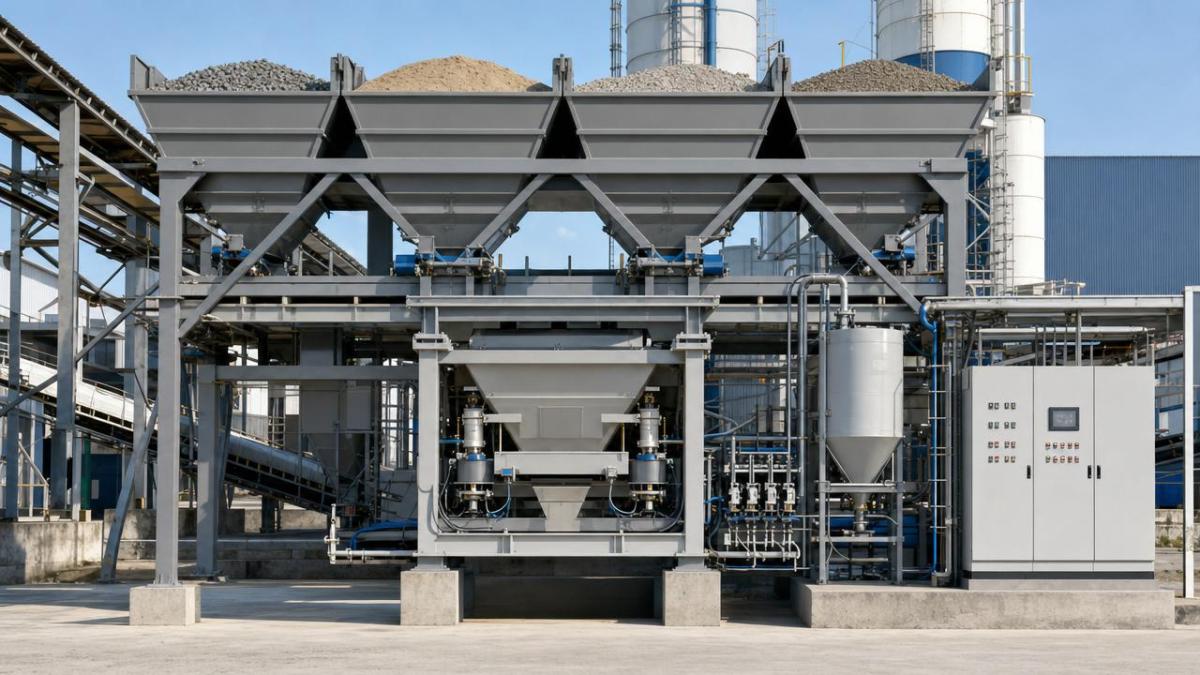
How to Compare High Accuracy Concrete Batching Systems
auth.Paving Materials FellowTime
Jun 13, 2026Click Count
How to Compare High Accuracy Concrete Batching Systems

Choosing among high accuracy concrete batching systems requires more than checking rated output or software features.
The real comparison starts with measurable batching precision under real plant conditions.
That includes aggregate weighing, cement dosing, water control, admixture accuracy, and repeatability across long production cycles.
A strong system should also protect mix consistency when moisture changes, materials bridge, or operators switch recipes quickly.
In practical terms, high accuracy concrete batching is not one feature.
It is the combined result of mechanics, controls, sensors, calibration discipline, and operating logic.
This guide offers a practical framework for comparing systems before tendering, shortlisting, or final supplier selection.
Start with Accuracy Definitions, Not Marketing Claims
Many suppliers describe their equipment as precise, intelligent, or fully automatic.
Those words mean little unless accuracy is defined in measurable terms.
For high accuracy concrete batching, ask for tolerance by material category, not just overall plant performance.
Cement, fly ash, water, sand, coarse aggregate, and liquid admixtures behave differently during dosing.
A useful comparison should separate static accuracy, dynamic accuracy, and repeatability.
- Static accuracy shows how well scales perform during controlled calibration checks.
- Dynamic accuracy shows performance during actual charging and discharge cycles.
- Repeatability shows whether the same recipe stays stable across dozens or hundreds of batches.
This distinction matters because some systems look excellent during acceptance testing but drift during daily production.
When comparing high accuracy concrete batching options, always request data from live production runs.
Compare the Core Precision Components
The next step is to review the hardware that directly influences batching precision.
Small design differences can create big quality gaps over time.
Weighing System Design
Check the number, type, and protection level of load cells.
Ask how the scale frame handles vibration, shock loading, and material impact.
Poor mechanical isolation can distort readings even with quality sensors.
Discharge and Feed Control
Fast opening gates improve cycle time, but they can overshoot target weights.
A better system uses coarse and fine feeding logic.
That allows high speed early in the cycle and tighter control near the setpoint.
Moisture and Water Compensation
Moisture variation is one of the biggest threats to mix consistency.
High accuracy concrete batching systems should support real-time moisture measurement or robust manual correction workflows.
Without that, even accurate aggregate scales can still produce unstable water-cement ratios.
Admixture Dosing Control
Liquid admixtures need careful control at low volumes.
Review pump type, flow stability, line flushing method, and valve response time.
Fine errors here often go unnoticed until slump or setting behavior becomes inconsistent.
Assess Mix Consistency Under Real Production Conditions
A system can hit weight targets and still fail to deliver consistent concrete.
That is why comparison should move beyond dosing values alone.
Review how the plant performs across recipe changes, varying ambient temperatures, and different aggregate gradations.
From a decision standpoint, the key question is simple.
Can the system keep concrete properties stable when conditions are less than ideal?
- Ask for batch records across multiple shifts.
- Check slump variation between repeated runs of the same mix.
- Review strength consistency where plant data is available.
- Compare performance during high-output periods, not only low-speed trials.
In actual projects, stable performance matters more than occasional best-case accuracy.
Review Calibration Stability and Maintenance Burden
Calibration is where many comparisons become more realistic.
Some high accuracy concrete batching systems perform well when newly installed, then require frequent correction.
That creates hidden downtime, more operator intervention, and a greater risk of silent drift.
Ask suppliers how often each weighing circuit typically needs recalibration.
Also ask what usually triggers deviation.
- Mechanical wear in linkages or mounts
- Buildup on hopper walls or discharge gates
- Sensor drift from dust, heat, or moisture
- Control lag after software parameter changes
A lower-maintenance design often delivers better lifetime precision than a more complex one.
This is especially true on remote sites with limited technical support.
Examine Data Traceability and Control Logic
Modern selection decisions increasingly depend on data quality.
For high accuracy concrete batching, traceability helps validate performance and reduce dispute risk.
Look for systems that record target values, actual values, correction logic, alarm history, and operator actions.
That record becomes valuable for quality audits, client reporting, and internal process improvement.
Control logic also deserves close attention.
The best systems do not just display errors.
They prevent them through recipe permissions, lockouts, batch sequence checks, and tolerance alarms.
Match the System to the Project, Not Just the Specification Sheet
Not every high accuracy concrete batching setup fits every project equally well.
A bridge deck supply plant has different priorities from a precast yard or tunnel lining operation.
This is where comparison becomes more strategic.
Look at the project’s production rhythm, material variability, quality exposure, and operating environment.
- For remote infrastructure sites, prioritize robust calibration retention and easier maintenance access.
- For urban commercial supply, prioritize recipe flexibility and traceable batch records.
- For precast operations, prioritize repeatability, low tolerance windows, and process integration.
- For large EPC projects, prioritize uptime, spare parts support, and supplier response capability.
In other words, the best technical choice is the one that stays accurate in your actual operating model.
Use a Practical Supplier Evaluation Checklist
A good shortlist becomes stronger when every supplier answers the same technical questions.
That makes high accuracy concrete batching comparisons cleaner and more defensible.
- Request material-specific dosing tolerance under production conditions.
- Ask for batch history samples, not only factory test reports.
- Review moisture correction method and water compensation speed.
- Confirm recalibration frequency and maintenance access points.
- Check whether the control system logs alarms, edits, and manual overrides.
- Verify support capability, spare parts lead time, and training scope.
- Compare lifecycle reliability, not just purchase price.
This approach helps separate polished presentations from systems that truly deliver dependable precision.
Final Decision Focus
The best high accuracy concrete batching decision comes from balancing accuracy, consistency, reliability, and control transparency.
Capacity still matters, but it should not dominate the evaluation.
A plant that produces slightly less per hour can still create better project value if it holds tighter mix control.
When reviewing suppliers, keep the discussion grounded in field performance, not broad automation claims.
If the system can maintain high accuracy concrete batching through material variation, long shifts, and routine wear, it is likely the stronger investment.
Use that lens to build a shortlist, challenge assumptions, and move toward a more confident equipment decision.
Recommended News
- 00
0000-00
How Concrete Production Automation Improves Batch Accuracy and Plant ThroughputConcrete production automation improves batch accuracy and plant throughput by optimizing moisture correction, weighing precision, sequencing, and traceability for more consistent, efficient output. - 00
0000-00
How to Evaluate Output Stability in Continuous Asphalt Plants for HighwaysContinuous Asphalt Plants for highways: learn how to judge output stability beyond rated capacity, from cold feed and burner response to controls—choose a plant with confidence. - 00
0000-00
Batching Accuracy Calibration: How Moisture and Scale Drift Affect Mix PrecisionBatching accuracy calibration goes beyond scale checks. Learn how moisture variation and scale drift impact mix precision, quality, and cost—and how smarter control improves results.
000000-00
{item.title}{item.description}Search News
Industry Portal
Hot Articles
- What to check before choosing an aggregate production line manufacturerChoose an aggregate production line manufacturer with confidence. Explore key checks for capacity, product quality, layout, service, lifecycle cost, and reliable project delivery.
- When does open-pit mining fleet electrification cut haulage costs?Mining Fleet Electrification open pit: learn when electrified haulage lowers cost per tonne through reliable power, stable routes, high utilization and smarter charging.
- How TBM cutterheads should match abrasive rock conditionsTBM Cutterheads for abrasive rock: learn how geology, cutter layout, wear protection, muck flow, and maintenance strategy improve tunnelling reliability.
Popular Tags