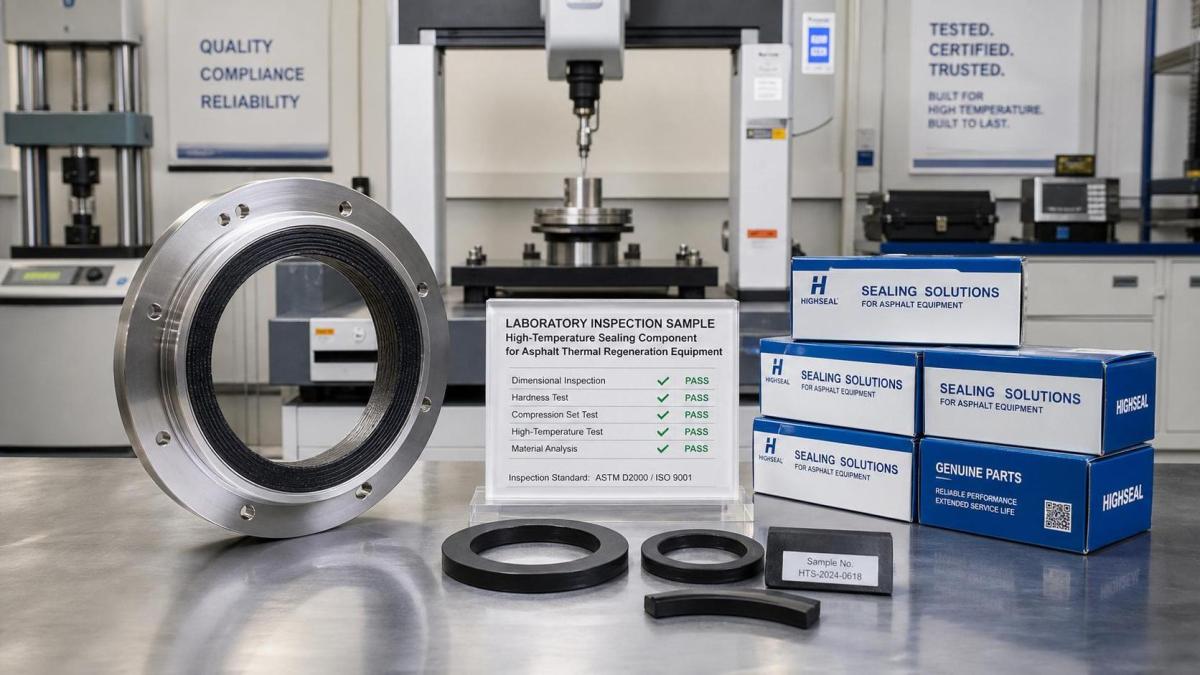
EU REACH Tightens BaP Limit for Asphalt Seals
auth.Paving Materials FellowTime
Jul 07, 2026Click Count
On July 6, 2026, the European Commission issued Regulation (EU) 2026/1182, immediately tightening the benzo[a]pyrene (BaP) migration limit for high-temperature sealants used in Asphalt Hot Recycling equipment from 0.01 mg/kg to 0.005 mg/kg. The change matters beyond a technical threshold: it directly affects sealant suppliers, equipment exporters, importers, replacement-part providers, and after-sales service operations tied to equipment sold or installed in the EU. For companies supplying into this chain, the immediate compliance window and document update requirements make this an operational issue as much as a regulatory one.

What the new REACH amendment changes
The confirmed facts are limited but clear. Regulation (EU) 2026/1182 was published by the European Commission on July 6, 2026. It amends REACH Annex XVII by lowering the BaP migration limit for high-temperature sealants used in Asphalt Hot Recycling equipment from 0.01 mg/kg to 0.005 mg/kg, with immediate effect.
The scope covers sealing components used in all recycling equipment sold or installed within the EU. This includes imported complete machines as well as after-sales replacement parts. The event summary also states that Chinese sealant suppliers and asphalt equipment exporters must complete SDS updates and third-party SGS test review within 72 hours, or face risks including product removal from sale and fines.
Where the pressure will show up first in the supply chain
Sealant suppliers face an immediate document-and-test burden
For suppliers of high-temperature sealants, the rule change reaches directly into formulation compliance, SDS accuracy, and test evidence. Because the limit is lower and effective immediately, the practical pressure is likely to fall first on whether existing material files, declarations, and third-party verification still support EU-facing shipments or stocked products. What deserves closer attention is whether current compliance files already reflect the stricter limit or whether they were prepared only against the previous 0.01 mg/kg threshold.
Equipment exporters must review both complete units and spare-part packages
Exporters of asphalt hot recycling equipment are affected because the rule applies not only to installed equipment in the EU but also to imported complete machines and replacement components. From an industry perspective, this means compliance review cannot stop at the main equipment level. Sealing assemblies included in export packages, service kits, and replacement inventories may all need to be checked against the new limit, with supporting SDS and test records aligned before delivery or installation.
Importers, buyers, and service operators will need tighter file control
EU-side importers, procurement teams, and after-sales operators may be exposed through purchasing decisions, installation schedules, and replacement-part handling. The main risk point is not only product composition, but whether the supporting compliance record is current and defensible. Buyers may need to verify that supplied seal components are backed by updated SDS documentation and recent third-party review, especially where installation or service timelines are already underway.
Testing and compliance support functions become time-critical
Testing service providers and compliance teams are likely to see immediate demand because the event summary links the 72-hour window to SDS updates and SGS review. Observably, this compresses the normal pace of regulatory follow-up into a short operational response cycle. For companies in the chain, laboratory coordination, document control, and internal release approval may become the main bottlenecks rather than manufacturing itself.
What companies should check now
Reconfirm whether current SDS files still match the new threshold
Companies supplying sealants or equipment into the EU market should first verify whether existing SDS files reflect the revised BaP limit of 0.005 mg/kg. Analysis shows this is not a routine paperwork issue, because the event summary links document updates directly to market access and enforcement risk.
Review SGS test status against the amended requirement
The stated need for third-party SGS test review within 72 hours means companies should examine whether current reports are recent, product-specific, and usable under the revised limit. If a business relies on inherited supplier files or older qualification records, the immediate issue is whether those documents remain adequate for products already being shipped, installed, or offered as replacements.
Check spare parts, service stock, and pending deliveries
The scope expressly includes after-sales replacement parts, so companies should not limit review to new machine exports. What deserves closer attention is any stock already allocated for EU customers, service kits prepared for maintenance work, and deliveries scheduled close to the effective date. Even when the product itself has not changed, the compliance position may have changed because the threshold has moved.
Align procurement and supplier qualification records
For procurement and supply chain teams, the practical task is to confirm that approved suppliers can provide updated SDS records and third-party verification tied to the affected seal components. From an industry perspective, purchasing decisions, technical files, and delivery commitments now need to be checked together rather than separately, especially where sealants are sourced through tiered suppliers.
Why this looks like an execution signal, not a distant policy notice
Analysis shows this development is better understood as an already effective compliance change rather than an early-stage policy direction. The threshold revision has been issued, it applies immediately, and the event summary ties non-compliance to product removal and fines. At the same time, it is still necessary to separate confirmed facts from open points: the input does not provide further detail on enforcement practice, customs treatment, tender document updates, or how market participants will apply the rule in day-to-day transactions. Those points still require observation.
How the market is likely to read this change
From an industry perspective, the main significance of this event is that a narrower chemical limit is now affecting equipment trade, spare-part circulation, and after-sales compliance at the same time. This should be read primarily as a rule now in force with immediate operational consequences for affected suppliers and exporters. It is less useful to treat it as a broad market trend story and more useful to treat it as a near-term compliance checkpoint that may influence procurement review, shipment release, and service-part qualification.
Basis of this article and what still needs verification
This article is generated from the user-provided news title, event date, and event summary. For events of this kind, source types typically relevant to later verification may include official regulatory notices, releases from supervisory authorities, trade or customs authorities, industry association updates, standard-setting documents, and reporting by authoritative trade media.
No specific official source link was provided in the input, so the precise official publication path still needs to be verified on an ongoing basis. Further monitoring is also needed for any detailed enforcement wording, certification and testing interpretation, tender-document changes, market feedback, and how affected companies implement the requirement in practice.
Recommended News
- 00
0000-00
EU Tightens RAP Lead Limit to 5 ppm Under REACHEU Tightens RAP Lead Limit to 5 ppm Under REACH: learn how the 2026 rule change impacts asphalt hot recycling equipment, EU compliance, testing documents, and supply chain readiness. - 00
0000-00
EU Tightens RAP Lead Limit to 5 ppm Under REACHEU Tightens RAP Lead Limit to 5 ppm Under REACH: learn how the new EU rule affects RAP sourcing, compliance declarations, and export readiness for hot asphalt recycling equipment suppliers. - 00
0000-00
China Tightens Export Checks on Asphalt Recycling EquipmentChina tightens export checks on asphalt recycling equipment: learn how the new REACH Annex XVII compliance rule may delay customs clearance and what exporters must do now.
000000-00
{item.title}{item.description}Search News
Industry Portal
Hot Articles
- What to check before choosing an aggregate production line manufacturerChoose an aggregate production line manufacturer with confidence. Explore key checks for capacity, product quality, layout, service, lifecycle cost, and reliable project delivery.
- When does open-pit mining fleet electrification cut haulage costs?Mining Fleet Electrification open pit: learn when electrified haulage lowers cost per tonne through reliable power, stable routes, high utilization and smarter charging.
- How TBM cutterheads should match abrasive rock conditionsTBM Cutterheads for abrasive rock: learn how geology, cutter layout, wear protection, muck flow, and maintenance strategy improve tunnelling reliability.
Popular Tags