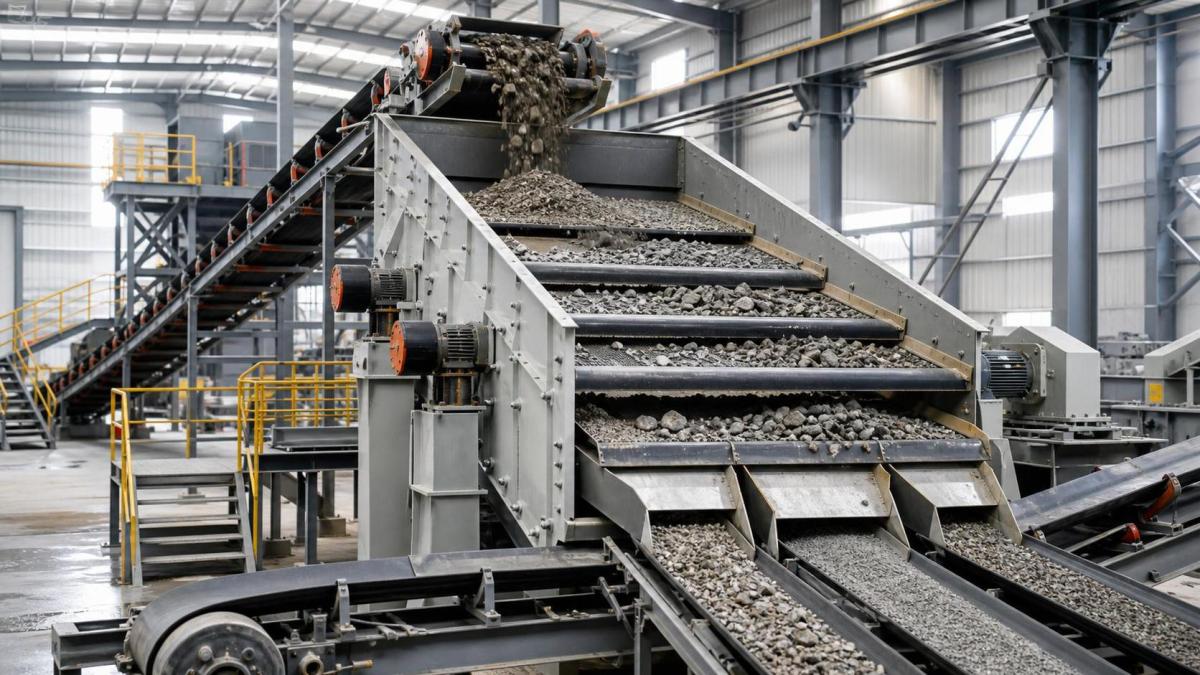
Screening Efficiency in Vibrating Screens: Common Causes of Low Throughput
auth.Rock Comminution ExpertTime
Jun 30, 2026Click Count
Screening Efficiency in Vibrating Screens: Common Causes of Low Throughput

Low throughput in a screening circuit usually has more than one cause. A machine may run, but screening efficiency vibrating screens performance still falls short of expected capacity.
In daily operation, the problem often shows up as carryover, uneven product size, rising recirculating load, or lost saleable material. Output drops, while wear and energy cost keep climbing.
The practical fix starts with diagnosis. Feed behavior, screen media, moisture, vibration settings, and maintenance condition all shape real screening efficiency vibrating screens results.
When these factors are checked in sequence, improvement is usually faster than expected. Small adjustments often release more usable capacity than major plant changes.
Why Throughput Falls Even When the Screen Looks Fine
A vibrating screen can appear mechanically healthy and still perform poorly. Motors may run normally, vibration may look stable, yet separation efficiency remains weak.
That happens because throughput is not only about machine movement. It also depends on how material reaches the deck, spreads across the width, and meets the opening size.
In crushing plants, quarries, and mineral processing lines, the first warning sign is often overloaded one side of the deck. Another common sign is clean wire on one area and plugged media elsewhere.
This is why screening efficiency vibrating screens work should be treated as a system issue, not only a machine issue. Feeders, chutes, media, and operating practice matter together.
Common Causes of Low Screening Efficiency Vibrating Screens Performance
1. Poor Feed Distribution
Poor feed distribution is one of the biggest reasons for low throughput. If material lands in one narrow stream, only part of the deck does useful screening work.
This shortens retention time and increases bed depth in overloaded zones. Fines cannot reach the openings efficiently, so undersize stays trapped in the top layer.
Typical causes include worn feed boxes, poor chute angle, incorrect feeder speed, and material dropping too close to one side. The result is lower screening efficiency vibrating screens output.
2. Wrong Screen Media Selection
Screen media must match material type, cut size, moisture level, and tonnage. Many throughput problems begin with the wrong opening shape or panel style.
If openings are too small, capacity falls immediately. If they are too large, separation quality drops and off-spec product increases downstream.
Polyurethane, woven wire, rubber, and hybrid media each behave differently. Choosing the wrong one can reduce screening efficiency vibrating screens performance even when vibration settings are correct.
3. Excessive Moisture and Material Blinding
Moisture changes everything. Wet fines stick together, bridge across openings, and form a compact layer that blocks stratification.
Blinding and pegging are especially common near the critical size range. That means particles close to the aperture size repeatedly lodge in the openings.
Once this starts, capacity falls quickly. Operators often push feed harder, but that usually worsens screening efficiency vibrating screens performance instead of recovering it.
4. Incorrect Vibration Parameters
Stroke, speed, and throw angle directly affect movement on the deck. If one setting drifts, the screen may lose both capacity and cut accuracy.
Too little amplitude can leave material sluggish and packed. Too much can move it too fast, reducing the chance for fines to pass.
In real plants, vibration problems may come from incorrect pulley changes, worn springs, unbalanced exciters, or maintenance adjustments made without measurement.
5. Excessive Bed Depth and Overloading
More feed does not always mean more tons out. Once the bed becomes too deep, lower layers are shielded from the screen surface.
This is common after crusher changes, feed surges, or seasonal moisture shifts. The screen becomes a conveyor instead of a separator.
At that point, screening efficiency vibrating screens performance drops, recirculation rises, and downstream equipment may look like the problem even when it is not.
6. Worn Components and Loose Operating Condition
Worn panels, broken wires, damaged side tension, loose bolts, and tired springs all reduce usable screening area. They also change vibration behavior in subtle ways.
Because the machine still runs, these losses often stay hidden for weeks. By then, throughput loss becomes accepted as normal plant variation.
How to Diagnose the Problem on Site
A useful inspection starts with observation before adjustment. Watch the screen under normal load, not only during startup or after feed is reduced.
Check these points in order:
- Is feed spread evenly across the full width?
- Does bed depth increase sharply at the inlet?
- Are media openings blinded, pegged, or worn larger?
- Are material trajectories stable and consistent?
- Do vibration readings match design values?
- Are springs, bolts, and support points in good condition?
This sequence helps separate root causes from symptoms. In practice, the first visible issue is not always the main reason for low throughput.
Fast Field Indicators
Practical Ways to Improve Screening Efficiency Vibrating Screens Results
Once the cause is clear, correction should be deliberate. Random adjustments often move the problem rather than solve it.
Improve Feed Presentation
Use feed boxes, spreader plates, or chute liners that distribute material across the full deck width. Keep the drop pattern stable during load changes.
Match Media to the Duty
Select media based on aperture, open area, wear life, and moisture behavior. Anti-blinding options can deliver a strong gain in screening efficiency vibrating screens applications.
Control Moisture Where Possible
When seasonal moisture rises, adjust feed rate, review washing strategy, and consider media changes. Wet sticky material rarely responds well to higher loading.
Verify Vibration, Do Not Guess
Take actual vibration measurements. Compare stroke, speed, and operating angle with manufacturer targets and process requirements before changing mechanical settings.
Run a Maintenance Routine That Protects Capacity
Capacity loss often begins as a maintenance issue. Tightening schedules, spring inspections, media condition checks, and support frame reviews should be routine, not reactive.
A Simple Action Plan for Stable Output
For consistent screening efficiency vibrating screens performance, use a repeatable action plan instead of one-off corrections.
- Record baseline tons per hour, product gradation, and recirculating load.
- Inspect feed distribution during steady operation.
- Check media condition, open area, and blinding behavior.
- Measure actual vibration values.
- Correct one variable at a time and track the result.
- Review performance again after moisture or feed changes.
That approach keeps decision-making practical. It also helps avoid replacing parts or changing settings that were never responsible for the throughput loss.
In most plants, better screening efficiency vibrating screens performance comes from disciplined observation, correct media choice, stable feed presentation, and verified vibration control. When these basics are handled well, throughput becomes easier to protect and easier to improve.
Recommended News
- 00
0000-00
High-Frequency Screening Technology: How to Improve Efficiency in Fine Material SeparationHigh-frequency screening technology efficiency explained: discover how to boost fine material separation, improve product quality, cut recirculation, and lower operating costs. - 00
0000-00
EU CE Rule Takes Effect for EMC Limits on High-Frequency ScreensEU CE rule update: high-frequency screens sold to the EU from Oct 1, 2026 must meet EN 61000-6-4:2026 EMC limits. See impacts on testing, certification, and delivery planning. - 00
0000-00
High-Frequency Vibrating Screens South Africa: What Affects ThroughputHigh-frequency vibrating screens South Africa: discover what really affects throughput, from ore, moisture, and aperture choice to feed stability and maintenance for better plant results.
000000-00
{item.title}{item.description}Search News
Industry Portal
Hot Articles
- What to check before choosing an aggregate production line manufacturerChoose an aggregate production line manufacturer with confidence. Explore key checks for capacity, product quality, layout, service, lifecycle cost, and reliable project delivery.
- When does open-pit mining fleet electrification cut haulage costs?Mining Fleet Electrification open pit: learn when electrified haulage lowers cost per tonne through reliable power, stable routes, high utilization and smarter charging.
- How TBM cutterheads should match abrasive rock conditionsTBM Cutterheads for abrasive rock: learn how geology, cutter layout, wear protection, muck flow, and maintenance strategy improve tunnelling reliability.
Popular Tags