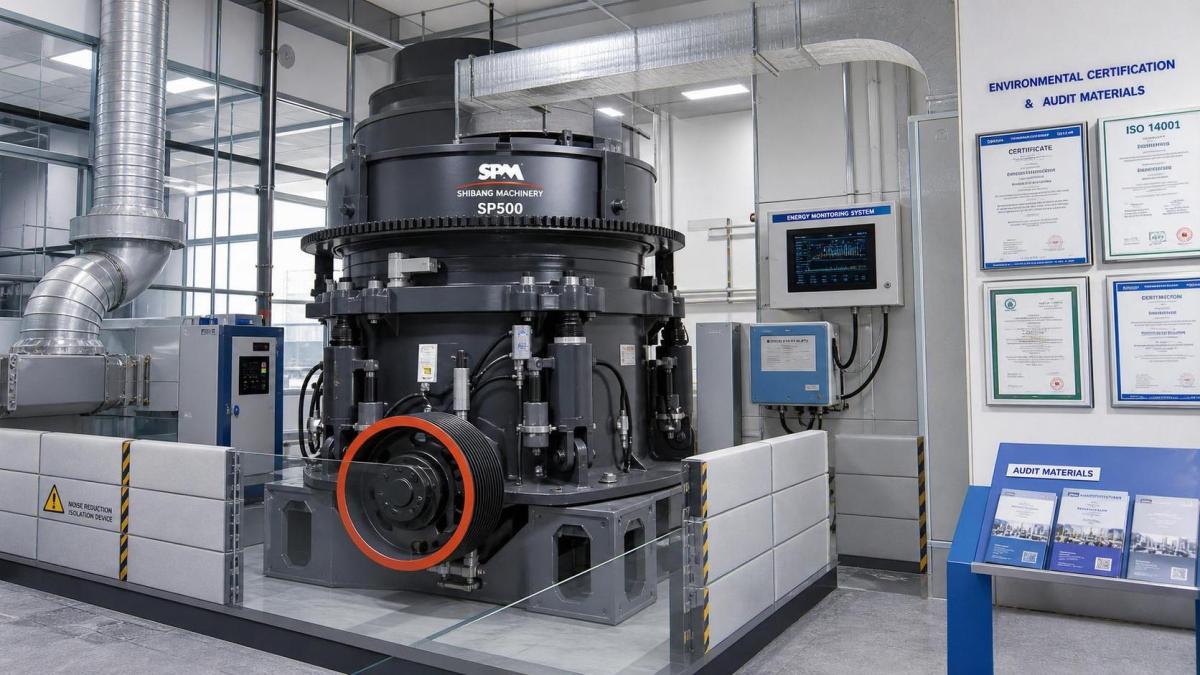
Codelco 2026 Tender Raises ISO 14001 Requirement
auth.cTime
Jun 30, 2026Click Count
On June 30, 2026, Codelco signaled a stricter market-access condition in its new second-half tender for large mining equipment by requiring hydraulic cone crusher bidders to hold a valid ISO 14001:2025 certification and submit a third-party environmental performance audit covering measured energy use, noise, and dust control. For Chinese exporters, this is not just a document update in procurement files; it directly affects bid eligibility, compliance preparation, and the timing of export-oriented delivery plans.

What the tender now requires
According to the information provided, Codelco, Chile's largest state-owned mining company, issued a new large-scale mining equipment tender notice on June 30, 2026. In that notice, all suppliers bidding hydraulic cone crushers are required to provide a valid ISO 14001:2025 certification certificate.
The same tender requirement also asks bidders to attach a third-party environmental performance audit report. The report must include measured data on energy consumption, noise, and dust control.
The requirement applies to all Chinese export enterprises participating in the tender. Suppliers that do not meet the requirement will be automatically disqualified.
Why this matters across the supply chain
Bid qualification is now tied to environmental documentation
From an industry perspective, the immediate impact falls on export-oriented equipment manufacturers and traders seeking to enter or remain in this procurement channel. The rule change matters because qualification is no longer limited to technical and commercial submissions; environmental certification and supporting audit materials have become an upfront condition for participation.
What deserves closer attention is the operational effect on bid preparation. Companies now need to verify whether their ISO 14001:2025 certificate is valid for the relevant scope and whether their supporting audit package can stand up to document review at the tender stage.
Testing and certification service providers may become part of the delivery timeline
Analysis shows that certification bodies, audit providers, and testing-related service firms may be drawn more directly into the export process for this product category. The stated requirement for third-party environmental performance data means that compliance work may extend beyond certificate possession into measurable evidence preparation.
For businesses involved in documentation, compliance support, or tender file coordination, the main issue is timing. Environmental audit materials, measured data, and certificate validity may now affect submission readiness in the same way that technical specifications and commercial terms already do.
Procurement and post-order planning may need earlier screening
Observably, buyers, project teams, and supply-chain coordinators connected to this tender should pay attention to supplier screening earlier in the procurement cycle. If a supplier lacks the required certification or cannot provide the specified third-party audit report, the issue arises before contract execution and can interrupt quotation, scheduling, and export preparation.
For after-sales and delivery-related parties, the signal is also relevant because compliance records, product documentation, and traceable environmental performance materials may become more closely linked to procurement acceptance and cross-border equipment delivery.
What companies should review now
Check certificate validity and scope first
Analysis shows that the first practical question is whether the supplier already holds a valid ISO 14001:2025 certification certificate that can be submitted in a tender context. Businesses should pay close attention to certificate status, applicable scope, and whether the document set is consistent with the product and bidding entity involved.
Prepare audit materials as bid documents, not as later supplements
What deserves closer attention is the tender's explicit request for a third-party environmental performance audit report with measured data on energy consumption, noise, and dust control. Based on the information provided, these materials should be treated as part of qualification readiness rather than as general background files. Where execution details are not yet provided, companies should avoid assuming that missing materials can be supplemented later.
Watch for changes in tender wording and review practice
It is more appropriate to understand this as an active execution signal within a procurement process, but some points still require observation, including review standards, document interpretation, and any later clarification in tender wording. Companies following this opportunity should continue checking whether the phrasing around certification validity, audit format, and measured data requirements changes in subsequent documents or notices.
Align export planning with compliance lead time
From an industry perspective, export teams should also look at whether certification review, third-party audit preparation, and internal document coordination could affect bid schedules and later delivery commitments. Even without additional confirmed execution details, the current requirement indicates that compliance readiness now has a direct bearing on market access for this tendered product.
How this signal should be read
Observably, this development is better read as a concrete procurement enforcement signal than as a general policy discussion. The important point is not simply that an environmental standard is being referenced, but that eligibility for hydraulic cone crusher bidding has been explicitly linked to both certification and auditable performance evidence.
Analysis shows that the market should still remain cautious about drawing wider conclusions beyond the tender facts provided. At this stage, it would be premature to infer broader regulatory outcomes or sector-wide enforcement trends that are not stated in the input. What can be said with confidence is that, within this tender context, environmental compliance has moved into a gatekeeping position for the affected suppliers.
A practical reading of the development
For the industry, the immediate significance of this event lies in execution rather than rhetoric. Codelco's tender language introduces a defined entry requirement for hydraulic cone crusher suppliers, and for Chinese exporters the consequence of non-compliance is clearly stated as automatic exclusion.
It is more appropriate to understand this development as a rule already reflected in a live procurement setting, while the broader implications for later market practice still need continued observation. The near-term focus should remain on certificate validity, audit documentation, and how procurement-side compliance review is carried out in practice.
Basis of this article and what still needs verification
This article is based on the user-provided news title, event date, and event summary. For developments of this kind, relevant source categories typically include official tender notices, procurement announcements, regulatory publications, trade or customs information, industry association releases, standard-setting organization documents, and reporting by established industry media.
No specific official source link was provided in the input, so the original announcement text and any later clarification still need to be verified on an ongoing basis. Further observation should focus on later tender document changes, certification review interpretation, audit document expectations, market feedback, and how participating companies implement the requirement in actual bidding practice.
Recommended News
- 00
0000-00
China Tightens CE and MSHA Dual Certification Rules for Mining CrushersChina tightens CE and MSHA rules for mining crushers, raising export compliance costs and risks. Learn what buyers and suppliers must prepare before 2026. - 00
0000-00
China Tightens Export Compliance for Mining Hydraulic CrushersChina tightens export compliance for mining hydraulic crushers, raising new certification hurdles for EU, US, and Australia shipments. Learn what exporters must do before the October 2026 deadline. - 00
0000-00
Zero tariff for Brazilian construction machinery is implemented, and the purchasing window opensBrazil engineering machinery zero-tariff policy takes effect, opening a new procurement window. Learn how it impacts pricing, customs clearance, bidding, delivery, and project sourcing opportunities.
000000-00
{item.title}{item.description}Search News
Industry Portal
Hot Articles
- What to check before choosing an aggregate production line manufacturerChoose an aggregate production line manufacturer with confidence. Explore key checks for capacity, product quality, layout, service, lifecycle cost, and reliable project delivery.
- When does open-pit mining fleet electrification cut haulage costs?Mining Fleet Electrification open pit: learn when electrified haulage lowers cost per tonne through reliable power, stable routes, high utilization and smarter charging.
- How TBM cutterheads should match abrasive rock conditionsTBM Cutterheads for abrasive rock: learn how geology, cutter layout, wear protection, muck flow, and maintenance strategy improve tunnelling reliability.
Popular Tags